3A Molecular Sieve Supplier for Ethanol & Selective Drying
Adsorbent Source supplies 3A molecular sieve for ethanol dehydration, hydrocarbon drying, refrigerant systems, process-gas drying and replacement desiccant projects. Beads, pellets, samples, technical documents, export packaging and bulk supply can be coordinated according to the required application, particle size, quantity and destination.

Product appearance and particle size may vary according to formulation and confirmed supply specification.
| Buyer Check | 3A Molecular Sieve Supply Direction |
|---|---|
| Product Type | 3A molecular sieve desiccant for selective moisture adsorption. |
| Common Forms | Beads and extruded pellets; exact form and tolerance depend on the selected grade. |
| Common Size References | 4×8 mesh and 8×12 mesh beads; 1/8 inch and 1/16 inch pellets are common industry references. |
| Typical Purchase Routes | New filling, replacement loading, trial sample, export shipment or recurring procurement. |
| Documents | TDS, SDS, COA, packing information and sample availability should be confirmed with the selected source. |
| Best RFQ Information | Application, feed composition, target moisture, operating conditions, particle size, filling quantity and destination. |
What Is 3A Molecular Sieve Desiccant?
3A molecular sieve desiccant is produced by replacing part of the sodium ions in a 4A-type zeolite with potassium ions. This narrows the effective pore opening to approximately 3 angstroms and creates strong selectivity toward water.
Because many alcohols and hydrocarbons are larger than the pore opening, they are largely excluded from the internal crystal structure while water can be adsorbed. This makes 3A a common starting point for applications where moisture must be removed without unnecessarily retaining the main product molecule.
Final performance depends on the product formulation, binder, particle form, operating cycle, inlet conditions and regeneration design. Adsorbent Source therefore treats the grade name as an initial selection direction rather than a complete specification. For purchasing, the final 3A molecular sieve desiccant should be confirmed against the quoted TDS, particle-size tolerance, packaging and application conditions.
How selective drying works
3A Molecular Sieve Desiccant Applications
Application suitability depends on the feed composition, target outlet condition, cycle design and required service life. The following are common review directions rather than universal approval statements. Buyers replacing an existing bed should also provide the current grade, particle size, loading quantity and performance issue.
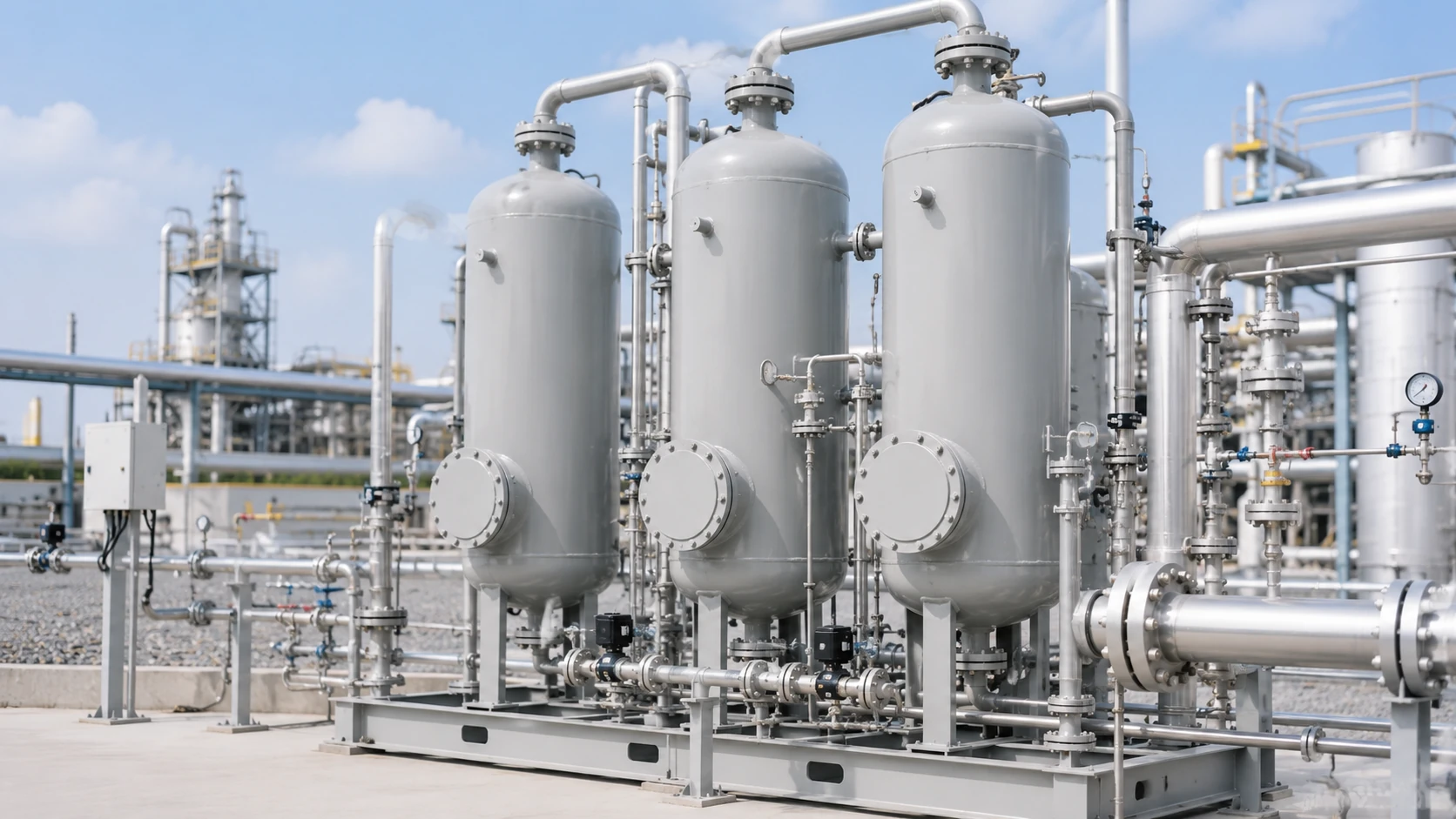
Alcohol and hydrocarbon stream drying
3A products are frequently considered where water must be removed from alcohols or hydrocarbon streams while limiting adsorption of larger product molecules.
- Ethanol and selected light-alcohol dehydration
- Natural-gas and hydrocarbon stream moisture removal
- Process preparation before low-temperature or downstream operations
- Fixed-bed replacement and performance-improvement projects
Fuel and Industrial Ethanol Drying
Selective water adsorption can support the production of low-moisture ethanol while limiting ethanol co-adsorption.
Hydrocarbon Gas and Liquid Dehydration
Reviewed for natural gas, cracked gas and selected refinery or petrochemical streams where water removal is required.
Refrigerant and Component Drying
For refrigerant drying applications, application-specific 3A-based materials may be used in refrigerant systems and filter driers after compatibility review.
Solvent and Liquid Dehydration
Suitable product directions can be reviewed for selected solvents where water is the target contaminant.
Compressed Air and Process Gas Drying
For compressed air drying and process-gas moisture-control duties, 3A may be evaluated when the adsorption selectivity matches the stream composition or when the original equipment specification calls for 3A molecular sieve desiccant.
Existing Bed Replacement
Current product data, loading history, cycle conditions and performance problems are used to review a replacement route.
3A Molecular Sieve Specifications to Confirm Before Purchase
The values below describe the general 3A product direction. For a broader grade-selection framework, review our How to Select Molecular Sieve guide. Actual adsorption capacity, crush strength, attrition, residual water and cycle performance must come from the selected product’s technical data sheet.
| Selection Item | General 3A Direction |
|---|---|
| Zeolite Type | Potassium-exchanged A-type molecular sieve |
| Effective Pore Opening | Approximately 3 angstroms |
| Primary Adsorption Direction | Selective water removal |
| Common Physical Forms | Beads and extruded pellets |
| Common Bead References | 4×8 mesh and 8×12 mesh |
| Common Pellet References | 1/8 inch and 1/16 inch |
| Regeneration | System- and product-specific thermal, purge, vacuum or pressure-cycle conditions |
| Documents to Confirm | TDS, SDS, COA, packing information and sample availability |
Mesh and pellet dimensions are common industry references. Availability and tolerances vary by manufacturer and grade.
3A Molecular Sieve Bead and Pellet Size Options
Smaller particles can offer faster mass-transfer characteristics but may increase pressure drop. Larger particles can reduce pressure drop but must still meet the required adsorption and cycle performance.
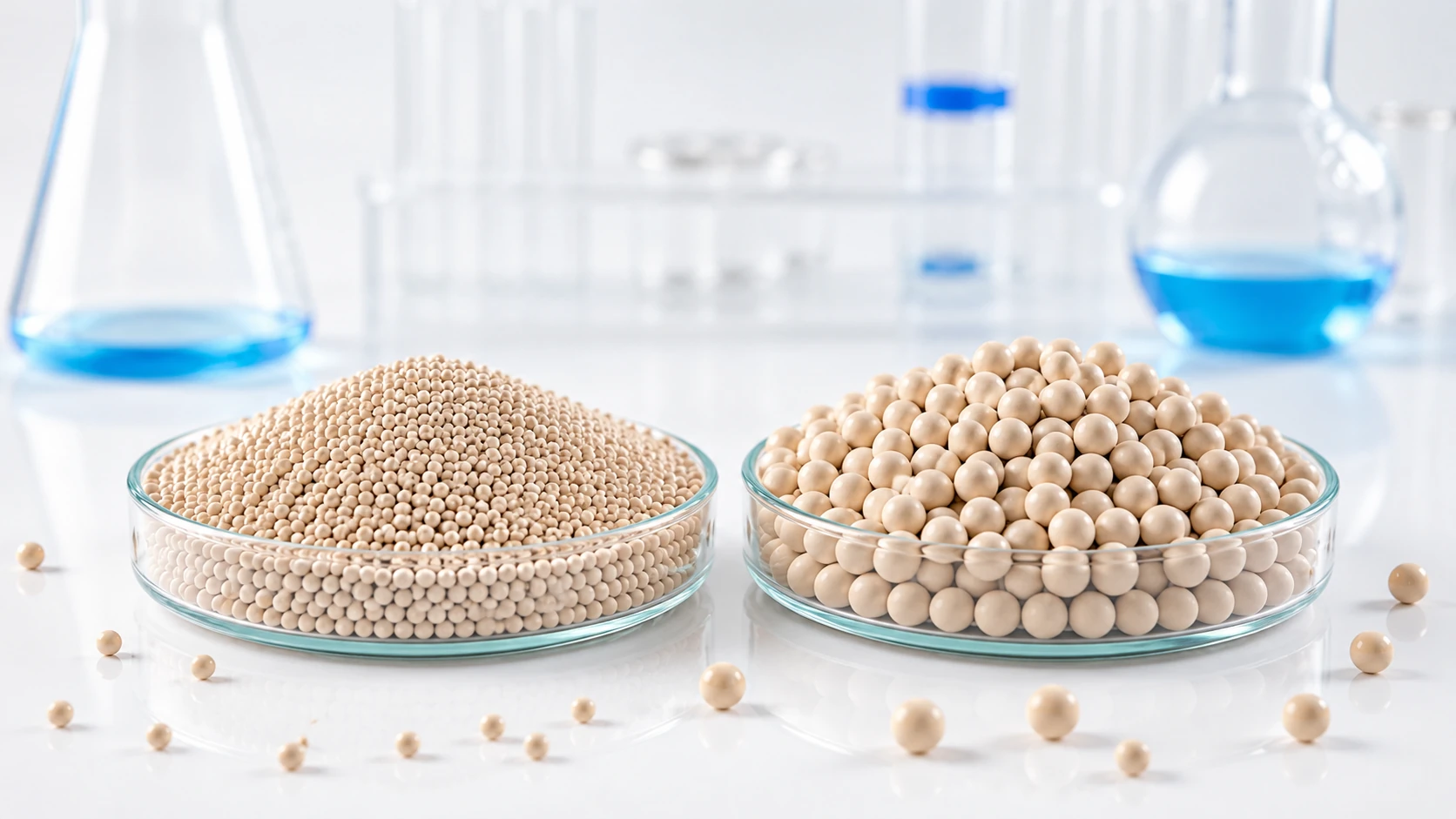
Common size references
Exact availability depends on the selected supply source. The vessel dimensions, loading method, flow direction and allowable pressure drop should be reviewed before changing particle size.
Do not treat visual particle size as an acceptance method. Final inspection should follow the agreed specification and measurement method.
3A Molecular Sieve Packaging and Storage
Molecular sieve begins adsorbing moisture when exposed to ambient air. Packaging must remain sealed and undamaged before loading, and opened material should be handled under a controlled procedure. For shipment planning, see the Adsorbent Packaging and Export Guide.

3A Molecular Sieve Supply and Project Support
Adsorbent Source supplies 3A molecular sieve for new filling, replacement, trial and recurring procurement requirements, with support for grade and particle-size review, samples, technical documents, packaging and export supply.
Application Review
Clarify the stream, target moisture level, operating conditions, cycle and current performance problem.
Grade and Size Coordination
Review available 3A product directions, particle forms and specification points requiring confirmation.
Samples and Documents
Coordinate available TDS, SDS, COA, packing details and sample evaluation requirements.
Commercial and Export Details
Confirm quantity, packaging, labels, pallet requirements, destination and quotation conditions.
What to Send for a Quick 3A Quote
A quick quote does not require a complete process design package. If the grade or particle size is not yet confirmed, send the available application or existing molecular-sieve information and we can review suitable supply options.
Additional Information for 3A Grade Selection
These details are useful for new selection, replacement review or detailed grade matching after the initial inquiry.
3A Molecular Sieve Desiccant Questions
Is 3A molecular sieve a desiccant?
Yes. 3A molecular sieve is used as a selective desiccant because water can enter its approximately 3-angstrom pore system while many larger molecules are largely excluded. The exact grade still needs to match the process, particle-size and regeneration requirements.
What is the main difference between 3A and 4A molecular sieve?
3A is a potassium-exchanged form of A-type zeolite with a smaller effective opening. It is more selective toward water and excludes more larger molecules than 4A.
Why is 3A commonly used for ethanol dehydration?
Water can enter the approximately 3-angstrom pore system while ethanol is largely excluded, supporting selective water removal with limited ethanol co-adsorption.
Can one 3A grade be used for every drying application?
No. Binder system, particle form, strength, adsorption behavior and cycle requirements differ. The selected product must match the process and equipment.
Are beads or pellets better?
Neither form is universally better. The decision depends on vessel design, pressure drop, mechanical strength, loading method and mass-transfer requirements.
Can you help replace an existing molecular sieve?
Yes. Start with the current product name or specification, particle size and required quantity if available. TDS, COA, loading history and operating information can then be reviewed if detailed replacement matching is required.
Can you provide technical documents and samples?
Document and sample availability depends on the selected product and source. State the required TDS, SDS, COA and evaluation quantity during inquiry.
How can I request a 3A molecular sieve price or quotation?
Send the required form and particle size, quantity, application or existing grade, and destination country. Final quotation depends on the selected product specification, packaging, quantity and shipment terms.
Request a 3A Molecular Sieve Quote
Send the required quantity, bead or pellet size, existing grade if available and destination country. For new drying applications, additional process information can be reviewed after the initial inquiry.