Catalyst Carrier Supplier & Reactor Support Media
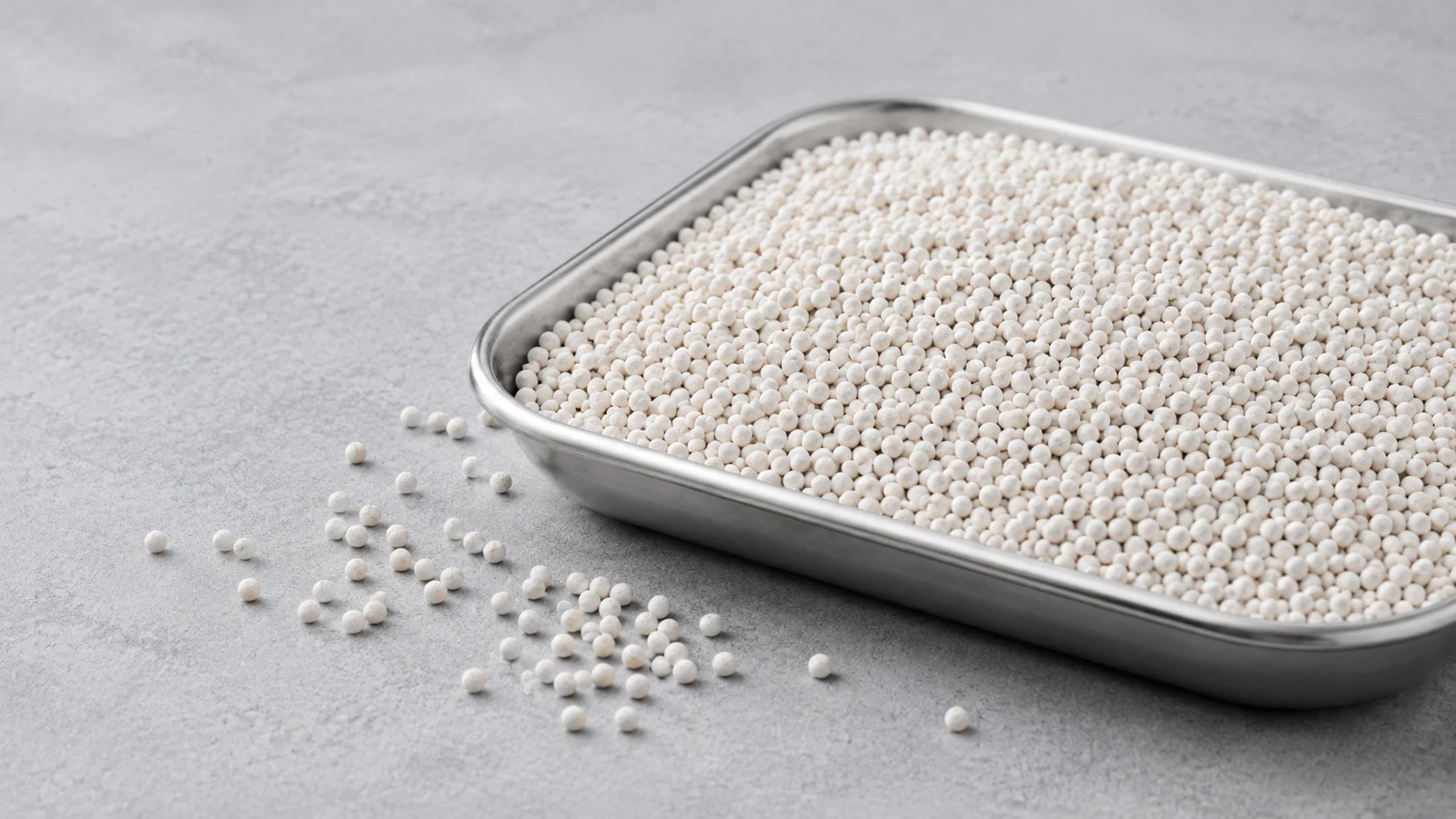
Adsorbent Source supplies activated alumina catalyst carriers, inert ceramic balls and reactor support media for catalyst systems, fixed beds, adsorption towers and process vessels. As a catalyst carrier supplier in China, we help buyers distinguish between active-component carrier materials and inert bed-support media before confirming product specifications, samples, technical documents, packaging and export quotation.
Quick Route
Choose the Correct Product Route
Activated Alumina Catalyst Carrier
For catalyst preparation and supported catalyst systems where pore structure, surface area and active-component compatibility matter.
Inert Ceramic Balls
For inert mechanical support and protection layers in catalyst beds, adsorption towers and process vessels.
Reactor Support Media
For complete bed-support structures where loading position, particle size, mechanical strength and vessel design must be reviewed.
Buyer Quick Guide
Choose the Correct Catalyst Carrier or Support-Media Route
Start with what the material must do inside the reactor. Carrier material and support media may work in the same vessel, but they are selected from different technical requirements.
Carry Active Components
For catalyst preparation where surface area, pore structure, particle form and active-component compatibility matter.
Activated Alumina Catalyst Carrier →Support Catalyst Beds
For inert support layers where mechanical strength, chemical stability, particle size and alumina content matter.
Inert Ceramic Balls →Support Complete Bed Structures
For catalyst beds, adsorption towers and process vessels where loading position, support function and bed structure must be reviewed.
Reactor Support Media →Carrier vs Support Media
Compare active-component carrier functions with mechanical reactor-support functions before selecting a product family.
Catalyst Carrier vs Support Media →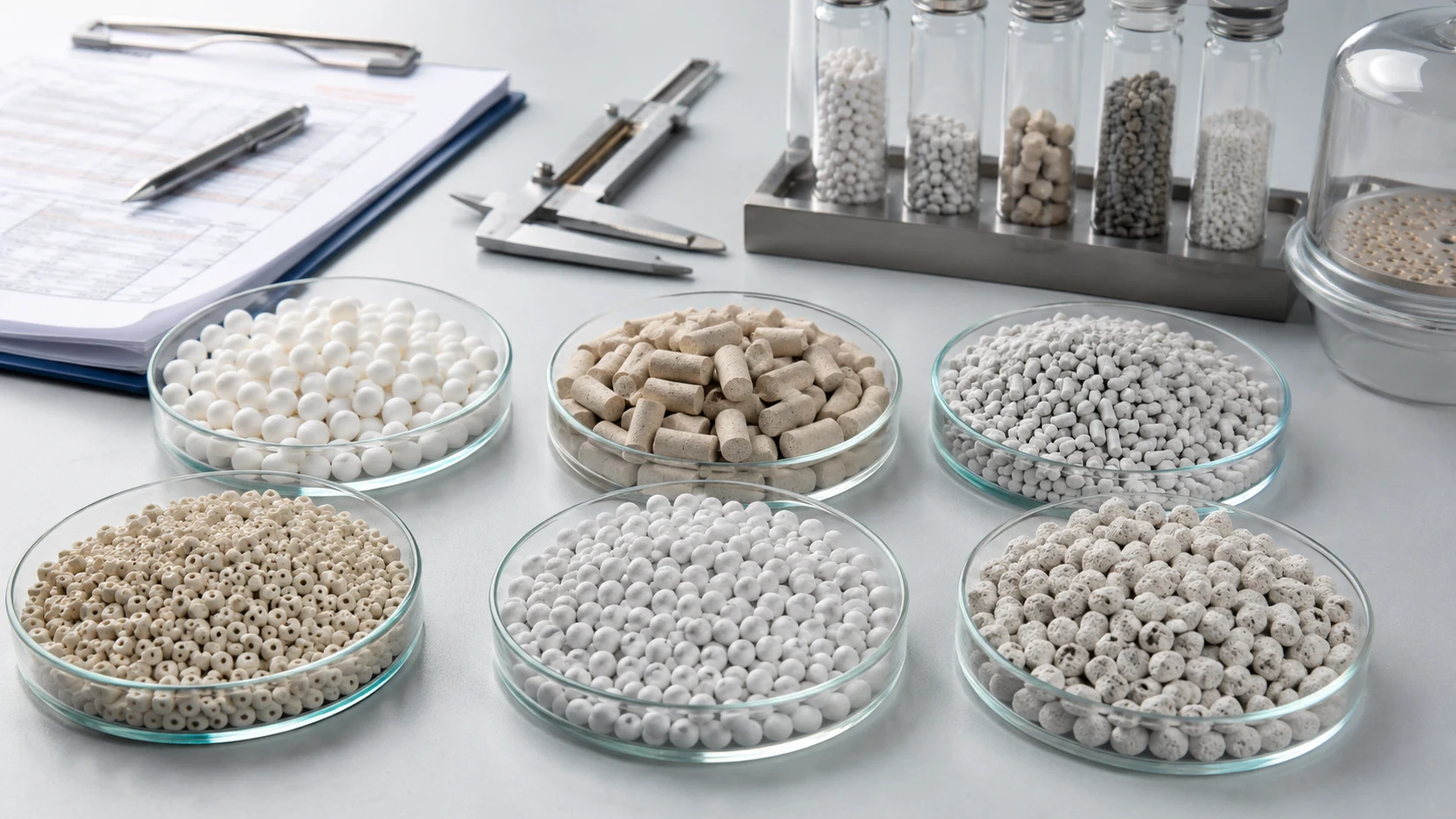
Product Category Overview
What Are Catalyst Carriers and Support Media?
Catalyst carriers are materials used to provide physical structure for active catalytic components. Their selection often focuses on pore structure, surface area, particle form, strength and compatibility with the catalyst formulation.
Reactor support media perform a different function. Inert ceramic balls and related support materials are typically selected to support catalyst or adsorbent layers, protect active media and maintain stable bed structure and flow distribution.
Adsorbent Source groups these materials under the Catalyst Carriers category so buyers can first identify the required reactor function and then move to the correct product page for grade, size, mechanical properties, technical documents and quotation.
Important boundary: Catalyst carrier and reactor support media are not finished catalysts. Final catalyst activity, conversion, selectivity and service life depend on the active catalyst system, formulation, preparation method, loading and operating conditions.
Product Family
Catalyst Carrier and Reactor Support Media Range
The Catalyst Carriers category currently routes to three dedicated product pages with different purchasing and engineering roles.
Activated Alumina Catalyst Carrier
Porous alumina carrier material for selected catalyst preparation and catalyst-support systems where surface area, pore structure, particle size and mechanical strength are important.
View Activated Alumina Catalyst Carrier →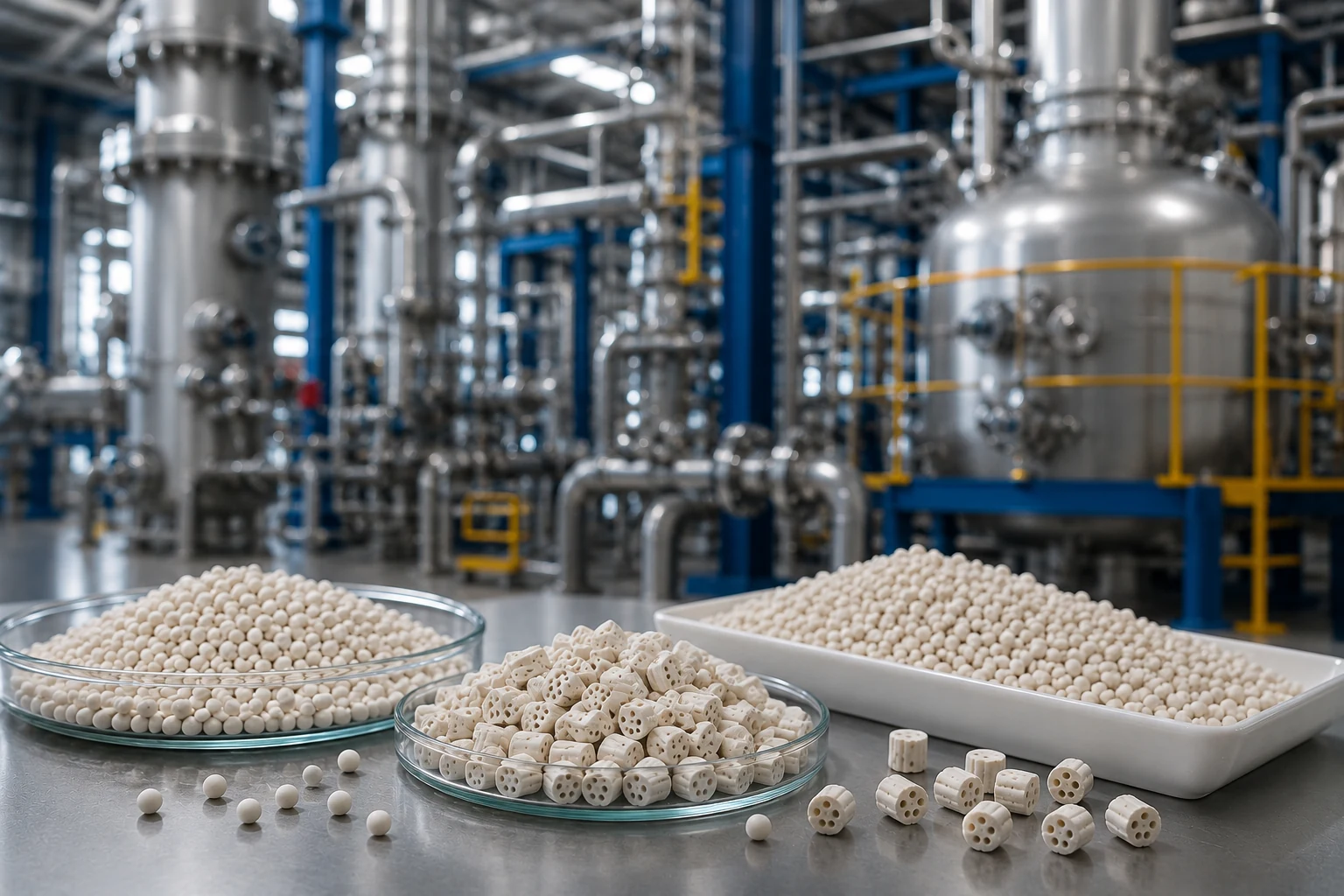
Inert Ceramic Balls
Spherical inert support media for catalyst beds, reactors, adsorption towers and process vessels where strength, chemical stability and bed support are required.
View Inert Ceramic Balls →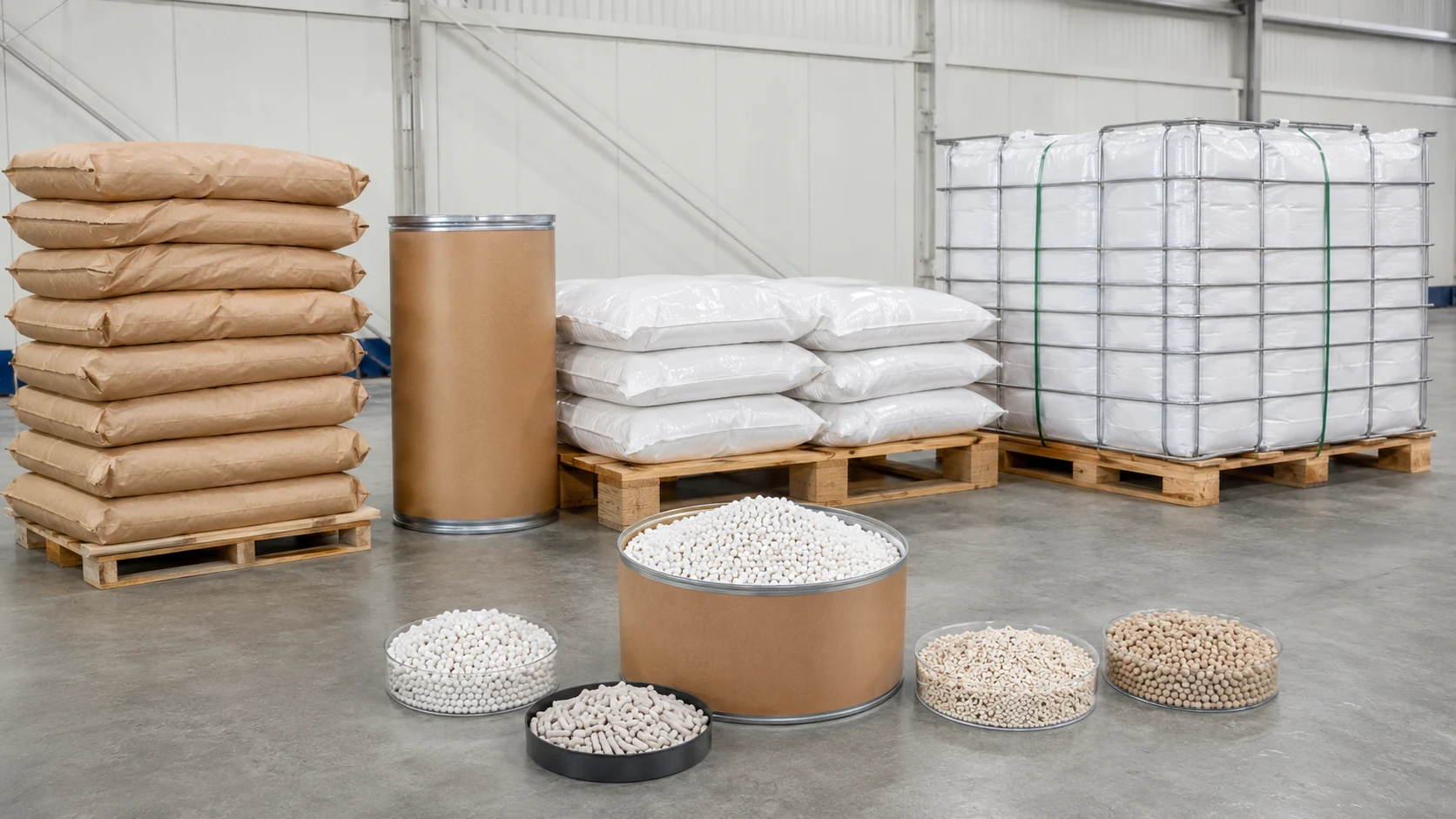
Reactor Support Media
Support media for complete catalyst-bed and process-vessel structures where loading position, support layers, media size and mechanical stability must be confirmed according to the vessel and bed design.
View Reactor Support Media →Product Comparison
Activated Alumina Carrier vs Inert Ceramic Balls vs Reactor Support Media
These product families may appear together in catalyst and reactor projects, but they should not be treated as interchangeable.
| Selection Area | Activated Alumina Catalyst Carrier | Inert Ceramic Balls | Reactor Support Media |
|---|---|---|---|
| Main Function | Support active catalytic components or catalyst preparation. | Provide inert mechanical support for catalyst or adsorbent layers. | Build and protect support layers within reactors and process vessels. |
| Main Selection Focus | Pore structure, surface area, particle form, strength and catalyst compatibility. | Alumina content, particle size, crush strength and chemical stability. | Loading position, bed structure, particle size, strength and media function. |
| Typical Position | Used as carrier material within catalyst preparation or active catalyst systems. | Used below, above or around active catalyst or adsorbent layers. | Used throughout engineered support or protection layers inside the vessel. |
| Important Process Data | Catalyst system, active component, pore requirements and reactor conditions. | Temperature, pressure, chemical environment, bed structure and loading position. | Vessel design, loading plan, operating condition and support function. |
| Primary Product Page | Activated Alumina Catalyst Carrier | Inert Ceramic Balls | Reactor Support Media |
Application Routing
Where Catalyst Carriers and Support Media Are Used
The parent category provides the application direction only. Detailed loading and product specifications belong on the relevant child page.
Catalyst Preparation
Projects involving active-component impregnation, coating or supported catalyst preparation normally begin with a catalyst carrier specification.
Review Catalyst Carrier →Catalyst Bed Support
Mechanical support underneath or above catalyst layers normally requires inert support media selected from strength, size and chemical stability.
Review Inert Ceramic Balls →Reactor Loading
Complete reactor loading plans may require different support layers according to vessel design, bed structure and loading sequence.
Review Reactor Support Media →Adsorption Towers
Support media may be used beneath adsorbent beds to maintain stable packing and protect active media from support-grid openings or flow disturbance.
Review Support Media →Gas & Liquid Distribution
Inert support layers can contribute to bed stability and flow distribution depending on reactor and vessel design.
Review Ceramic Support Balls →Carrier vs Support Decision
When the material function is unclear, compare catalyst carrier and reactor support media before requesting a grade.
Read Carrier vs Support Media Guide →Selection Factors
Information Needed Before Selecting Catalyst Carriers
Correct selection starts with the reactor function and technical requirements, then moves to the relevant material family.
Supply Support
Catalyst Carrier Supplier Support
Adsorbent Source supplies catalyst carrier and reactor-support materials for catalyst preparation, fixed beds, adsorption towers and process vessels. Product route, material grade, particle size, mechanical data, pore data where applicable, samples, technical documents, packaging and export quotation are reviewed according to the confirmed reactor function and purchasing requirement.
Material Routing
Determine whether the project requires a catalyst carrier, inert ceramic balls or broader reactor support media.
Specification Review
Review particle size, material composition, mechanical strength, pore data where applicable, operating condition and reactor requirement.
Samples & Technical Documents
Confirm available samples, TDS, SDS, COA and packing information for the selected material where applicable.
Packaging & Export Supply
Confirm bags, drums, cartons, palletizing, shipment quantity, destination and export packing requirements before order confirmation.
Sourcing Reference
Common Catalyst Carrier Purchasing Data
These are category-level purchasing data points. Final values should be confirmed from the dedicated product page and the applicable technical documents for the selected material.
| Item | What to Confirm | Why It Matters |
|---|---|---|
| Product Family | Catalyst carrier, inert ceramic balls or reactor support media | Different functions require different technical data. |
| Material | Activated alumina, ceramic or selected support material | Material compatibility depends on reactor environment. |
| Shape & Size | Ball, bead, cylinder or other form plus particle-size range | Influences packing, pressure drop and loading design. |
| Mechanical Data | Crush strength, attrition, stability and related product data | Important for loading, support function and bed integrity. |
| Pore Data | Surface area, pore volume and pore-size distribution where relevant | Especially important for catalyst-carrier grades. |
| Operating Conditions | Temperature, pressure and chemical environment | Determines material and grade compatibility. |
| Packaging | Bags, drums or palletized export packing | Should match quantity, handling and shipment requirements. |
| Documents | TDS, SDS, COA and packing information | Confirm availability before final order approval. |
Request a Catalyst Carrier or Reactor Support Media Quote
Already know the required material type, particle size and quantity? Send those first for an initial quotation. Reactor function, loading position, operating conditions, mechanical-strength requirement and pore data are mainly required when product routing or grade selection support is needed.
Adsorbent Source will review the requirement, confirm the applicable product route and quotation basis, and confirm available samples and technical documents where required.
Send Catalyst Carrier RFQFAQ
Catalyst Carriers FAQ
What are catalyst carriers?
Catalyst carriers are support materials used to provide physical structure for catalytic active components. Carrier selection can involve pore structure, surface area, particle form, mechanical strength and compatibility with the catalyst system.
What is the difference between catalyst carrier and reactor support media?
Catalyst carrier generally refers to material intended to support or carry active catalytic components. Reactor support media is mainly selected to support beds, protect active materials and maintain stable loading structure.
What are inert ceramic balls used for?
Inert ceramic balls are commonly used as support or protection layers in catalyst beds, reactors, adsorption towers and process vessels where mechanical strength and chemical stability are required.
When should activated alumina catalyst carrier be selected?
Activated alumina catalyst carrier is reviewed when catalyst preparation or supported catalyst systems require defined alumina pore structure, surface area, particle form and mechanical properties.
What information is needed for reactor support media?
Important information includes reactor or vessel type, bed structure, loading position, operating temperature, pressure, process composition, particle size, strength and filling quantity.
Are catalyst carriers finished catalysts?
No. A catalyst carrier is the support material. Finished catalysts normally include active catalytic components combined with or deposited onto a carrier.
What documents are available for catalyst carrier and support-media orders?
Available documentation may include TDS, SDS, COA, packing information and applicable export documents according to the confirmed material, product grade and order requirement.