Activated Alumina Balls
Adsorbent Source supplies activated alumina balls and spherical activated alumina beads for industrial packed beds, dryer towers, water-treatment vessels and other grade-specific applications. Buyers can compare particle size, spherical form, mechanical strength, bulk-density and filling requirements, packaging, technical documents and the correct downstream grade before quotation.
Activated Alumina Balls Procurement Checklist
“Activated alumina balls” describes the spherical product form, not one universal application grade. Confirm the physical specification first, then route the project to the correct drying, fluoride-removal or support-media grade.
Product Form
Spherical porous alumina balls or beads for packed-bed adsorption and support-media applications.
Particle Size
Confirm bead-size range and distribution according to vessel design, pressure drop, flow and existing media.
Physical Data
Compare bulk density, crush strength, attrition or fines, moisture and other grade-specific TDS values.
Grade Direction
Drying, fluoride removal and catalyst-support duties require separate grade confirmation rather than selection by appearance.
What Are Activated Alumina Balls?
Activated alumina balls are spherical porous aluminum oxide media designed to provide high surface area, mechanical stability and consistent packed-bed handling. In purchasing language, “balls” and “beads” commonly describe the physical form of activated alumina rather than a single fixed application specification.
Different activated alumina ball grades can be produced for different duties. A desiccant grade for compressed-air drying, a fluoride-removal grade for water treatment and a catalyst-support grade may look similar but can have different pore properties, particle-size tolerances, crush strength, bulk density and performance data.
For the broader product family, return to Activated Alumina . For a specific application, use the grade-routing section below instead of selecting only by bead appearance.
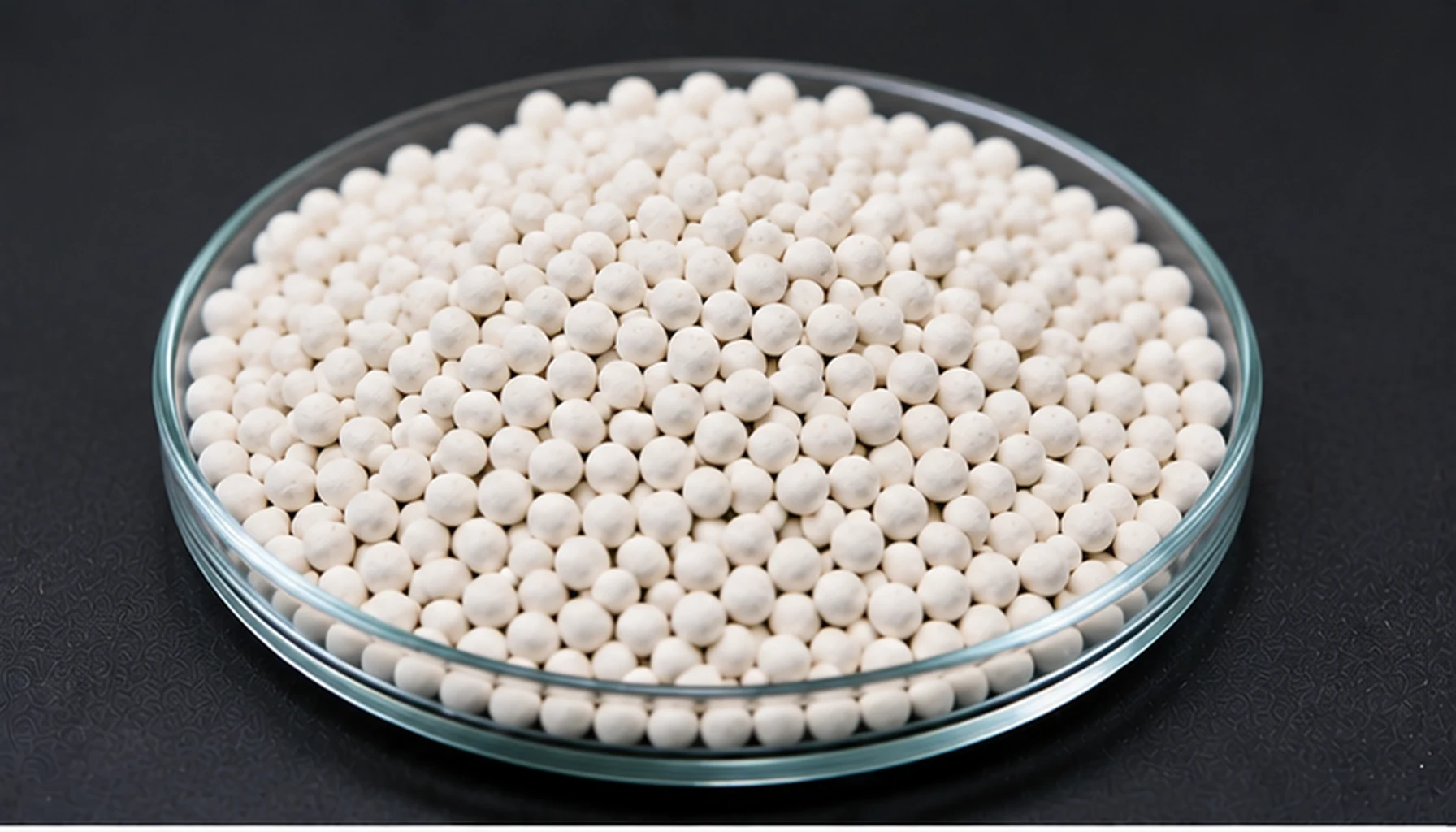
Key Physical Properties of Activated Alumina Balls
For a product-form page, the most useful comparison is the physical specification that affects loading, pressure drop, handling and replacement compatibility. Exact values should be confirmed against the selected grade TDS and COA.
Spherical Shape
Uniform round beads support repeatable packing, handling and gas or liquid distribution inside adsorption vessels.
Particle Size Range
Bead size influences pressure drop, contact behavior, bed packing and compatibility with support screens or distributors.
Crush Strength
Mechanical strength is important for packed beds, repeated loading, regeneration cycles and reducing breakage.
Bulk Density & Filling
Bulk density affects how much activated alumina is required to fill a given vessel volume and matters in replacement projects.
Activated Alumina Balls Specifications to Confirm
Use the TDS and batch documents available for the grade under review during final approval. These are the main physical and procurement specifications to check before sample, trial or bulk purchasing.
| Specification | What to Confirm |
|---|---|
| Product Form | Spherical activated alumina balls or beads; confirm grade-specific appearance and consistency. |
| Particle Size | Required size range and distribution according to vessel, pressure-drop limit and existing media specification. |
| Bulk Density | Supplier TDS or COA value used to estimate filling weight from bed volume and replacement requirements. |
| Crush Strength | Grade-specific mechanical-strength data suitable for transport, loading and intended packed-bed duty. |
| Attrition / Fines | Dust, abrasion or fines limits where handling, valves, downstream filtration or bed stability are important. |
| Moisture | Storage and delivery condition plus any grade-specific moisture limit stated on TDS or COA. |
| Adsorption / Pore Data | Use only technical indicators relevant to the selected application grade for final approval. |
| Packaging | Bags, drums or palletized export packaging according to quantity, moisture protection and shipment requirements. |
| Documents | TDS, SDS, COA, packing information and available export documents for the grade under review. |
Choose the Application Grade After Confirming the Ball Specification
This page covers the activated alumina ball and bead product form. Detailed application selection belongs on the dedicated product or application page.
Air & Gas Drying
For compressed-air dryers, instrument air and gas dehydration, continue to the dedicated desiccant product and dryer application pages.
Activated Alumina Desiccant →Compressed Air Drying Adsorbents →
Fluoride Removal
Water-treatment projects require fluoride concentration, pH, water chemistry, bed design and operating data rather than ball size alone.
Activated Alumina for Fluoride Removal →Catalyst Support
Catalyst support and carrier duties require dedicated pore, surface, strength and chemistry specifications rather than a generic activated alumina-ball grade.
Review Catalyst Carriers →How to Specify Activated Alumina Balls for Procurement
A useful RFQ should identify the physical product specification and final application grade. This reduces the risk of matching a product only by the words “activated alumina balls.”
Required Application
Drying, fluoride removal, support media or another defined industrial duty.
Existing Grade
Current supplier, product name, TDS, COA or reference sample for replacement projects.
Particle Size
Required bead-size range and tolerance or screen requirement from existing equipment.
Bulk Density
Important when calculating replacement filling quantity from tower or vessel volume.
Mechanical Strength
Crush-strength, attrition and dust requirements for loading, operation and transport.
Bed Information
Vessel dimensions, bed depth, support structure, current filling weight and pressure-drop requirement.
Packaging
Required bag or drum format, palletizing, moisture protection and shipping marks.
Documentation
TDS, SDS, COA, packing details, destination and export-document requirements.
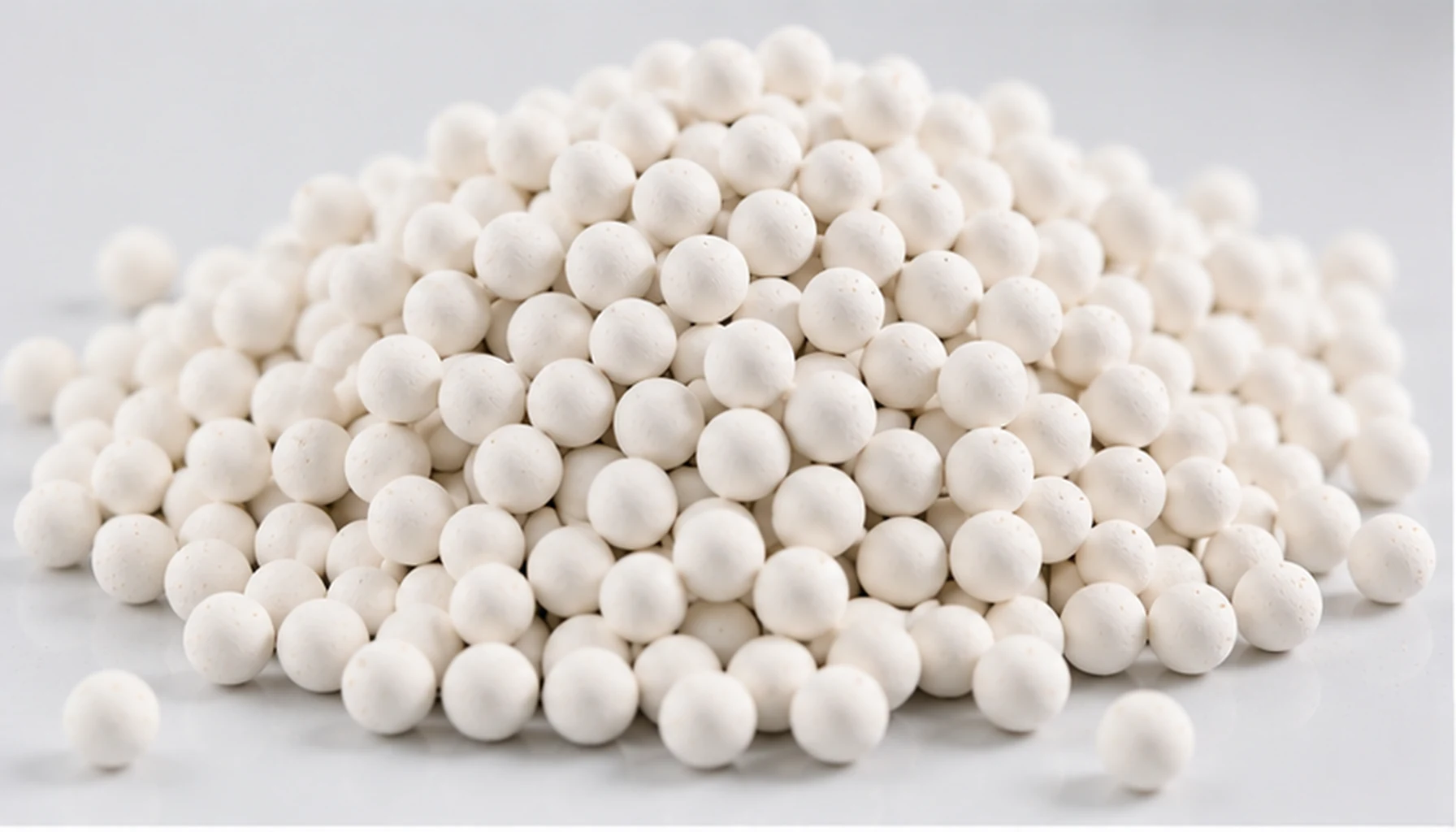
Match Ball Size and Filling Data Before Replacing Existing Media
Existing bead size and filling weight are useful starting points, but they are not enough by themselves. Bulk density, vessel volume, product grade and operating duty should also be checked before changing suppliers.
- Record existing supplier, grade and particle size
- Confirm vessel dimensions and current filling quantity
- Compare bulk density before calculating replacement weight
- Review crush strength, fines and current media condition
- Confirm the new grade is qualified for the same application
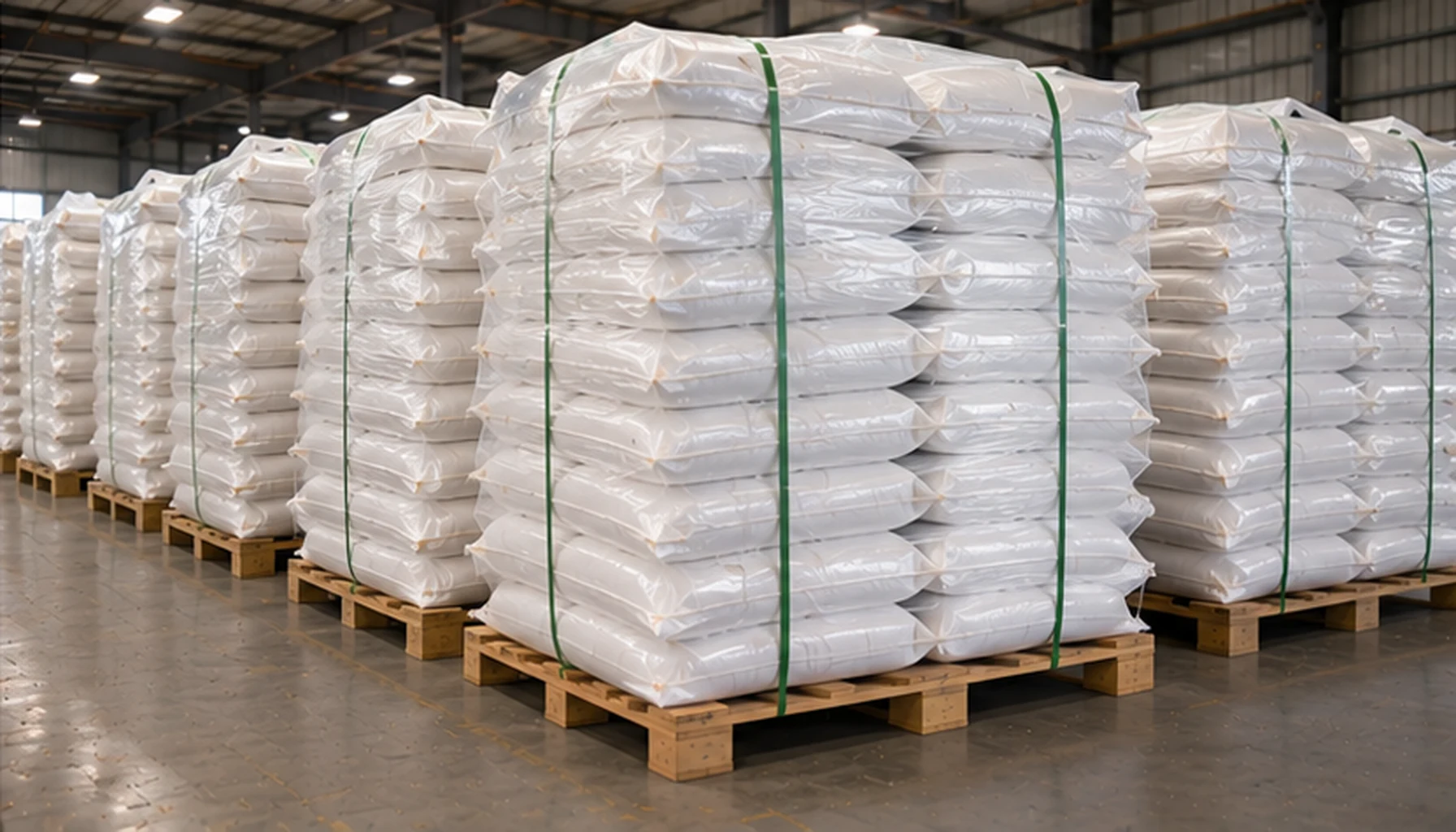
Activated Alumina Balls Packaging and Supply Support
For each activated alumina balls inquiry, Adsorbent Source reviews the requested grade and specification, then checks sample, packaging, technical-document and export-supply availability.
Grade Confirmation
Match spherical media to the intended drying, fluoride-removal or support-media specification.
Sample Review
Sample or trial-quantity availability can be checked when useful for qualification.
Technical Documents
Availability of TDS, SDS, COA and packing information can be checked for the grade under review.
Export Packing
Confirm moisture-protected bags or drums, palletizing, labels and shipment requirements.
Four Steps to Specify Activated Alumina Balls
Start from the physical product form, then confirm the application grade and available grade-specific technical data. This is more reliable than approving media from color, appearance or a generic product name.
1. Define the Duty
Confirm drying, fluoride removal, catalyst support or another specific application.
2. Match the Physical Form
Confirm spherical bead size, bulk density, filling quantity and vessel requirements.
3. Review Grade Data
Compare strength, attrition, moisture and application-specific TDS or COA parameters.
4. Confirm Supply
Align sample, packing, documents, quantity, destination and shipment requirements.
Send Your Activated Alumina Balls Requirement
Share the application, existing grade if any, particle size, vessel or filling information, physical specification, quantity and destination. Adsorbent Source will review the application and specifications, then check the availability of the requested grade and technical documents.
Request Activated Alumina Balls QuoteRecommended RFQ Information
- Application
- Existing supplier / grade
- Required particle size
- Bulk density requirement
- Crush strength requirement
- Attrition / fines requirement
- Vessel dimensions
- Existing filling quantity
- Operating condition
- Required packaging
- Estimated quantity
- Destination country
- TDS / SDS / COA needs
- Reference sample availability
Activated Alumina Balls FAQ
What are activated alumina balls?
Activated alumina balls are spherical porous aluminum oxide media used in packed adsorption beds and other grade-specific industrial applications. “Balls” and “beads” normally describe the product form rather than one universal application grade.
Are activated alumina balls and activated alumina beads the same?
In many purchasing contexts, both terms refer to spherical activated alumina media. Final approval should still be based on grade, particle size, bulk density, strength and application-specific technical data.
What particle size should I order?
Particle size should match vessel design, flow, pressure-drop limit, support screens, existing media and intended application.
Why is bulk density important?
Bulk density helps determine how much activated alumina is required to fill a given bed volume. A change in bulk density can change replacement filling weight even when vessel dimensions stay the same.
Why should crush strength and attrition be checked?
Mechanical strength and attrition affect handling, dust generation, bed stability and the ability of the media to withstand transport, loading and operation.
Can the same activated alumina balls be used for drying and fluoride removal?
They should not be assumed to be interchangeable. Drying and fluoride-removal grades can have different performance priorities and qualification data even when both are supplied as white spherical beads.
Can activated alumina balls be used as catalyst support?
Some alumina products are designed for catalyst-support duties, but catalyst carriers should be selected from dedicated surface, pore, chemistry and mechanical specifications rather than a generic activated alumina-ball description.
What information should I send for a quote?
Send the application, existing grade, particle size, bulk density or strength requirements if known, vessel or filling information, quantity, packaging, destination and required documents.
What product documents may be available?
Availability of TDS, SDS, COA, packing information and export documents depends on the selected grade and order requirements and can be confirmed for each inquiry.