Water Treatment Adsorbents for Industrial and Drinking Water Systems
Compare water treatment adsorbents, including activated alumina, granular activated carbon and powder activated carbon, according to water quality, target contaminant, flow rate, contact time, treatment method, vessel design and replacement requirements.
For fluoride-focused projects, review the Activated Alumina Fluoride Removal product. Before requesting a quotation, also review the TDS, SDS and COA requirements and Adsorbent Packaging and Export Guide. For fluoride removal quotations based on an actual water report, see the Activated Alumina Water Analysis and RFQ Guide.
Start With the Contaminant, Not Only the Adsorbent Name
Water treatment is an application field, not a complete product specification. The correct material depends on what must be removed, the inlet concentration, required outlet concentration, pH, competing substances, treatment flow and equipment design.
Activated alumina, granular activated carbon and powder activated carbon use different treatment mechanisms and system arrangements. Even products within the same material family may have different particle size, pore structure, ash, hardness and adsorption behavior.
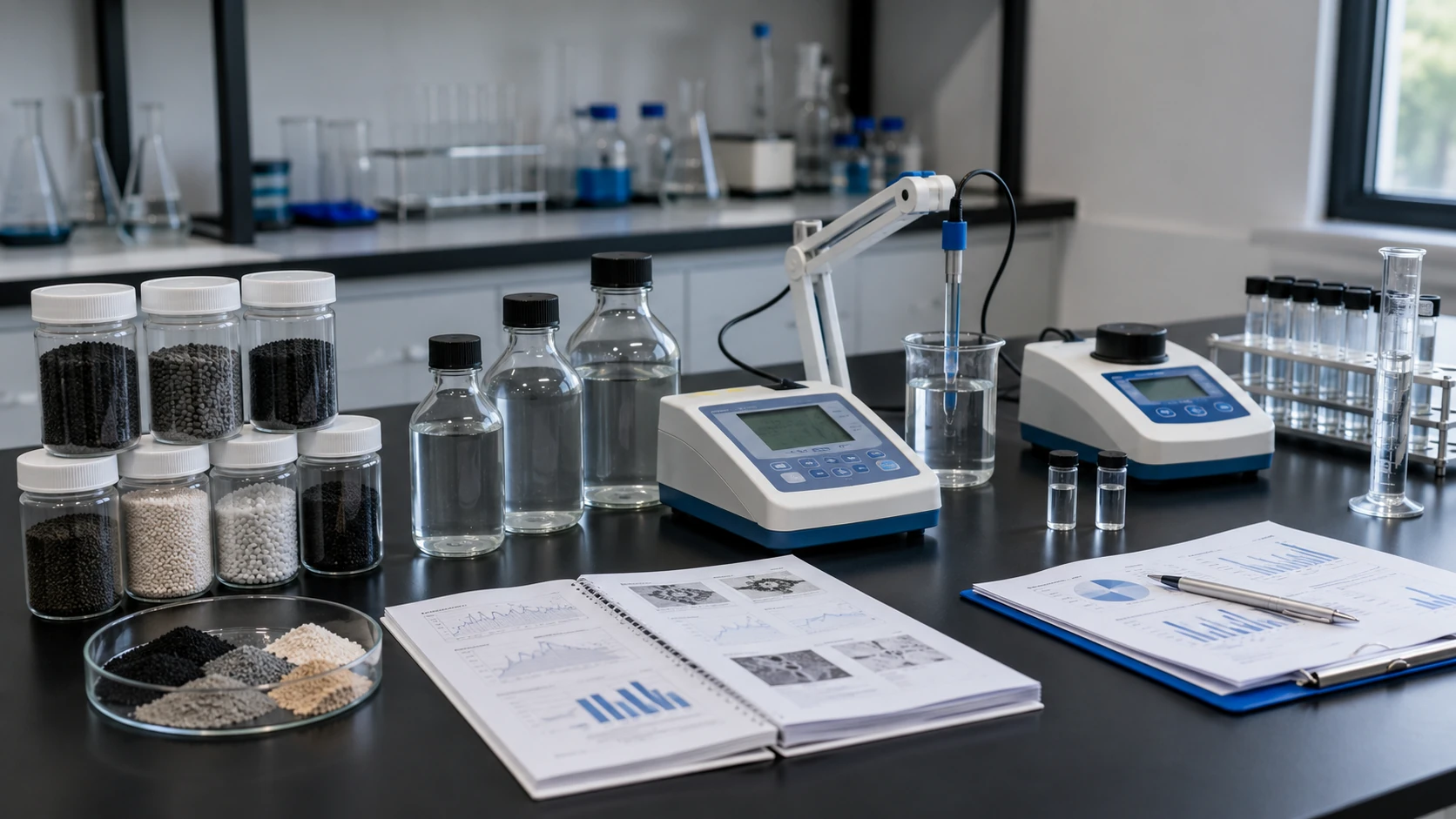
Common Water Treatment Targets to Clarify
Different targets may require different media, pretreatment, testing and monitoring strategies. Mixed water matrices should be reviewed as a complete system.
Main Water Treatment Adsorbent Options
Adsorbent Source supports initial comparison of activated alumina, granular activated carbon and powder activated carbon for fixed-bed filtration, dosing treatment, fluoride reduction, organic contaminant control, odor treatment and replacement projects.
Final approval should follow the water analysis, treatment target, operating design and supplier-specific technical data.
Activated Alumina
Activated alumina is reviewed for fluoride reduction and selected water-treatment adsorption duties in vessels or filter columns.
- Drinking water and groundwater fluoride reduction
- Fixed-bed adsorption vessels
- New filling and replacement media projects
- pH, competing ions and contact time are critical
Granular Activated Carbon
GAC is used in packed beds, filters and adsorption columns for continuous treatment of selected organic contaminants, taste, odor and color-related compounds.
- Fixed-bed water filters and adsorption columns
- Organic contaminant and odor control
- Continuous operation with breakthrough monitoring
- Particle size, hardness, EBCT and pressure drop matter
For an existing fixed-bed filter, use the GAC Particle Size and Mesh Selection Guide to check the retained media size, and the Activated Carbon Purchase Specification to define grade tests and lot acceptance before bulk ordering.
Powder Activated Carbon
PAC is a fine carbon powder used for liquid dosing, mixing, decolorization, odor control and selected batch-treatment duties.
- Mixing tanks and chemical-dosing systems
- Temporary, seasonal or batch treatment
- Decolorization and selected organic removal
- Downstream solids separation is required
Activated Alumina, GAC and PAC Comparison
This table is an initial purchasing reference. Final approval requires water analysis, treatment targets, process design and supplier-specific product data.
| Selection Factor | Activated Alumina | Granular Activated Carbon | Powder Activated Carbon |
|---|---|---|---|
| Main Direction | Fluoride and selected inorganic adsorption | Fixed-bed organic adsorption | Dosing and batch liquid treatment |
| Typical System | Adsorption vessel or filter column | Fixed bed, filter or adsorption column | Mixing tank or dosing system |
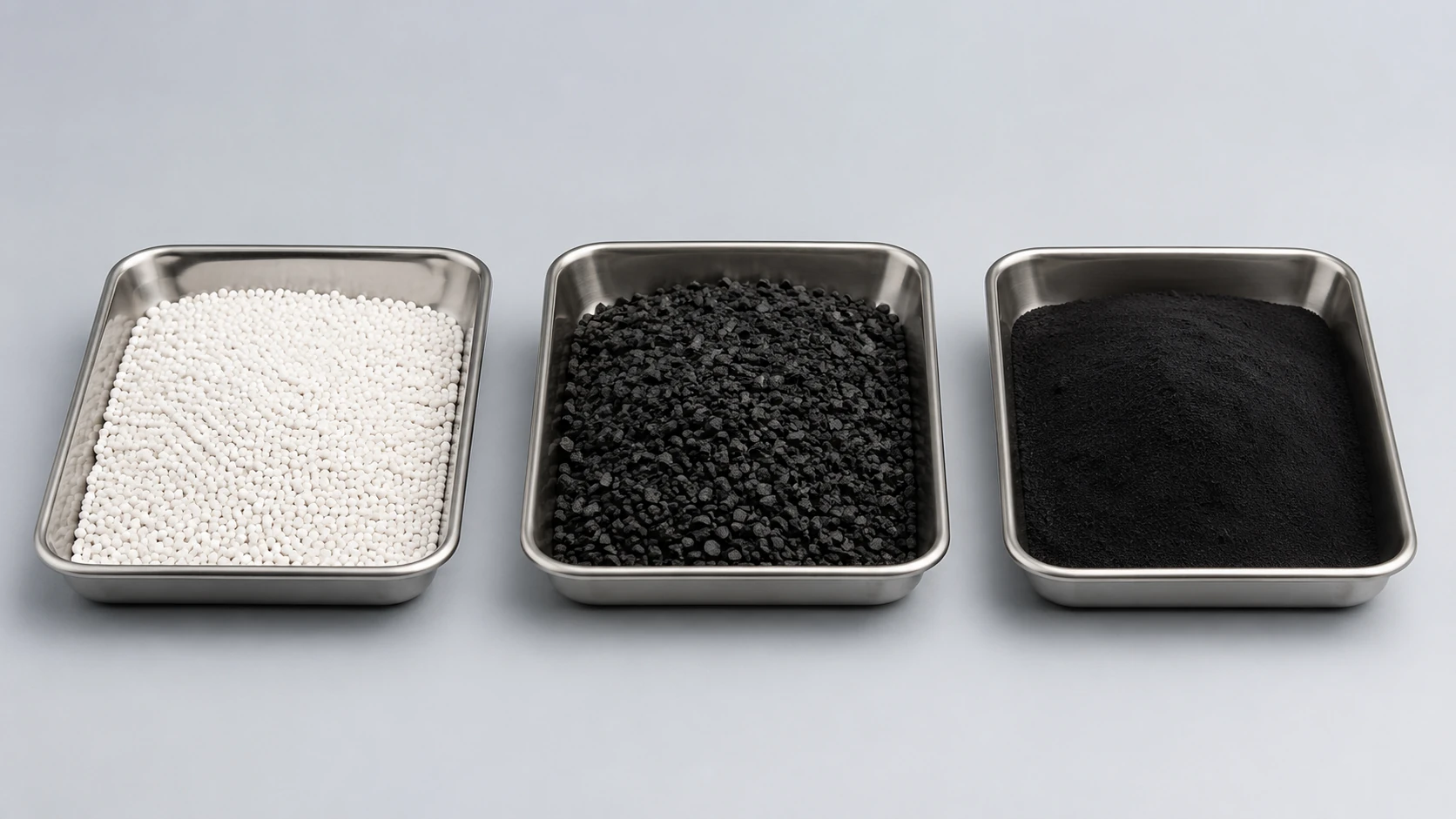
| Material Form | White spherical or granular media | Black granules | Fine black powder |
| Main Design Data | pH, fluoride, competing ions and contact time | Target organic, bed depth, EBCT and pressure drop | Dosage, mixing time, contact time and separation |
| Reuse Direction | Regeneration or replacement may be reviewed | Reactivation or replacement may be reviewed | Usually removed after treatment |
| Main Risk | Ignoring water chemistry and pH | Selecting only by iodine value | No effective downstream solids separation |
| Final Approval | Water analysis and bed-design review | Water analysis, product data and pilot evidence | Jar test or process trial |
GAC and PAC Are Not Directly Interchangeable
Both materials are activated carbon, but their physical form, handling method, equipment arrangement and downstream operation are fundamentally different.
Granular Activated Carbon
GAC is retained inside a fixed bed, filter or adsorption column. Water flows through the carbon bed during continuous treatment.
- Granular form retained inside a vessel
- Suitable for continuous operation
- Requires pressure-drop and flow-distribution control
- May require backwashing depending on the system
- Breakthrough is monitored at the outlet
- Replacement requires bed removal and refilling
Powder Activated Carbon
PAC is dosed directly into the liquid and dispersed through mixing. After the contact period, the powder must be separated from the treated liquid.
- Fine powder added through a dosing system
- Suitable for batch, temporary or variable treatment
- Requires mixing and controlled contact time
- Dosage is commonly established through testing
- Needs sedimentation, filtration or other separation
- Not used as a conventional loose fixed-bed substitute
Why Water Quality Changes Adsorption Performance
The same adsorbent can have very different actual capacity and breakthrough time in different water sources. Selection should not rely only on a laboratory index.
How a Fixed-Bed Water Adsorption System Works
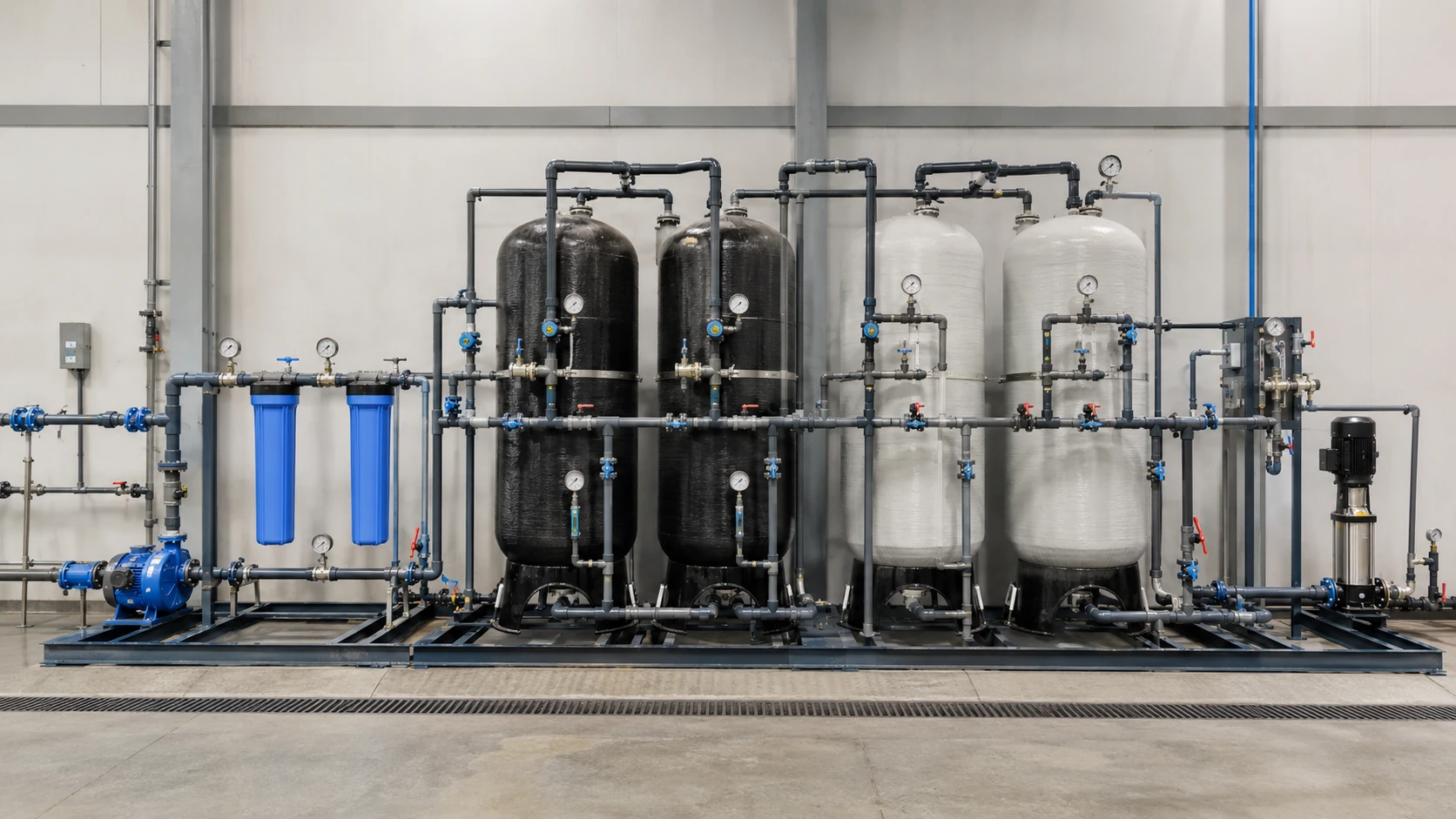
In a fixed-bed system, pretreated water passes through one or more vessels filled with granular activated carbon, activated alumina or another specified medium.
The system should control suspended solids, flow distribution, pressure drop and contact time. Media condition is monitored through inlet and outlet water analysis rather than replacement by calendar time alone.
Water Review
Confirm the source water, target contaminant and complete analysis.
Pretreatment
Reduce suspended solids, oil, turbidity and other media-fouling loads.
Bed Entry
Water enters the vessel through a designed flow-distribution system.
Adsorption
Target contaminants contact the selected adsorbent inside the bed.
Treated Outlet
Treated water exits through the media-support and collection system.
Monitoring
Inlet and outlet concentrations, flow and pressure drop are tracked.
Media Action
The bed is regenerated, reactivated or replaced according to the design.
Why Treatment May Remain Poor After Media Replacement
Replacing the media alone cannot correct an unsuitable material, incomplete water analysis, poor flow distribution or upstream treatment failure.
New Systems and Replacement Projects Need Different Data
New Water Treatment System
A new system should be evaluated from the water analysis, treatment target and process design.
- Complete source-water analysis
- Target contaminant and inlet concentration
- Required outlet concentration
- Daily treatment capacity and peak flow
- Fixed-bed, dosing or batch process
- Contact time, bed depth or PAC dose
- Regeneration, reactivation or disposal strategy
Existing Media Replacement
Replacement should begin with the original media record and historical inlet and outlet performance.
- Original product and supplier
- Original TDS and particle size
- Original filling quantity
- Service time and treatment history
- Current pressure drop and breakthrough data
- Backwash or regeneration record
- Evidence of caking, powdering or media loss
Information Needed for Water Treatment Adsorbent Review
Complete water and system data helps compare material direction, particle size, treatment method, filling quantity, packaging and documentation.
Send the Water Analysis and Treatment System Data
Adsorbent Source supplies industrial adsorbents and reviews the requested grade, water analysis and equipment data for each inquiry.
Sample and TDS, SDS and COA availability, particle-size information, packaging and export-supply details can be checked for the requested grade and order requirements.
Request Water Treatment Review
Compare Water Chemistry, Media Form and System Design Together
Adsorbent Source supports industrial buyers, water-treatment contractors and replacement-media users by organizing water analysis, treatment targets, existing media information and supplier documents.
We do not confirm contaminant removal, bed life or treatment capacity from a general product name, iodine value or surface-area number alone. Final approval should follow the selected product data, water matrix and system design.
Water Treatment Adsorbent Questions
What adsorbents are used in water treatment?
Common directions include activated alumina for fluoride reduction, granular activated carbon for fixed-bed organic adsorption and powder activated carbon for dosing and batch treatment.
What is activated alumina used for in water treatment?
Activated alumina is commonly reviewed as an adsorption medium for fluoride reduction in drinking water, groundwater and selected industrial water-treatment systems.
What is the difference between GAC and PAC?
GAC is granular media retained in fixed beds or filters. PAC is fine powder dosed into water, mixed for a contact period and then removed through solids-separation equipment.
Can granular activated carbon remove all contaminants?
No. GAC performance depends on the contaminant, carbon pore structure, water matrix, flow, bed depth, contact time and competing substances.
Is iodine value enough to select activated carbon?
No. Iodine value is a general reference and does not prove performance for every organic compound. Raw material, pore distribution, particle size, hardness, ash and target-specific testing should also be considered.
How does pH affect activated alumina performance?
pH changes surface and contaminant behavior and can strongly affect fluoride adsorption. Selection should use the actual source-water pH and complete water chemistry.
How is an adsorbent bed size calculated?
Bed size depends on treatment flow, contact time, contaminant loading, expected capacity, vessel design, hydraulic loading, media density and operating strategy.
Why does a water adsorption bed break through early?
Early breakthrough may result from incorrect media, excessive flow, insufficient bed depth, competing substances, water changes, poor distribution, channeling or media fouling.
Can spent granular activated carbon be regenerated?
Reactivation may be considered depending on carbon type, contamination, quantity, local facilities, transport and economic conditions. Otherwise, the media may be replaced.
How should powder activated carbon be removed after dosing?
PAC normally requires downstream sedimentation, filtration, membrane separation or another suitable solids-removal step after mixing and contact.
What data is needed for a replacement media review?
Provide the complete water analysis, treatment target, system type, flow, vessel dimensions, bed depth, original media, particle size, filling quantity, service history and current performance.
What product documents may be available?
Availability of samples, TDS, SDS, COA, packing details and export documents depends on the requested grade and order requirements and can be checked for each inquiry.
Select the Adsorbent From the Water Analysis and Treatment Target
Send the water source, complete analysis, target contaminant, inlet and outlet concentrations, pH, flow, treatment method, vessel or dosing data, original media and required quantity. Adsorbent Source can review requested grades, document availability and export-supply requirements against the water analysis and equipment data provided.