PSA Oxygen Generation Adsorbents for Industrial Oxygen Systems
Compare PSA oxygen-generation adsorbents, including approved sodium-type and lithium-type oxygen molecular sieve grades, according to the oxygen target, flow rate, feed-air quality, pressure cycle, particle size and adsorption-bed design.
How to Select Molecular Sieve →
TDS vs SDS vs COA for Adsorbents →
Adsorbent Packaging and Export Guide →
How PSA Oxygen Generation Works
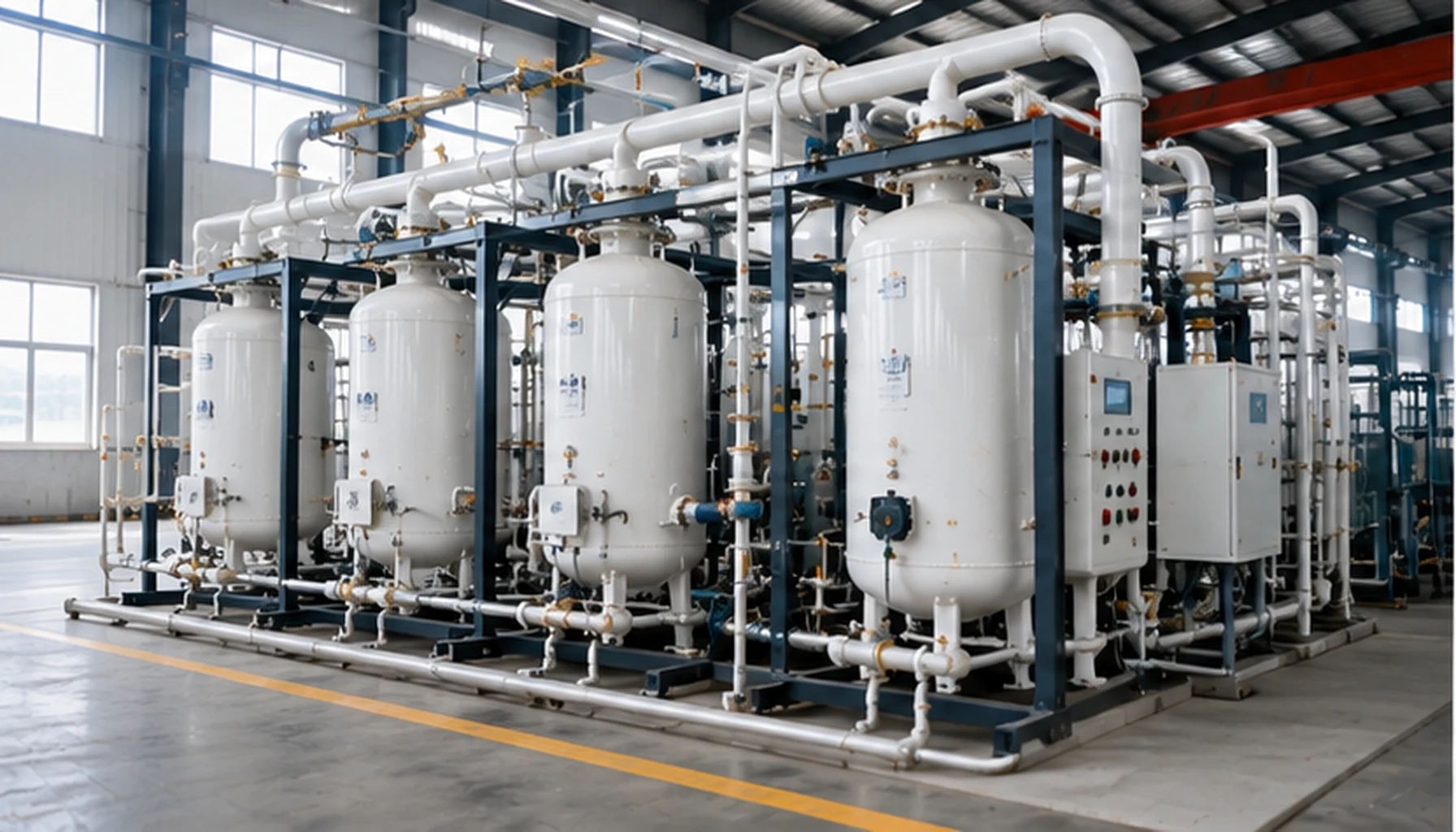
A PSA oxygen generator uses molecular sieve adsorption beds to preferentially retain nitrogen from pretreated compressed air. Oxygen and other less strongly adsorbed components pass through the bed and form the oxygen-enriched product stream.
The adsorption towers alternate between pressurization, adsorption, depressurization, regeneration and pressure equalization. The molecular sieve is the separation medium, but oxygen concentration, flow and recovery also depend on the tower design, valve sequence, pressure profile and feed-air condition.
Four Main Stages in a PSA Oxygen System
The exact sequence varies by equipment design, but most systems combine feed-air pretreatment, pressurized adsorption, oxygen collection and bed regeneration.
Feed-Air Pretreatment
Compressed air is cooled, separated, filtered and dried to reduce liquid water, oil aerosols, particles and excessive moisture before entering the adsorption towers.
Pressurized Adsorption
Air enters the active bed under pressure. The selected molecular sieve preferentially adsorbs nitrogen according to its dynamic performance and the operating cycle.
Oxygen Enrichment
Oxygen-enriched gas leaves the active vessel and enters the product buffer or downstream oxygen-use system according to the equipment arrangement.
Depressurization and Regeneration
The offline tower releases the adsorbed nitrogen during depressurization or vacuum regeneration before it returns to the next adsorption cycle.
PSA Oxygen Generation Adsorbents: Material Options
Oxygen molecular sieve selection should begin with the generator model, PSA or VPSA cycle, target oxygen flow, adsorption pressure, tower dimensions, original grade and feed-air quality.
The site lists 13X APG for cryogenic air-separation prepurification. That material must not be presumed suitable for PSA oxygen generation. Oxygen-production grades require supplier-specific nitrogen adsorption data and equipment approval.
13X APG Molecular Sieve
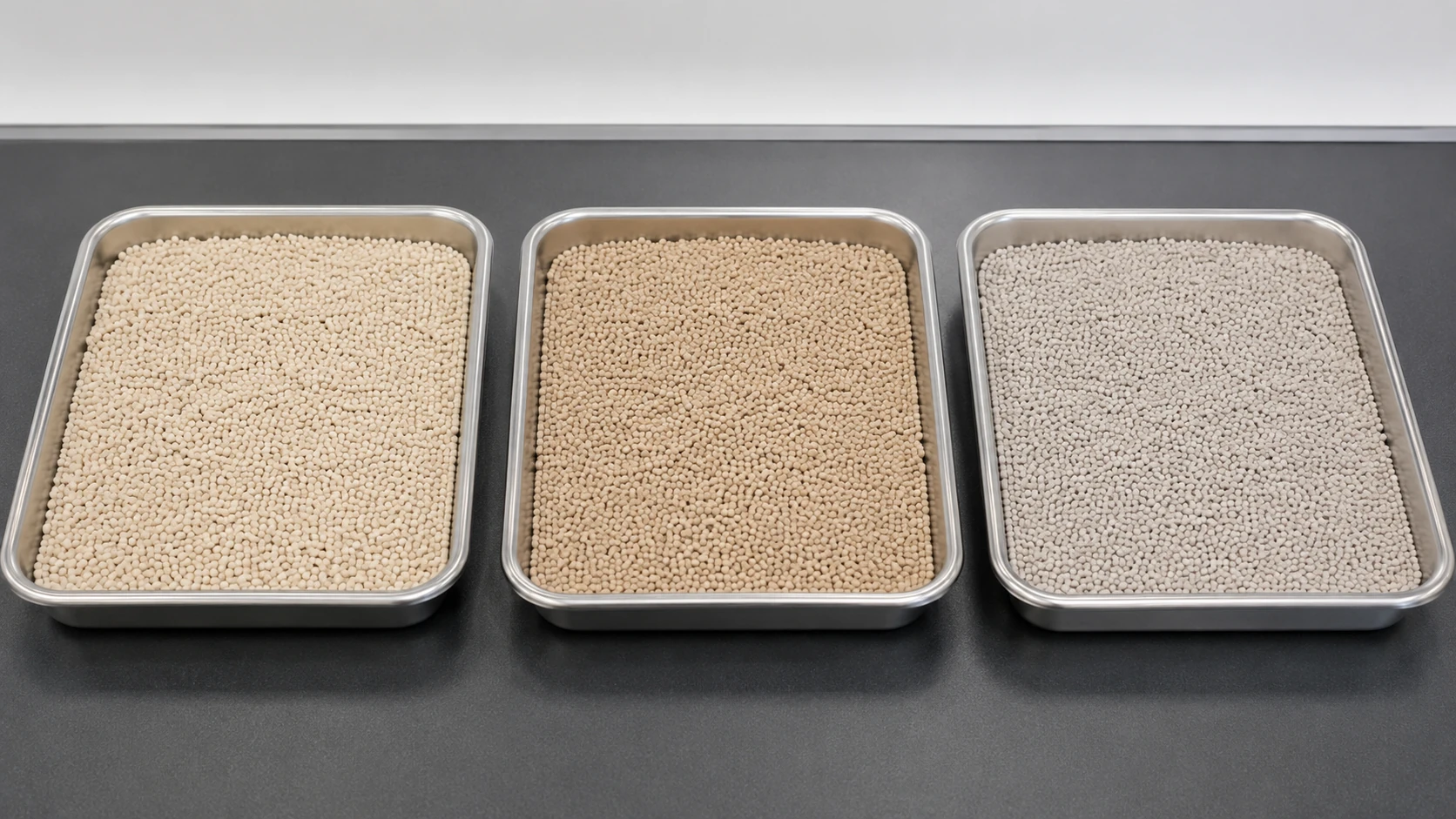
13X APG is commonly supplied for H₂O and CO₂ removal in cryogenic air-separation prepurification, rather than as a general-purpose PSA oxygen-production grade. Confirm the original generator grade and intended separation mechanism before ordering.
- Cryogenic ASU feed-air prepurification is a different process
- Do not infer PSA oxygen suitability from the APG label
- Confirm project-specific supplier TDS and OEM approval
- Particle size and cycle data must be confirmed
Lithium Oxygen Molecular Sieve
Lithium-exchanged oxygen molecular sieve may be reviewed for selected high-performance PSA or VPSA systems where the original process design requires higher nitrogen affinity, optimized productivity or reduced specific energy demand.
- Selected large industrial oxygen systems
- VPSA and optimized PSA process directions
- Full cycle and equipment review required
- Original PSA/VPSA oxygen adsorbent grade must be confirmed independently
Standard 13X Molecular Sieve
Standard 13X is broadly used for gas purification, dehydration, carbon dioxide removal and air separation pretreatment. It should not be treated as equivalent to an oxygen-production grade from the product name alone.
- Broad gas purification direction
- Selected adsorption and pretreatment systems
- Dynamic nitrogen data is supplier-specific
- Replacement equivalence must be verified
Standard 13X, Air-Plant-Grade 13X APG and Oxygen Sieve: Different Duties
This table is an initial purchasing comparison. Final approval requires supplier-specific nitrogen adsorption data and the actual oxygen-generator operating conditions.
Swipe the table horizontally to review 13X APG and lithium oxygen-sieve columns →
| Selection Factor | Standard 13X | 13X APG (ASU Prepurification) | Lithium Oxygen Molecular Sieve |
|---|---|---|---|
| Main Direction | Broad gas adsorption and purification | H₂O and CO₂ removal from cryogenic ASU feed air | High-performance PSA or VPSA oxygen direction |
| Nitrogen Adsorption | Grade and supplier dependent | Does not establish PSA oxygen nitrogen-selective performance | High-affinity direction depending on grade |
| Typical System | Purification and selected adsorption systems | Cryogenic ASU prepurification unit; not the PSA oxygen-production adsorber | Optimized PSA or larger VPSA oxygen systems |
| Replacement Risk | Generic grade may not match oxygen performance | Material role differs; not a direct oxygen-generator substitution | Requires full cycle and equipment compatibility |
| Main Data Needed | Dynamic adsorption data and application duty | Original ASU product grade, CO₂/H₂O duty and regeneration conditions | Complete process, pressure and productivity review |
| ADS Website Status | Existing product page | Separate 13X APG product page for ASU applications | Grade and supply review |
PSA and VPSA Oxygen Systems Have Different Adsorbent Demands
Both processes use cyclic adsorption, but their pressure ranges, regeneration methods, flow scale and equipment arrangements may require different molecular sieve performance.
PSA Oxygen Generation
PSA systems adsorb nitrogen under positive pressure and regenerate the molecular sieve mainly by reducing pressure. They are widely used in industrial oxygen generators and selected oxygen concentrator systems.
- Positive-pressure adsorption
- Depressurization regeneration
- Fast repeating cycle
- Performance closely linked to valve timing
- Use approved oxygen-production molecular sieve grades, not assumed APG substitutes
VPSA Oxygen Generation
VPSA systems commonly use relatively low adsorption pressure and vacuum-assisted regeneration. They are often reviewed for larger oxygen flow and optimized specific energy consumption.
- Lower adsorption-pressure direction
- Vacuum-assisted regeneration
- Often used for larger oxygen output
- Vacuum system and bed design are critical
- Lithium-based grades may be evaluated
Why Feed-Air Pretreatment Is Essential
Water, oil and particles can reduce molecular sieve capacity, increase pressure drop and shorten service life. A replacement should not be approved until the compressor, cooler, separator, drains, filters and dryer have been checked.
Poor pretreatment is frequently mistaken for molecular sieve failure. Replacing the adsorbent without correcting the upstream problem may result in another early performance loss.
Factors That Control Oxygen Concentration and Flow
PSA oxygen generation adsorbents operate as part of a complete pressure-swing cycle. The molecular sieve grade alone does not determine the final oxygen performance. For particle-size and bed-compatibility review, see the particle-size selection guide.
Why Oxygen Concentration May Remain Low After Replacement
Low oxygen performance after refilling does not automatically prove that the new molecular sieve is defective. The bed loading, pretreatment, valves, pressure cycle and product settings should be checked together.
New Oxygen Generators and Replacement Projects Need Different Data
New Oxygen Generator Filling
New equipment should be reviewed from its design oxygen output, process cycle and bed calculation.
- PSA or VPSA process
- Designed oxygen concentration and flow
- Adsorption and regeneration pressures
- Tower dimensions and bed height
- Designed molecular sieve chemistry and particle size
- Designed filling quantity and pretreatment train
Existing Molecular Sieve Replacement
Replacement should begin with the original grade, filling record and change in actual equipment performance.
- Original supplier and exact grade
- Original TDS, size and filling quantity
- Equipment manufacturer and model
- Original and current oxygen performance
- Service time and replacement reason
- Evidence of dust, moisture, oil or valve faults
When oxygen performance or moisture control changes, review Molecular Sieve Performance Troubleshooting together with cycle and bed data.
Information Needed for Oxygen Molecular Sieve Review
Complete equipment and operating data helps compare molecular sieve direction, particle size, filling quantity, pretreatment, packaging and documentation requirements.
Send the Oxygen Generator and Existing Adsorbent Data
Adsorbent Source reviews the requested OEM-approved oxygen molecular sieve grade against the generator conditions and documents. Cryogenic ASU 13X APG is a different prepurification application; its suitability for PSA oxygen generation must not be assumed. Availability is checked for each enquiry.
We can also coordinate samples, TDS, SDS, COA, particle-size information, moisture-resistant packaging and export supply details according to the selected product source.
Request Oxygen Adsorbent Review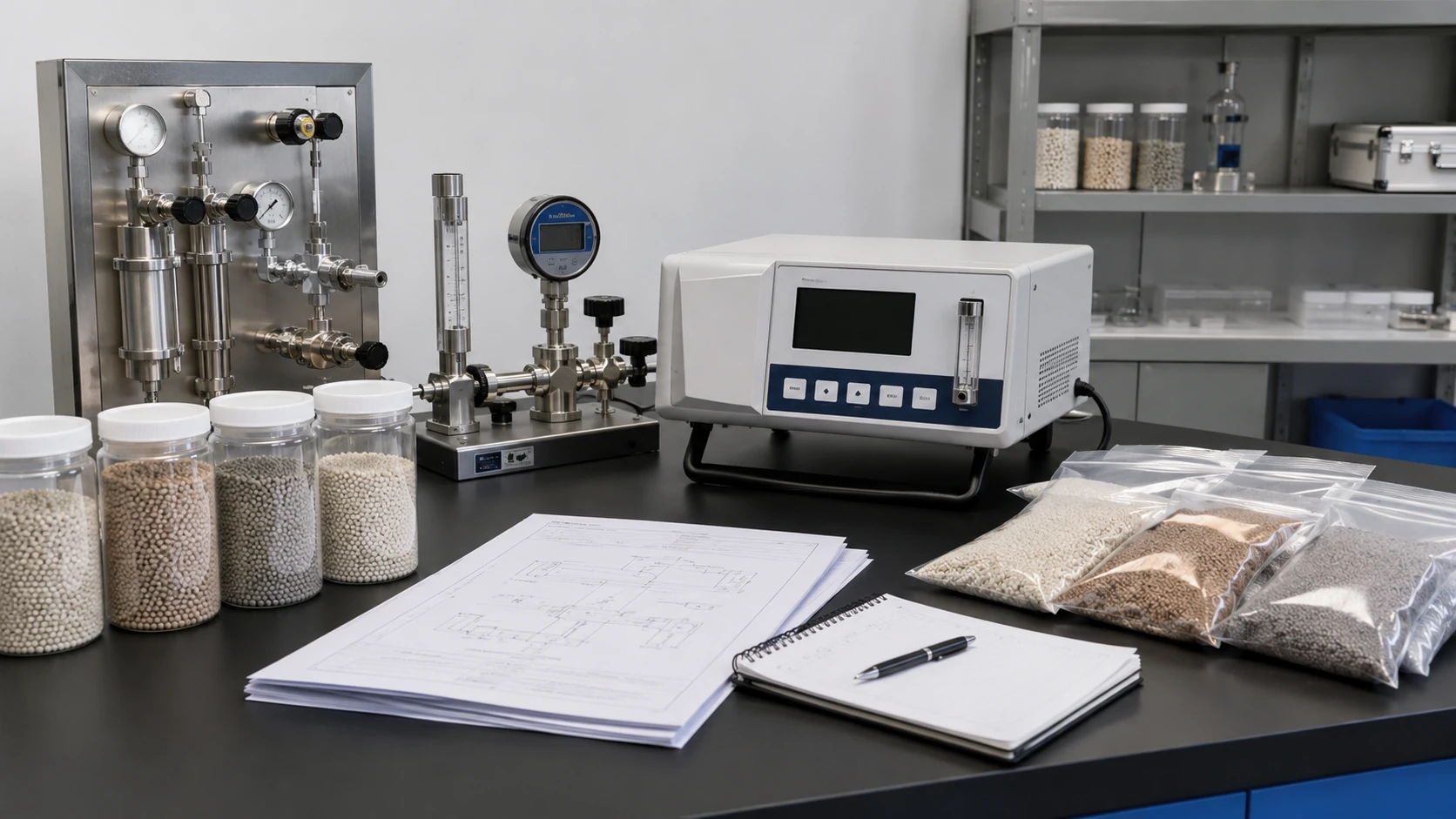
Compare the Original Grade and Equipment Cycle Together
Adsorbent Source supports industrial buyers by organizing the oxygen-generator data, original molecular sieve information, operating history and supplier documents before comparing replacement or new-filling options.
We do not confirm oxygen concentration, flow, recovery or service life from a generic product name alone. Final approval should follow the selected product data and the actual equipment cycle.
PSA Oxygen Generation Adsorbent Questions
What molecular sieve is used for PSA oxygen generation?
PSA and VPSA oxygen generators use nitrogen-selective zeolite grades chosen for the equipment cycle. Depending on the original design, sodium-type or lithium-type oxygen molecular sieves may be considered. Air-plant-grade 13X APG for cryogenic ASU prepurification is not a substitute by name.
How does molecular sieve separate oxygen from nitrogen?
Under the designed pressure conditions, the molecular sieve preferentially adsorbs nitrogen from air. Oxygen is less strongly adsorbed and passes through the bed as the oxygen-enriched product stream.
What is 13X APG molecular sieve?
13X APG commonly denotes an air-plant-grade molecular sieve for cryogenic ASU prepurification, where the duty is removal of moisture and CO₂ before the cold box. It should not be represented as the default adsorbent for PSA oxygen generation.
How do sodium and lithium oxygen molecular sieves compare?
Lithium-based oxygen sieve may offer advantages in selected system designs, but it is not universally better. Productivity, pressure, cycle, tower size, particle form, energy use and supplier data must be compared.
Can lithium oxygen molecular sieve directly replace an installed PSA oxygen grade?
Not automatically. Different chemistry, bulk density, particle size, nitrogen capacity and cycle requirements can change filling quantity, pressure drop and operating settings.
What oxygen concentration can a PSA oxygen generator produce?
Final concentration depends on equipment design, molecular sieve grade, pressure cycle, flow setting, pretreatment, valve condition and product specification. It should not be guaranteed from the molecular sieve name alone.
Why is feed-air pretreatment important?
Water, oil and particles can occupy adsorption sites, foul the molecular sieve, increase pressure drop and shorten operating life. Pretreatment protects the adsorption bed.
Why can oxygen purity remain low after molecular sieve replacement?
Possible causes include underfilling, poor settlement, incorrect particle size, bed channeling, valve leakage, low pressure, wrong cycle time, blocked exhaust silencers, contamination or an unsuitable replacement grade.
How is molecular sieve filling quantity calculated?
Filling quantity depends on adsorber dimensions, designed bed height, selected bulk density, support layers and equipment calculation. Existing projects should start with the original loading record.
What information is needed for a replacement recommendation?
Provide the generator model, PSA or VPSA process, original grade, particle size, filling quantity, pressure, cycle time, oxygen concentration, flow, tower dimensions, feed-air condition and replacement reason.
Can Adsorbent Source coordinate samples and technical documents?
Sample and TDS, SDS and COA availability, particle-size information, packing details and export-document availability depend on the requested grade and order requirements and can be checked for each inquiry.
Select the Molecular Sieve From the Equipment and Cycle Data
Send the oxygen-generator model, PSA or VPSA process, target concentration and flow, feed-air condition, pressure, cycle, tower dimensions, original grade, particle size and filling quantity. Adsorbent Source can review requested grades, document availability and export-supply requirements against the process data provided.