
Refrigerant Drying Adsorbents
Refrigerant Drying Adsorbents help control residual moisture inside filter driers, refrigeration equipment, air-conditioning systems and heat pumps. Adsorbent Source supplies refrigerant molecular sieve and reviews grade, compatibility, particle-size and documentation requirements against the system data provided.
How to Select Molecular Sieve →
TDS vs SDS vs COA for Adsorbents →
Adsorbent Packaging and Export Guide →
Protect the Refrigerant Circuit from Residual Water
Moisture may enter a refrigerant circuit through components, assembly, service work, inadequate evacuation or leaks. Depending on the system chemistry and operating conditions, residual water can contribute to ice formation at restricted flow points, corrosion, lubricant deterioration, acid-related reactions and unstable equipment performance.
A filter drier combines moisture adsorption with filtration and contaminant control. The molecular sieve must therefore work as part of the complete drier design rather than as an isolated loose desiccant.
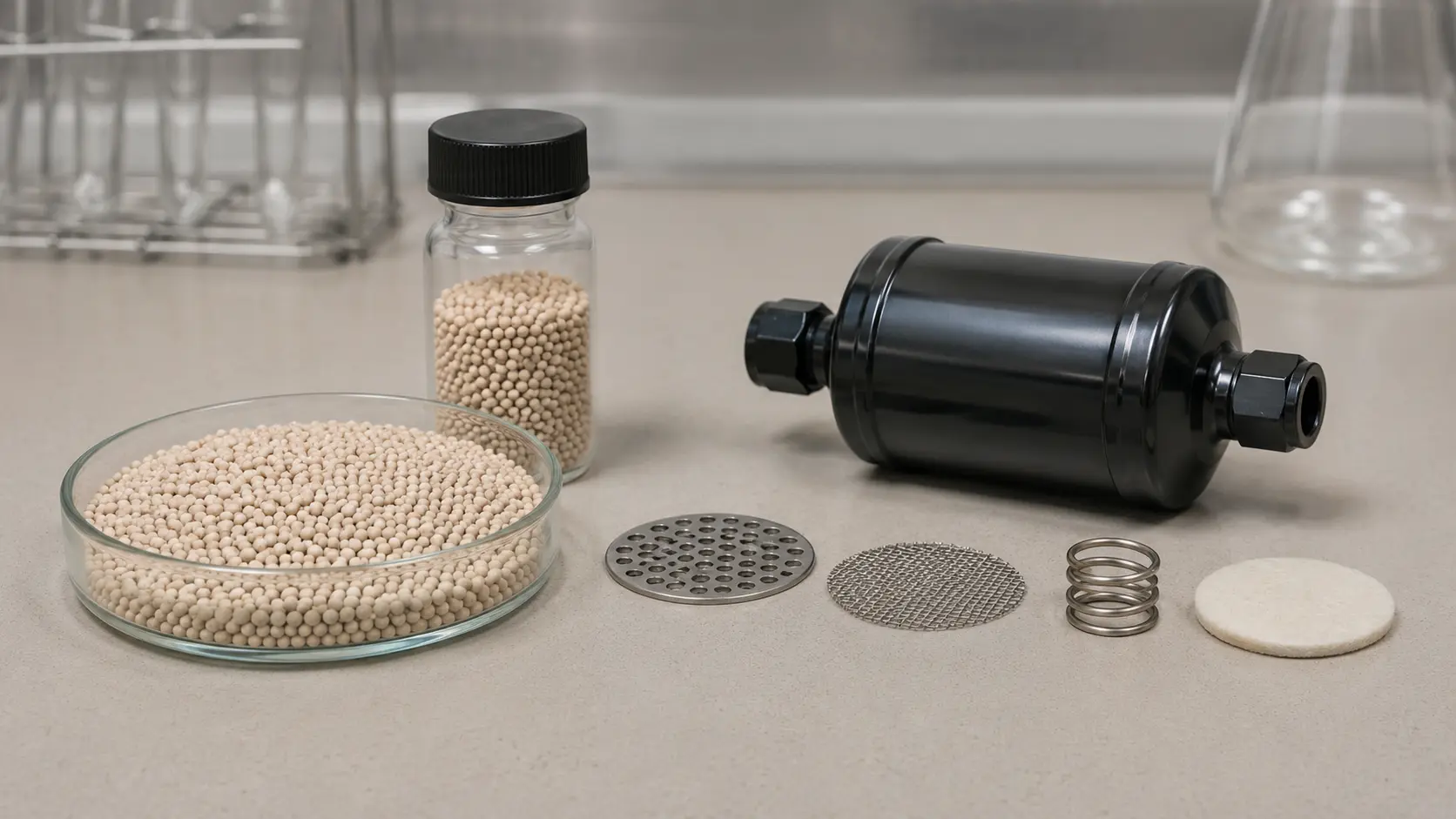
Refrigerant Molecular Sieve Is More Than a General 3A or 4A Name
A general pore-size designation does not by itself confirm suitability for a refrigerant circuit. The selected grade should be supported by relevant manufacturer data and reviewed against the actual refrigerant, lubricant and filter drier design.
| Evaluation Area | General Molecular Sieve | Refrigerant Molecular Sieve |
|---|---|---|
| Primary selection basis | Gas or liquid composition, moisture target, temperature, pressure and regeneration conditions | Refrigerant and lubricant compatibility, drier construction, moisture target and validated grade data |
| Particle requirements | Size selected for vessel flow, pressure drop, loading and regeneration | Size matched to drier shell, screens, flow path, filling density and production method |
| Mechanical control | Crush strength and attrition reviewed for the intended adsorption bed | Dust, abrasion, particle integrity and vibration resistance reviewed for a sealed refrigerant circuit |
| Typical use | Compressed air, process gas, solvent or other confirmed drying duties | Filter driers, refrigeration equipment, air-conditioning and heat-pump circuits |
| Final confirmation | Application data, supplier TDS, sample and operating conditions | Refrigerant, lubricant, drier design, compatibility data, supplier TDS and production validation |
Select Refrigerant Drying Adsorbents from System Data
The best-fit adsorbent direction depends on the complete refrigerant circuit and filter drier specification. Use the following inputs to compare grades and request supporting documents.
Refrigerant Type
Identify the exact refrigerant or blend, system category and any required compatibility standard or qualification method.
Lubricant
Confirm the compressor lubricant type and relevant compatibility requirements because the refrigerant and oil operate together.
Filter Drier Design
Provide the shell dimensions, flow direction, filling volume, screens, filters, spring arrangement and manufacturing process.
Particle Form
Match bead or particle size with retention components, packing density, flow behavior and filling equipment.
Performance Data
Review water adsorption, residual water, dust, attrition, crush strength and available compatibility or stability results.
Supply Control
Confirm sealed packaging, storage conditions, batch COA, sample procedure, order quantity and destination documents.
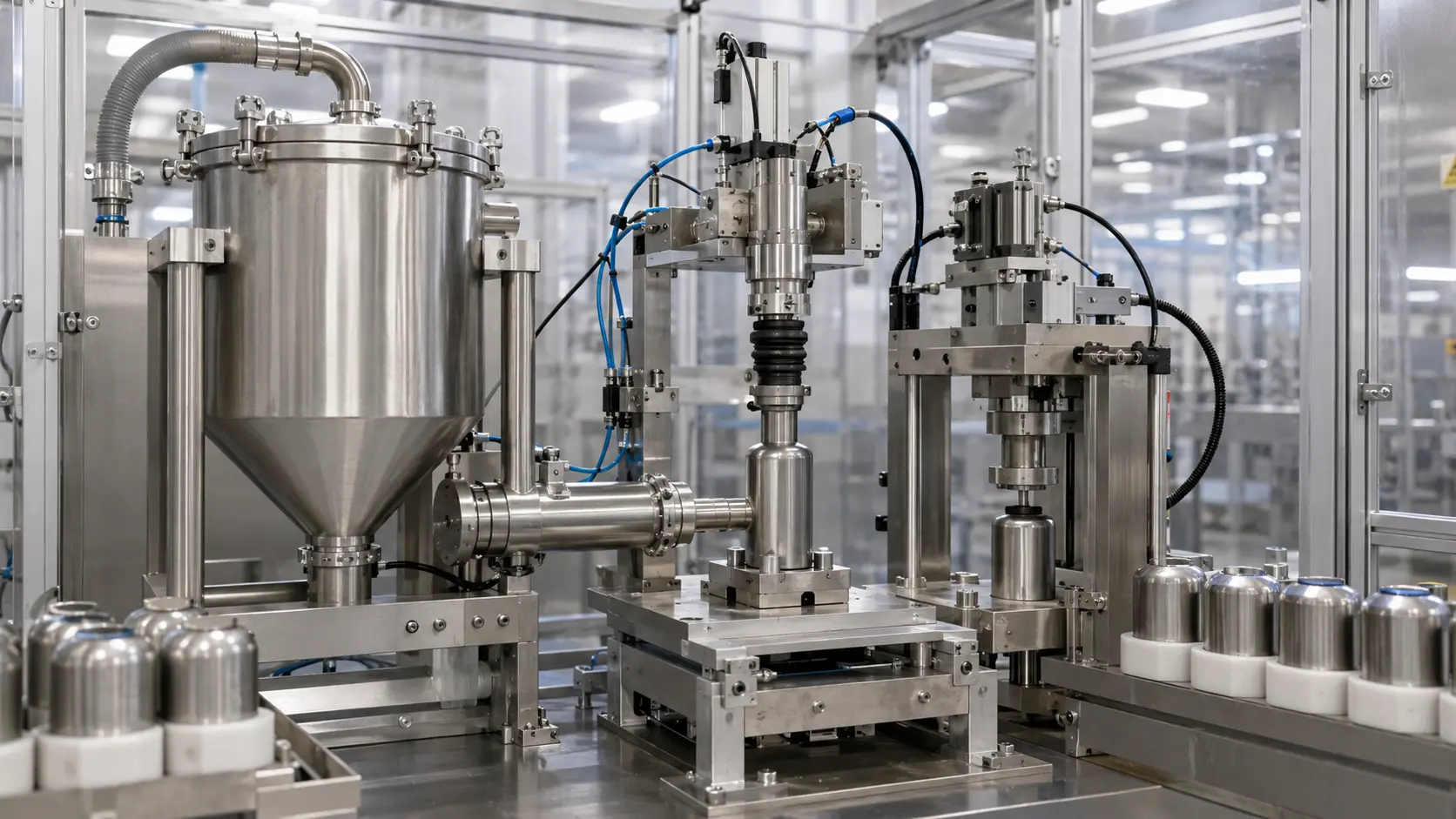
Keep the Molecular Sieve Dry During Filling
Refrigerant molecular sieve begins adsorbing atmospheric moisture after the package is opened. Storage, transfer, metering and filter drier filling should therefore minimize exposure time and prevent contamination before the drier is sealed.
A controlled production route may use dry-air or otherwise specified environmental control, sealed hoppers, enclosed metering, repeatable filling, vibration or settling control, retention-component assembly and prompt closure. The exact procedure belongs to the filter drier manufacturer and must follow its validated process.
Store
Keep unopened material sealed and protected from humidity, damage and contamination.
Transfer
Move material through a controlled path with minimal atmospheric exposure.
Fill
Meter the validated quantity into the specified drier shell and retention system.
Seal
Close, inspect and protect the assembled drier according to the production procedure.
Where Refrigerant Molecular Sieve May Be Evaluated
Each application requires confirmation of refrigerant, lubricant, drier structure and selected supplier data. One grade should not be assumed to cover every circuit.
| Application Area | Moisture-Control Role | Evaluation Focus |
|---|---|---|
| Hermetic filter driers | Adsorb residual water while filtration components retain particles and debris | Shell design, fill volume, screens, pressure drop, particle size and compatibility |
| Refrigeration equipment | Support circuit cleanliness and moisture control in the specified operating system | Refrigerant, lubricant, temperature range, component materials and drier location |
| Air-conditioning systems | Protect selected HVAC refrigerant circuits from moisture-related operating problems | System design, charge, service conditions, compatibility and equipment approval |
| Heat-pump systems | Provide moisture adsorption in circuits that may operate across changing conditions | Heating and cooling modes, refrigerant, lubricant, temperature and flow conditions |
| Replacement or localization projects | Compare a new adsorbent direction with an existing approved material | Current grade, sample, particle size, fill weight, TDS, test method and change-control procedure |
Review Moisture Performance and Compatibility Before Approval
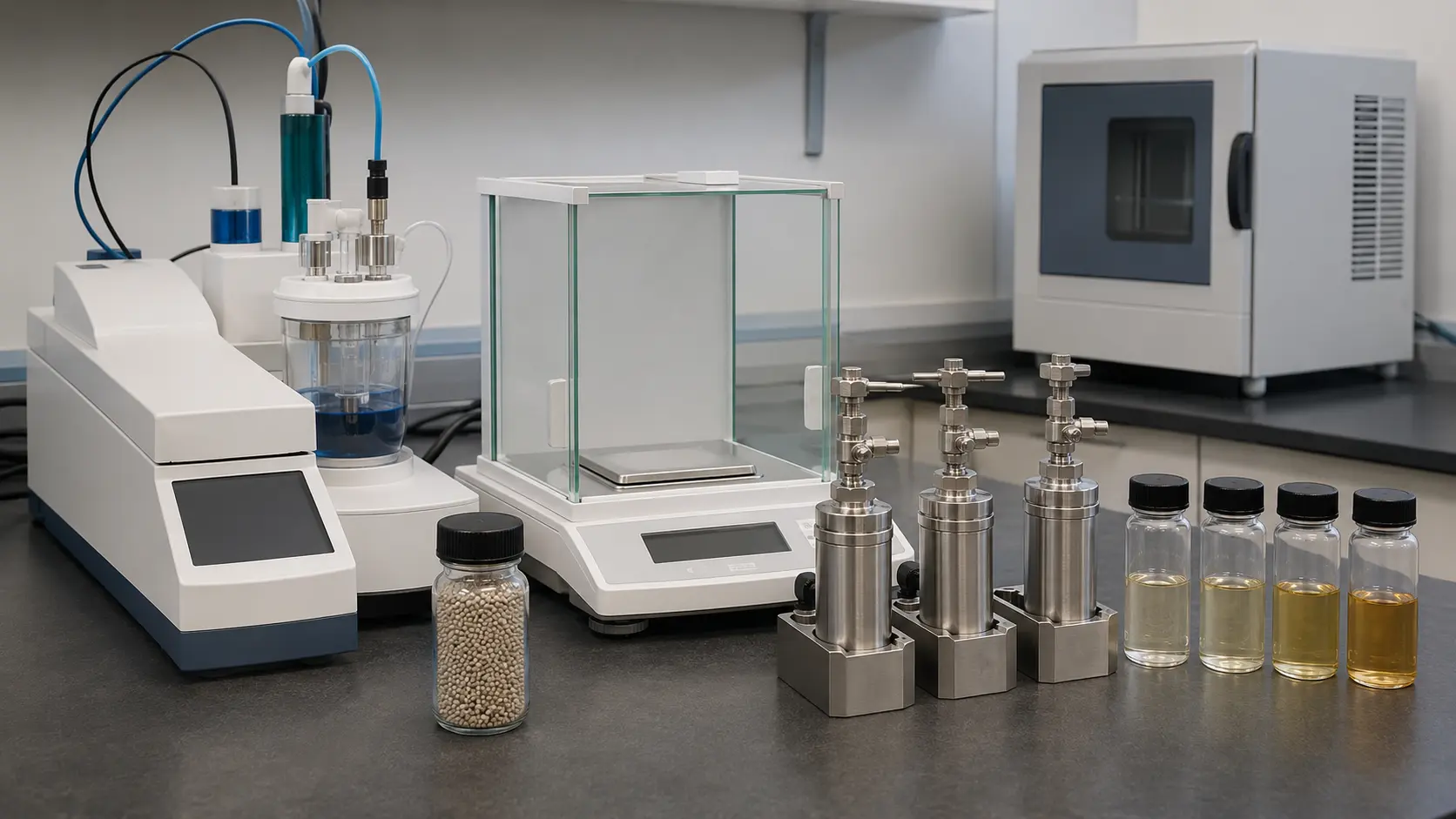
Useful evaluation may include incoming moisture, water adsorption, residual water, particle-size distribution, dust, attrition, crush strength and tests required by the filter drier manufacturer. Refrigerant and lubricant compatibility should be assessed using an appropriate method and the selected grade’s supporting data.
Refrigerant Molecular Sieve
Share the refrigerant, lubricant, filter drier drawing or model, existing adsorbent, particle size, fill weight, annual demand and required tests. Adsorbent Source reviews the requested grade, compatibility, particle size, tests, packaging and quotation requirements. Sample and TDS, SDS and COA availability can be checked for the grade and order.
Refrigerant Drying Adsorbents FAQ
What do refrigerant drying adsorbents do?
They adsorb residual moisture inside filter driers and selected refrigerant circuits. Their role must be considered together with the drier’s filtration, contaminant control and mechanical design.
Can ordinary 3A or 4A molecular sieve be used in a filter drier?
A general 3A or 4A name is not enough to confirm suitability. Refrigerant and lubricant compatibility, particle size, dust, attrition, mechanical integrity, drier structure and supplier data must be reviewed.
Does one refrigerant molecular sieve work with every refrigerant?
No universal compatibility should be assumed. The exact refrigerant or blend, lubricant, system materials, operating conditions and selected grade data determine whether further testing and approval are required.
Why is sealed packaging important?
Molecular sieve readily adsorbs moisture from air. Moisture-tight packaging and controlled handling help preserve adsorption capacity before the material is filled into the filter drier.
What particle size should be used?
Particle size must match the drier shell, screens, filter elements, flow path, packing density and filling process. Provide the existing grade or drier design so available options can be compared.
What information is needed for a sample or quotation?
Provide the refrigerant, lubricant, filter drier model or drawing, particle size, fill weight, current material, performance or compatibility requirements, sample quantity, annual demand, packaging and destination country.
Discuss Your Refrigerant Drying Requirement
Send the refrigerant, lubricant, filter drier structure, current adsorbent, particle size, fill quantity and required tests. Adsorbent Source can review the requested refrigerant molecular sieve grade, compatibility, sample availability, documentation and quotation requirements.