Activated Alumina Supplier for Industrial Applications
Adsorbent Source supplies activated alumina for compressed-air and gas drying, fluoride removal, water treatment and selected industrial adsorption applications. As an activated alumina supplier in China, we help buyers identify the correct product direction, bead size, operating requirement, samples, technical documents, packaging and export quotation.
This category page helps buyers identify the correct activated alumina product direction before moving to the relevant product or application page.
Buyer Quick Guide
Choose the Right Activated Alumina Route
Start with the application. This parent page should route buyers to the correct product or technical page rather than duplicate every child page.
Compressed Air or Gas Drying
For moisture removal in regenerative dryers, instrument air and gas dehydration systems.
Activated Alumina Desiccant →Fluoride Removal
For adsorption media used to reduce fluoride concentration in drinking-water or process-water treatment systems.
Fluoride Removal Grade →Compressed Air Drying Selection
Compare activated alumina with molecular sieve according to dryer type, dew point and regeneration conditions.
Compressed Air Drying Adsorbents →Activated Alumina vs Molecular Sieve
Review the difference between the two adsorbents before selecting a drying media.
Read Comparison Guide →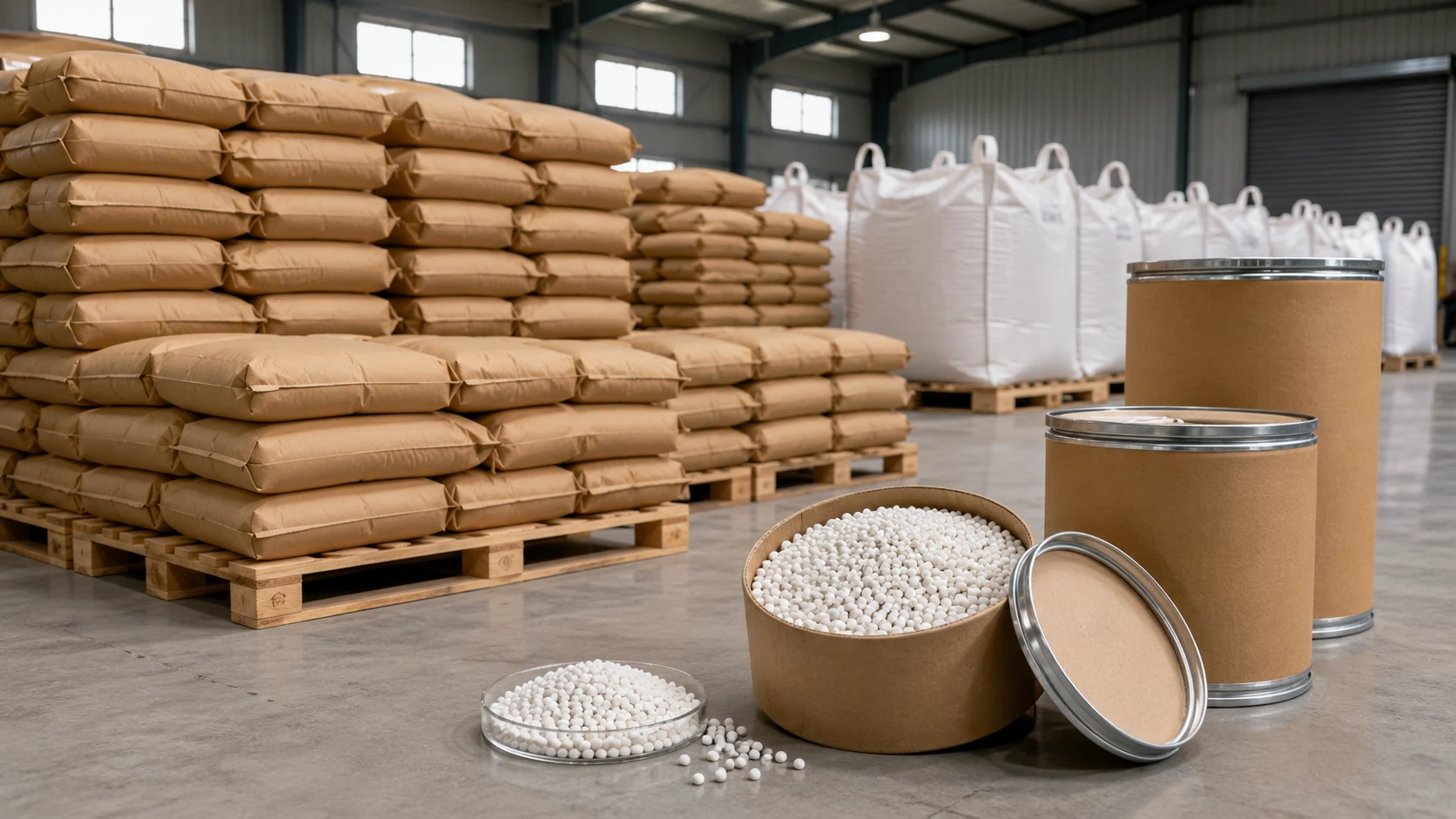
Product Category Overview
What Is Activated Alumina?
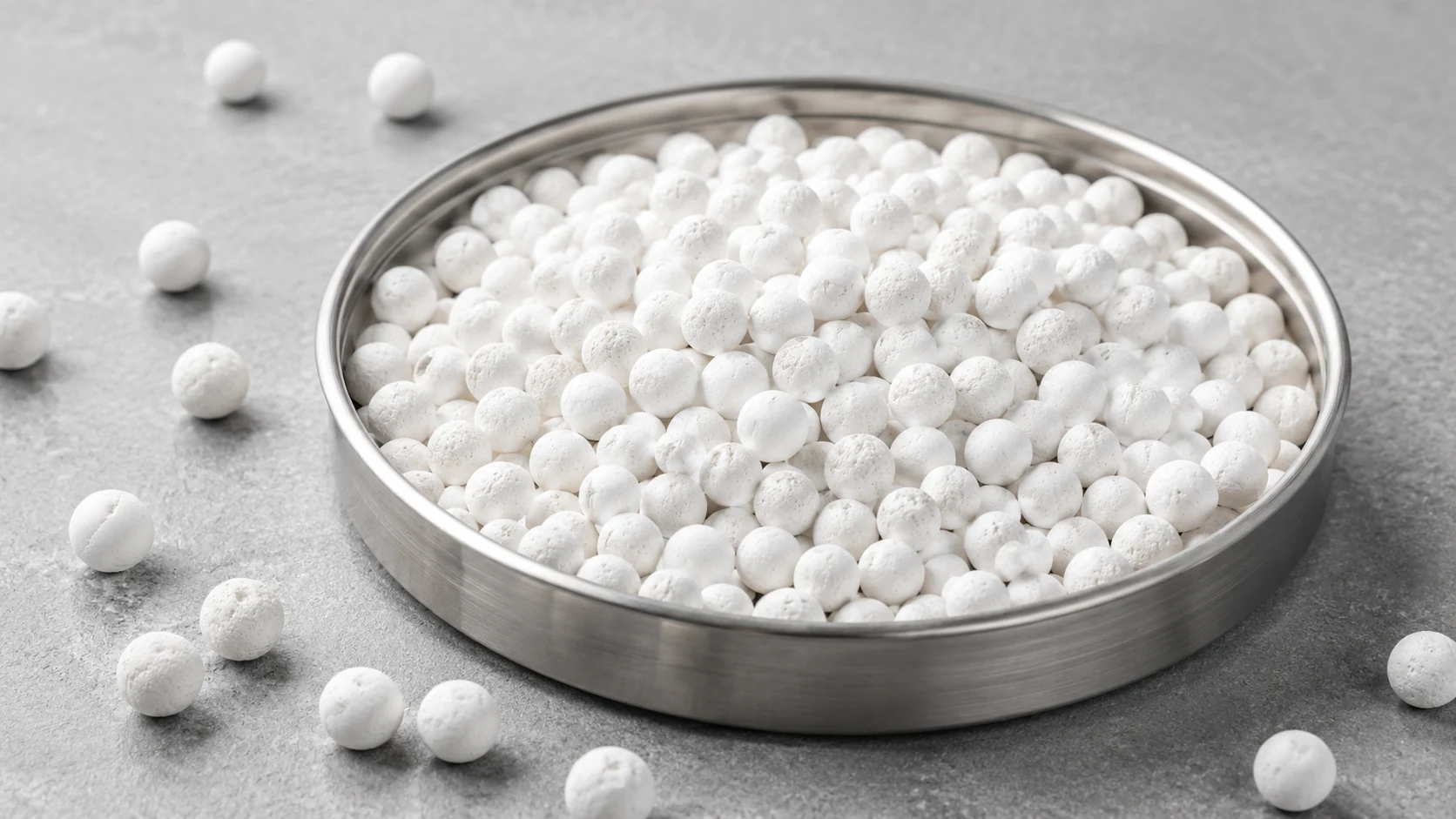
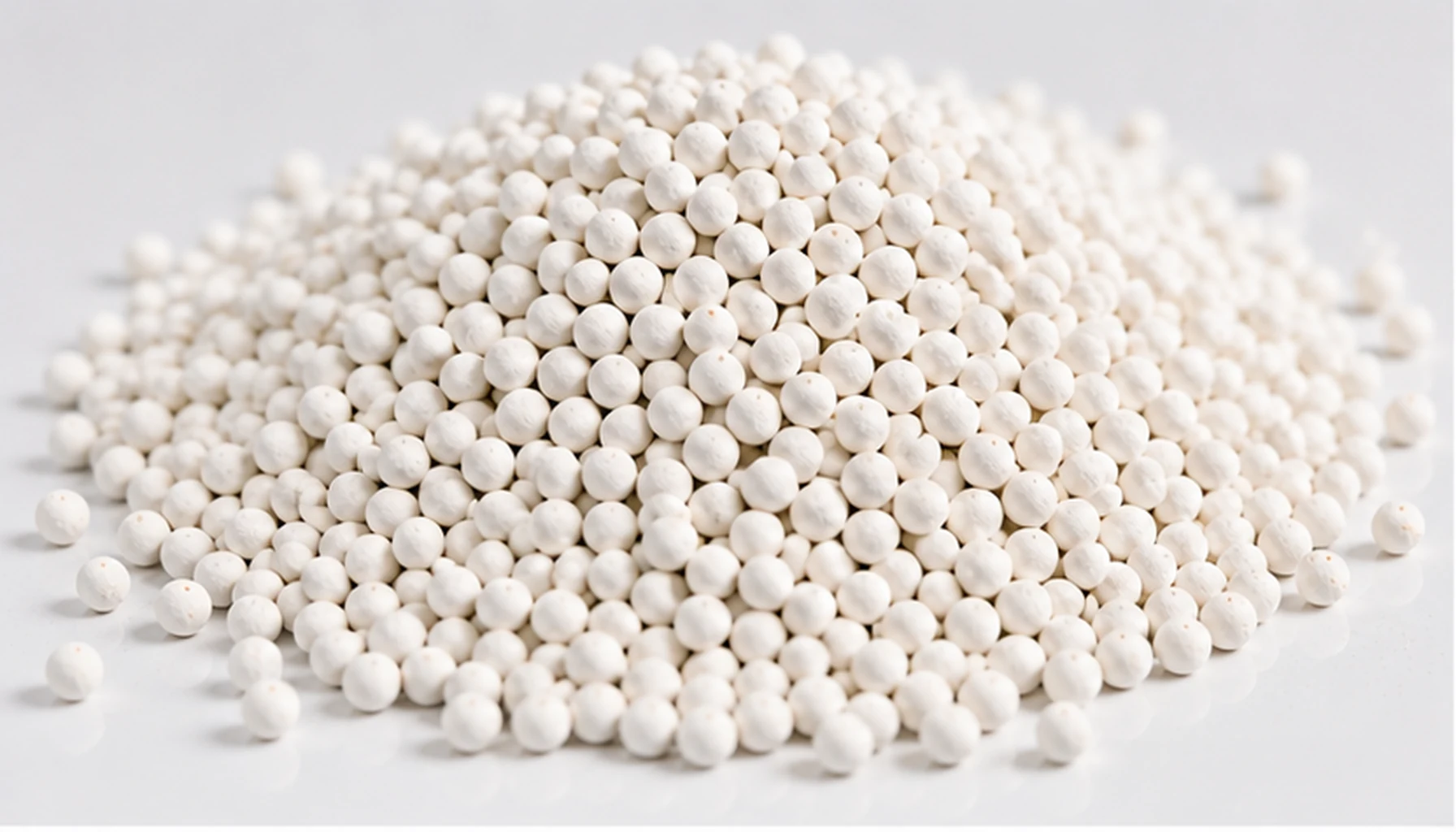
Activated alumina is a porous aluminum oxide adsorbent supplied mainly as spherical beads. Different grades are used for moisture adsorption, gas dehydration, fluoride reduction and selected industrial adsorption processes.
Activated alumina should be treated as a product family, not one universal grade. Drying and water-treatment applications require different operating data and product-selection logic.
Adsorbent Source helps buyers identify the correct application, particle size, operating conditions, packaging and documentation before moving to a specific activated alumina grade.
Product Family
Activated Alumina Product Range
The current Activated Alumina category contains two primary product-level routes. Application pages then provide the system-level selection guidance.
Activated Alumina Desiccant
Product grade for moisture removal in compressed air dryers, instrument air systems, gas dehydration equipment and replacement desiccant projects.
View Activated Alumina Desiccant →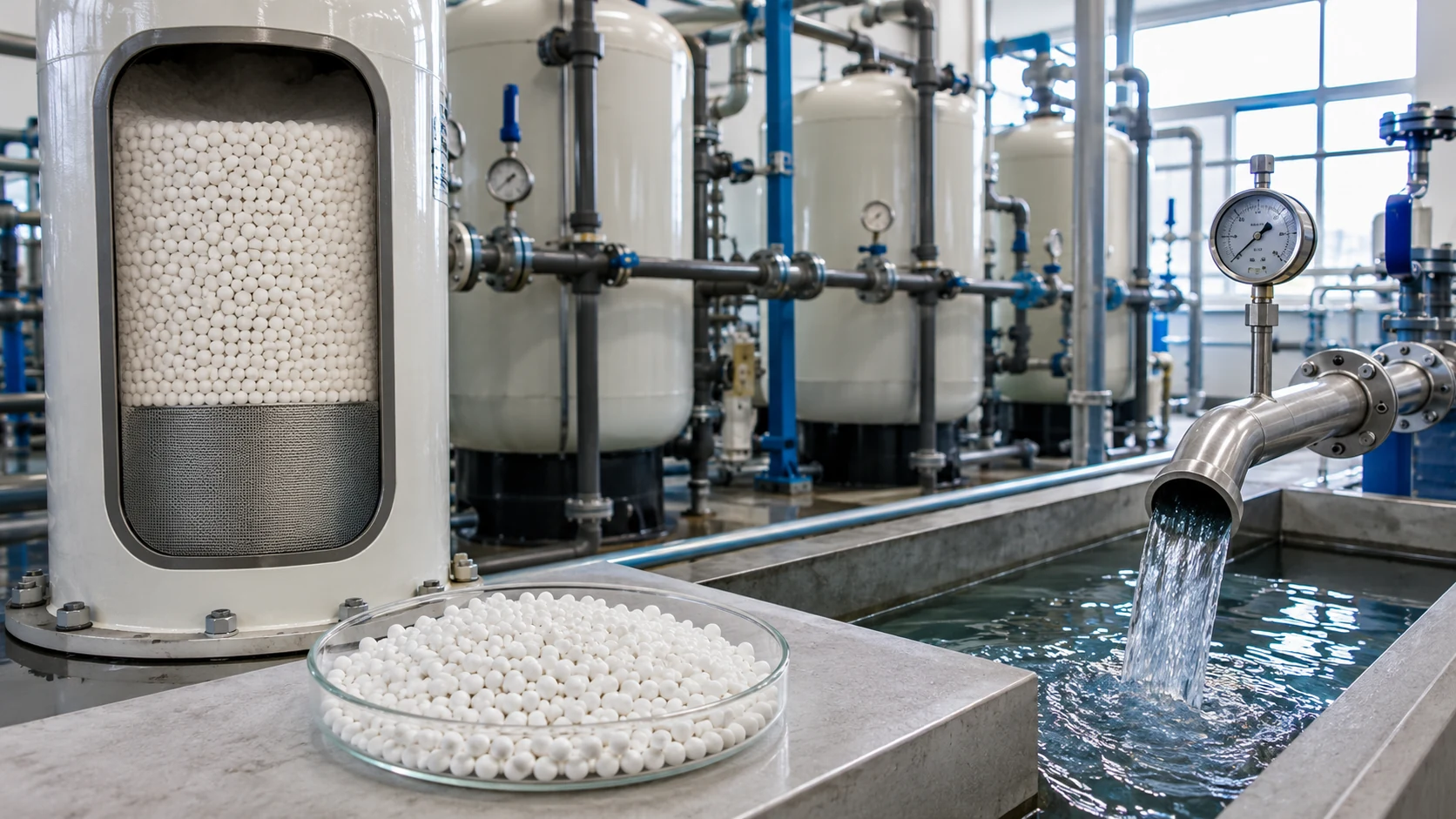
Activated Alumina for Fluoride Removal
Product grade for fluoride reduction in water-treatment systems where influent water chemistry, fluoride concentration, pH, contact time and bed design must be reviewed.
View Fluoride Removal Grade →Application Routes
Where Activated Alumina Is Used
Application pages explain the operating problem and system logic. Product pages explain the material itself. Keeping these roles separate reduces keyword overlap and makes product selection clearer.
Compressed Air Drying
Activated alumina is widely used in regenerative compressed-air dryers where moisture removal, pressure drop and regeneration behavior must be balanced.
Review Compressed Air Drying →Gas Dehydration
Selected activated alumina grades can be considered for gas drying when gas composition, pressure, temperature, inlet moisture and target dew point are known.
Review Desiccant Product →Fluoride Removal
Water-treatment projects should be reviewed from water chemistry, fluoride concentration, pH, flow rate, bed depth and replacement or regeneration strategy.
Review Fluoride Removal Product →Water Treatment
Activated alumina can be used as an adsorption medium in selected water-treatment systems, but suitability depends on the actual contaminant and process conditions.
Review Water-Treatment Grade →Industrial Adsorption
Selected process applications may use alumina-based adsorbents where pore structure, mechanical strength and process compatibility are important.
Send Application Data →Media Comparison
Buyers choosing a dryer media should compare activated alumina and molecular sieve by drying depth, regeneration and process requirements.
Activated Alumina vs Molecular Sieve →Category Comparison
Drying Grade vs Fluoride Removal Grade
These product directions are both activated alumina, but the purchasing information and qualification method are different.
| Selection Area | Activated Alumina Desiccant | Fluoride Removal Activated Alumina |
|---|---|---|
| Main Function | Moisture adsorption from compressed air or gas. | Fluoride adsorption from water. |
| Main System | Regenerative dryer, instrument air or gas dehydration vessel. | Fixed-bed water-treatment adsorption vessel. |
| Important Operating Data | Pressure, temperature, flow, inlet moisture, target dew point and regeneration method. | Influent fluoride, pH, water chemistry, flow, bed depth and contact time. |
| Particle Size | Selected with pressure drop, tower design and regeneration requirements. | Selected with hydraulic flow, bed contact and water-treatment design. |
| Main Qualification Risk | Choosing only by bead size without checking dryer operating conditions. | Choosing only by product name without checking actual water chemistry. |
| Next Page | Activated Alumina Desiccant | Activated Alumina for Fluoride Removal |
Selection Factors
How to Select an Activated Alumina Grade
The most useful information for initial product routing is the application, adsorption target, operating conditions, particle size, quantity and required documents.
Supply Support
Activated Alumina Supplier Support
Adsorbent Source helps buyers move from a general material name to a defined product grade, application requirement and purchasing specification.
Application Routing
Identify whether the requirement belongs to drying, fluoride removal or another activated alumina application.
Grade & Size Confirmation
Compare applicable activated alumina grades and bead sizes according to the intended application.
Documents & Samples
Provide or confirm available samples, TDS, SDS, COA and packing information for the confirmed product.
Export Supply
Confirm packaging, palletizing, quantity, destination and shipment requirements before quotation or order confirmation.
Sourcing Reference
Activated Alumina Beads, Packaging and Documents
These are category-level purchasing references. Final particle size, technical values, packaging and documentation should be confirmed against the selected activated alumina grade before order approval.
| Item | Common Direction | Buyer Note |
|---|---|---|
| Appearance | White spherical beads | Typical physical form for industrial activated alumina grades. |
| Particle Size | 1–2 mm, 2–3 mm, 3–5 mm, 4–6 mm | Final available size depends on the confirmed grade and application requirement. |
| Main Product Directions | Desiccant and fluoride-removal media | Choose the dedicated child product before technical approval. |
| Packaging | Bags, drums, jumbo bags, palletized packing | Confirm moisture protection, shipment quantity and destination. |
| Documents | TDS, SDS / MSDS, COA, packing information | Confirm document availability before order approval. |
Request an Activated Alumina Quote
Already know the activated alumina grade, bead size and quantity? Send those first. Full operating data is mainly required when product routing or grade selection support is needed.
Adsorbent Source supplies the appropriate desiccant or fluoride-removal product grade according to the application requirement and reviews the available technical information.
Before requesting a quotation, review the Activated Alumina Particle Size Guide, TDS, SDS and COA requirements and Adsorbent Packaging and Export Guide to prepare product and shipment details.
Send Activated Alumina RFQFAQ
Activated Alumina FAQ
What is activated alumina used for?
Activated alumina is commonly used for compressed-air and gas drying, fluoride removal, selected water-treatment processes and industrial adsorption duties.
Which activated alumina should I use for compressed air drying?
Start with the Activated Alumina Desiccant product page and provide dryer type, flow, pressure, inlet moisture, target dew point, regeneration method and existing filling information.
Which activated alumina is used for fluoride removal?
Use a fluoride-removal activated alumina grade selected according to influent fluoride concentration, pH, water chemistry, flow, contact time and treatment-system design.
Is activated alumina the same as molecular sieve?
No. Both are industrial adsorbents, but their pore structure, drying behavior and application ranges differ. Buyers can review the Activated Alumina vs Molecular Sieve resource before selecting drying media.
What activated alumina bead sizes are available?
Common references include 1–2 mm, 2–3 mm, 3–5 mm and 4–6 mm. Final availability and technical data should be confirmed for the selected grade.
What documents are available for activated alumina orders?
Available documentation may include TDS, SDS, COA, packing information and applicable export documents according to the confirmed activated alumina grade and order requirement.