How to Select Activated Alumina Particle Size
Choose a practical activated alumina particle size by balancing pressure drop, contact efficiency, loading volume, strength and the operating conditions of the adsorption system.
How to Select Activated Alumina Particle Size for Different Systems
Protect available system pressure
Smaller particles can improve external mass transfer but may create more resistance through a packed bed. The acceptable balance depends on airflow, bed depth, vessel diameter and the pressure available for adsorption.
Use the bed volume effectively
Particle size influences surface exposure, void space and the path taken by the process stream. A grade that is too large may reduce contact efficiency, while a grade that is too small may increase dust and operating resistance.
Keep the bed stable
Crush strength, attrition resistance and dust generation matter during filling, operation, unloading and regeneration. The best size is one the equipment can handle consistently over its service life.
Particle size is an equipment decision
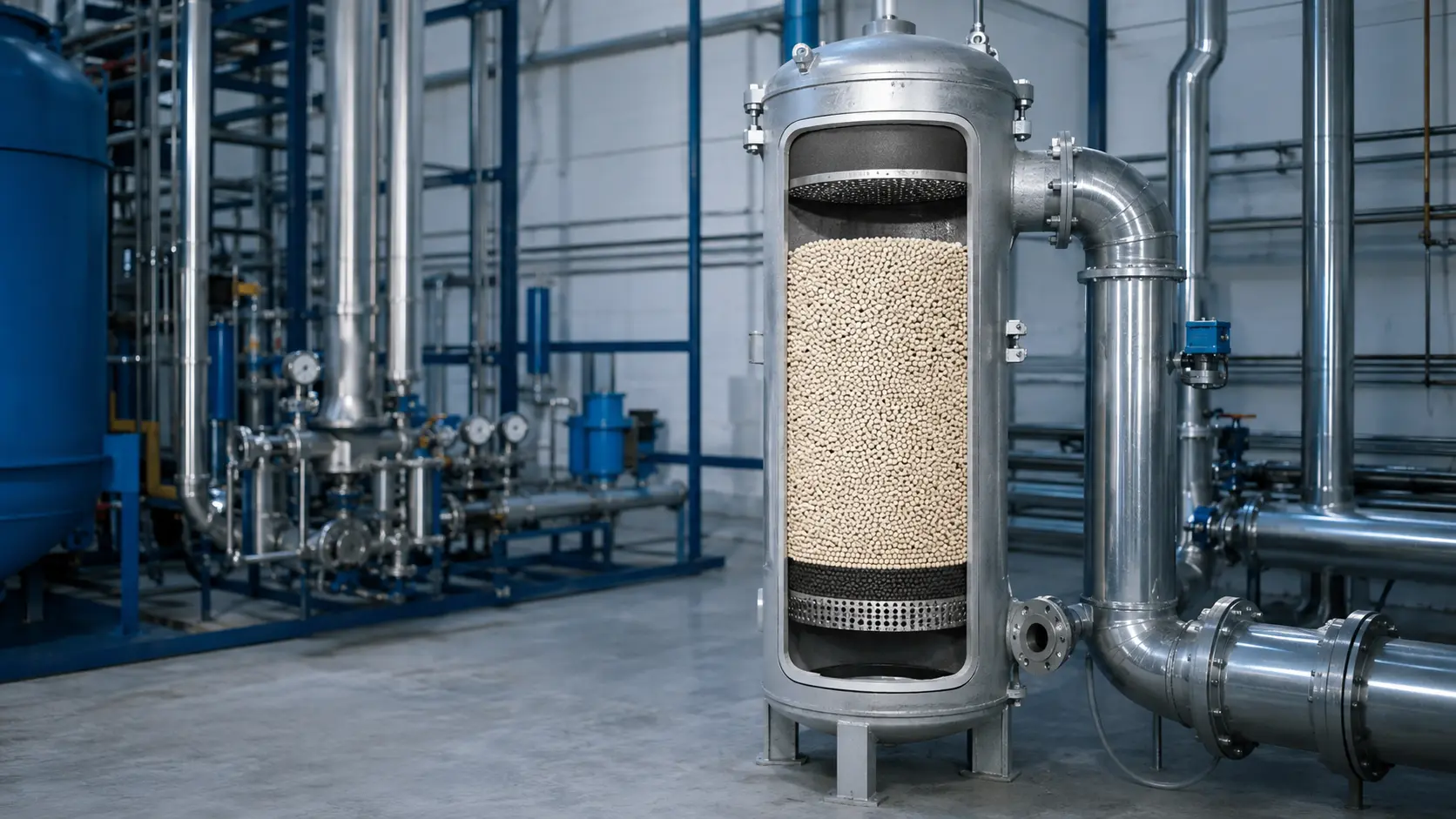
Activated alumina is commonly supplied as activated alumina balls and beads, pellets, granules or other physical forms. In a fixed-bed dryer or purifier, the selected size must fit the vessel diameter, support screens, distributor design and expected flow direction.
Compare particle size together with bulk density, crush strength, moisture capacity and working temperature. A supplier should understand the operating window before recommending a standard grade or a project-specific distribution.
How common size ranges affect operation
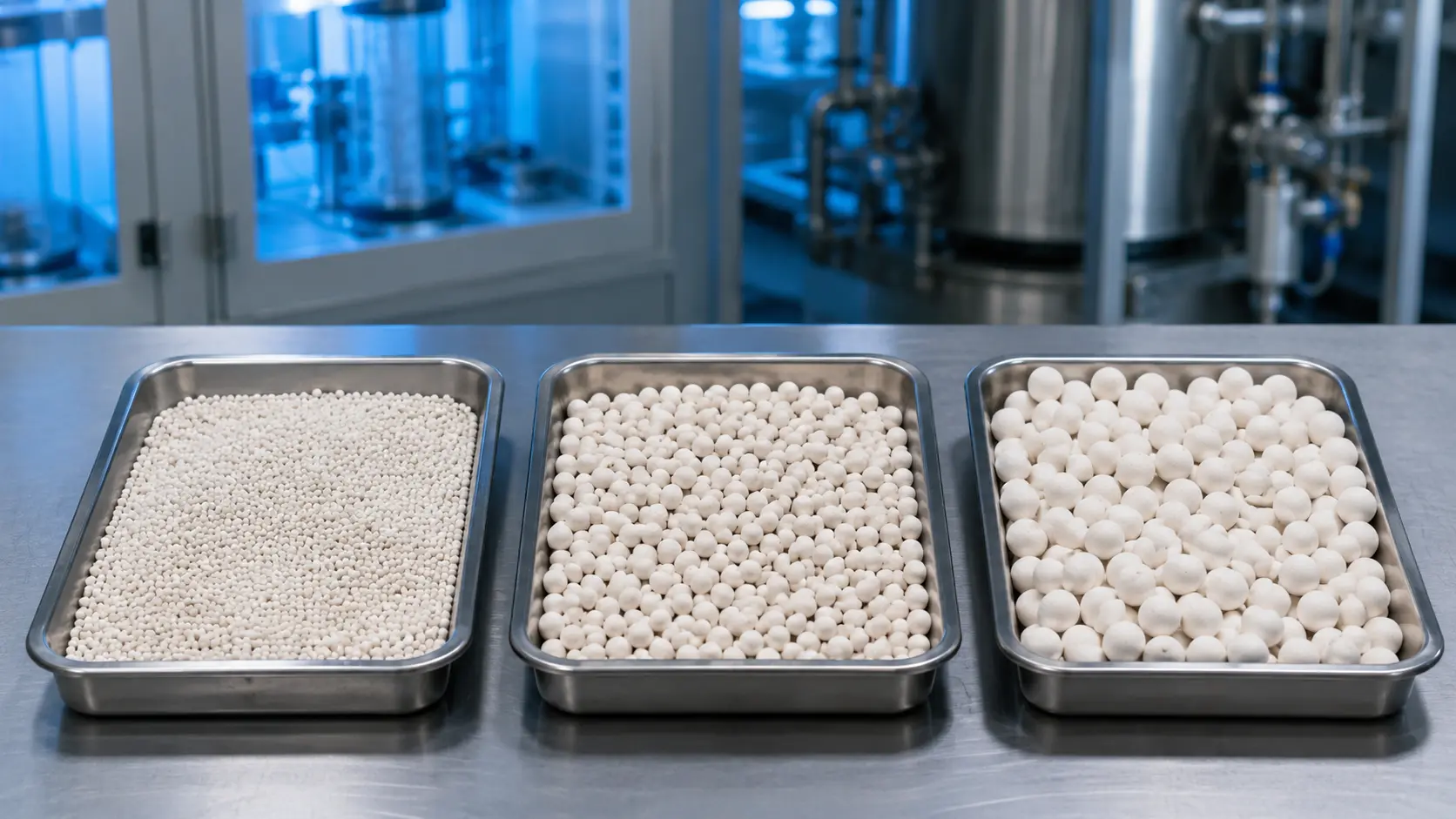
Exact performance depends on the product and process, but the following comparison helps organize an initial technical discussion. The same nominal size can behave differently when bead shape, strength, pore structure and particle-size distribution change.
| Particle size tendency | Potential advantage | Potential limitation | Typical discussion point |
|---|---|---|---|
| Smaller beads or granules | More external surface and shorter diffusion distance | Higher pressure drop, more sensitivity to dust and screen selection | Check flow rate, bed depth and available pressure |
| Medium-size beads | Balanced contact, pressure loss and mechanical handling | May not maximize either contact area or lowest resistance | Often a practical starting point for standard fixed beds |
| Larger beads or pellets | Lower resistance and easier loading or unloading | Lower surface-to-volume ratio and possible contact limitations | Check vessel geometry, contact time and mass-transfer needs |
Match the media to the adsorption vessel
For compressed-air drying and gas purification, particle size affects the relationship between flow velocity, bed depth and pressure drop. The vessel should have enough freeboard and a suitable retaining system for the selected media.
For liquid treatment, also consider suspended solids, pre-filtration, channeling risk, backwashing and the way the bed will be loaded or replaced. Activated alumina used for water treatment may require a different selection discussion from activated alumina used as a desiccant.
Review the complete equipment layout before treating a product datasheet as a final recommendation.
Why laboratory screening and batch control matter
A nominal particle-size description is only one part of quality control. Buyers may also need the particle-size distribution, fines content, moisture, bulk density, crush strength and attrition result for the grade being considered.
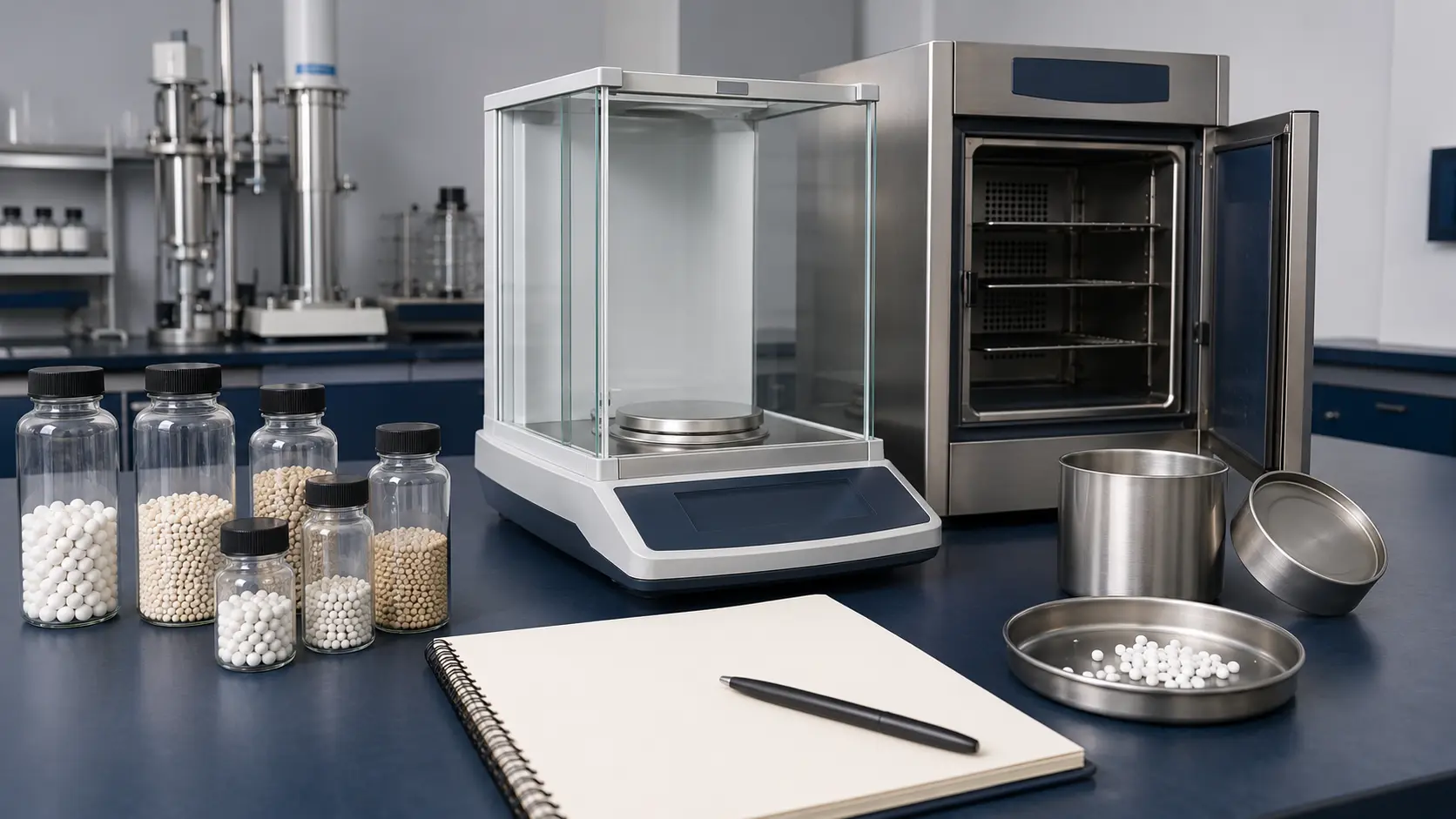
Laboratory screening helps confirm whether the delivered batch is within the agreed range. It also supports a fair comparison between suppliers when the same test method and acceptance limits are used.
- Confirm the stated particle-size range and allowable fines.
- Ask whether the result is typical, guaranteed or batch-tested.
- Check the test method and sample basis.
- Compare strength and dust performance with the loading method.
- Review packaging and storage conditions before use.
How to choose a starting grade for your application
Start with the process stream and equipment rather than choosing by particle size alone. Identify whether the material will dry compressed air, purify gas, remove fluoride from water, support a liquid-treatment bed or serve another adsorption duty.
Then collect the operating conditions: flow rate, temperature, pressure, humidity or liquid composition, bed dimensions, cycle time, regeneration method and target service life. These details allow a supplier to compare smaller, medium and larger grades on a meaningful basis.
For a replacement project, provide the current product reference, installed equipment and any known pressure-drop or dust issue. The closest nominal size is not always the best replacement if the operating conditions or vessel design have changed.
What to include in an activated alumina RFQ
- Application: compressed-air drying, gas purification, water treatment, fluoride removal or another process.
- Operating data: flow rate, pressure, temperature, humidity or liquid composition and contact time.
- Equipment: vessel diameter, bed depth, loading volume, support screen and flow direction.
- Physical requirements: preferred particle size, shape, dust limit, bulk density and crush strength.
- Commercial details: sample quantity, trial quantity, annual demand, packaging and destination.
- Documents: TDS, SDS, COA, particle-size distribution and any destination-country export documents.
Frequently asked questions
Is a smaller activated alumina particle size always better?
No. Smaller particles may improve contact characteristics, but they can also raise pressure drop and increase sensitivity to dust or screen selection. The right choice depends on the equipment and process window.
Which particle size is common for fixed-bed drying?
Many systems use a medium bead size as a practical starting point, but the correct grade depends on airflow, vessel dimensions, pressure limits, regeneration and the supplier’s technical data.
Does particle size affect activated alumina service life?
It can. Bed stability, attrition, dust generation, regeneration conditions and contaminant loading all influence service life. Particle size should be reviewed with strength and operating conditions.
What information should I send for a particle-size recommendation?
Send the application, flow rate, temperature, pressure, bed dimensions, target contaminant, cycle or regeneration method, quantity and destination. A photo or datasheet for the existing equipment can also help.
Can Adsorbent Source compare different activated alumina grades?
Yes. Share the process and purchasing requirements so the product family, particle size, technical documents, sample plan and quotation can be reviewed together.
Related Adsorbent Source resources
Need help selecting activated alumina particle size?
Send your application, operating conditions, vessel information, required quantity and destination. Adsorbent Source supplies activated alumina and reviews the requested grade, particle size and operating data. Sample and technical-document availability and quotation requirements can be checked for each inquiry.
Contact Adsorbent Source