Industrial procurement · Supplier quotation comparison
How to Compare Industrial Adsorbent Supplier Quotations
Two quotations may name the same 3A molecular sieve, activated carbon or activated alumina and still represent different products, test methods, packing protection and delivery terms. Use this buyer’s guide to normalize the technical and commercial basis before choosing a supplier.
How Should Buyers Compare Adsorbent Quotes?
Compare offers only after fixing the same adsorbent grade or approved equivalent, particle form, application, test methods, order mass, packing protection, delivery term and document requirements. A lower unit price is not comparable if the material, net delivered quantity or technical acceptance basis differs.
This guide serves the quotation evaluation and award decision. For the information needed to issue an initial inquiry, use the Industrial Adsorbent RFQ Checklist. For interpreting individual laboratory fields, see the Molecular Sieve TDS / COA Comparison.
Do not assume an upstream producer and a trading/export supplier offer identical quality assurance; evaluate both by traceability, accountability, documented material origin and their ability to fulfill the purchase specification. A distributor should not be excluded solely for not owning a factory.
Check the Exact Adsorbent You Are Being Offered
The same broad product-family name is not an approved substitution. Buyers should compare the supplier’s written offer against the original specification or a technically accepted sample.
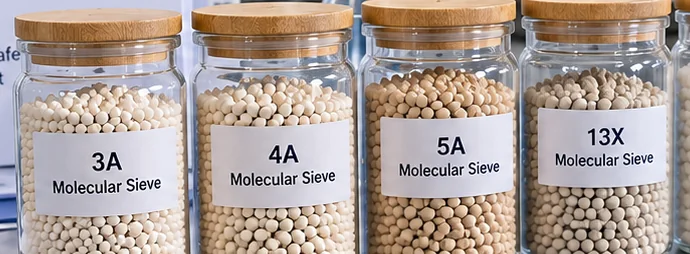
- Material family: 3A / 4A / 5A / 13X sieve, activated alumina, granular activated carbon, CMS or another specifically named grade.
- Intended duty: dehydration, gas separation, fluoride adsorption, VOC removal or catalyst support are not interchangeable applications.
- Form and size: bead/pellet/granule, particle-size range and distribution, with the applicable method.
- Qualified product: current TDS, available lot COA, SDS, confirmed grade designation and proposed origin/manufacturer details where contractually required.
- Replacement risk: compare bulk density, bed dimensions, pressure drop, attrition, regeneration and other acceptance variables before allowing an equivalent.
Approving a quote on nominal pore-size label, iodine value or generic capacity alone can obscure critical differences in real operating duty.
Industrial Adsorbent Quote Comparison Matrix
Use the same fields for every competing quotation. Record missing information as pending rather than assuming it is included.
Swipe horizontally to view all table columns →
| Buyer comparison field | What must be identical or clarified | Why a quote may not be equivalent |
|---|---|---|
| Product and approved grade | Product family, manufacturer/grade reference and proposed equivalent status | Different adsorption duty or unapproved substitute |
| Particle form and size | Bead, pellet or granule; size distribution and test method | Different pressure drop or handling characteristics |
| Technical acceptance | Agreed indicators, method, test conditions and units; sample/batch relationship | Noncomparable capacity, strength or moisture data |
| Quantity and basis | Net product mass or volume, bulk-density basis, order tolerance | Gross package weight or different total material quantity |
| Packaging | Primary moisture barrier, inner lining, pack size, pallet, sealing and marks | Different protection and unloading requirements |
| Delivery and pricing | Currency, Incoterm 2020 rule and named place, exclusions and quotation validity | Different risk, insurance or inland transport responsibilities |
| Production and logistics | Lead time starting event, dispatch readiness, export documentation and destination | Ambiguous promise or missing shipping preparation time |
| Payment and claims | Payment schedule, inspection stage, claim process and any agreed replacement remedy | Commercial exposure not reflected in unit price |
What Evidence Should Be Requested Before Supplier Approval?
Material traceability
Written grade identification, batch/lot policy, available COA, sample approval relationship and agreed product labeling.
Technical accountability
Who will confirm the application limits, supply test-method details, approve equivalents and address a nonconforming lot?
Supply and handling
Who controls packaging, sealing, storage, dispatch and applicable pre-shipment inspection arrangements?
A generic list of certificates or plant photographs is insufficient on its own. Request documents relevant to your order, check the issuer and validity, and do not infer process-performance guarantees from supplier registration or quality-system claims.
For sample approval, reference the Molecular Sieve Sample Evaluation Checklist or relevant Activated Carbon Sample Evaluation Checklist. Compare any proposed bulk material against the approved reference under a documented sampling and testing basis.
Normalize the Offer Before Comparing Price and Delivery
Ask each supplier to use the same quantity, delivery rule and named place, expected dispatch date, document package and packaging specification. Clarify whether pallets, special moisture barriers, third-party tests or inspection costs are included or separately charged.
State the agreed Incoterm 2020 and named place for every offer. EXW, FCA, FOB, CIF and DAP allocate responsibilities differently; they are not interchangeable cost labels. Confirm how the quote treats inland loading, origin formalities, marine/other freight, insurance, destination charges and taxes as applicable to that rule and shipment mode.
For recurring supply, agree how approved grade, particle size, COA parameters, moisture protection and lot traceability will be maintained. For a shutdown replacement order, the impact of a missed date or rejected material can be more important than a small unit-price saving.
Final Quote Approval Checklist
Swipe horizontally to view all table columns →
| Gate | Approve only when the following is confirmed |
|---|---|
| 1. Technical match | Approved material grade, application, particle form, tested attributes and any substitution authorization |
| 2. Sample / documentation | Any required qualification results and a clear link from the submitted sample/specification to bulk lots |
| 3. Packaging and quantity | Net material quantity, inner packaging/seals, transport protection and marking |
| 4. Commercial agreement | Final price basis, Incoterm/named place, lead time, payment and claims handling |
| 5. Shipment release | Inspection and shipment-document approval points defined before dispatch |
The shipment-release stage is covered separately in our Bulk Adsorbent Pre-shipment Inspection Checklist; it applies after a purchase specification and order have been agreed.
Questions When Comparing Adsorbent Suppliers
Is the same molecular sieve type a like-for-like product?
No. A generic 3A or 4A designation is not a complete specification. Compare the actual commercial grade, particle form, test method, capacity and approval basis for the intended application.
Should I compare FOB price directly with CIF price?
Not as if the contract scope were identical. Confirm the Incoterm and named place, then normalize transport, insurance, origin/destination charges and risk allocation before comparing.
Does a TDS replace a batch COA?
No. A TDS describes a product’s general technical basis; a COA may report defined batch-specific results. Confirm what is actually tested, on which lot and by which method.
Can a sourcing supplier provide an acceptable quote without owning a factory?
Potentially, yes. Evaluate traceability, contractual accountability, product evidence, quality handling and supply terms rather than assuming ownership of manufacturing equipment determines suitability.
What if two suppliers report different adsorption capacities?
Check conditions and methods first. Test temperature, gas or liquid composition, measurement basis and equilibrium versus working-cycle performance may prevent direct comparison.
When should a pre-shipment inspection be specified?
Define whether independent or buyer inspection is required before placing the order, with agreed sampling, acceptance and release rules. Do not wait until goods are ready to ship.
Request an Adsorbent Quote on a Clear Specification
Send the required grade and particle size, process or existing equipment data, approved test basis, quantity, packaging, named delivery place and required documentation. Adsorbent Source can review available material options and quotation scope subject to grade and supply confirmation.