Bulk adsorbent orders · Lot quality & shipment release
Bulk Adsorbent Pre-Shipment Inspection Checklist
Before bulk molecular sieve, activated alumina, activated carbon or silica gel is released for export, confirm the actual lot identity, quality evidence, packing condition, net quantity and agreed shipping documents—not only a generic product photo or technical data sheet.
What Should Be Inspected Before Bulk Adsorbents Ship?
Verify that the packed goods correspond to the approved purchase specification: material grade, actual lot or batch, agreed COA/tests, particle form, net quantity, moisture-protective packaging, external marks, loading readiness and the required documents. Set acceptance limits and sampling rights in the order before the supplier completes production.
This is a post-order quality release guide, not a duplicate of the initial RFQ checklist. Generic adsorption performance descriptions do not prove the packed lot meets the agreed grade; equally, a neat pallet photo does not prove chemical performance.
Different product families require different inspection priorities. Hygroscopic molecular sieve and activated alumina may need particular attention to exposure and moisture-barrier seals; powdered activated carbon has distinct leakage and dust handling concerns. The agreed product specification overrides any generic checklist here.
Match the Purchase Order, Lot and Shipping Documents
First establish one auditable relationship between the order, the material actually packed and the documents provided. Ask for an agreed document pack rather than assuming every shipment automatically includes a third-party inspection certificate.
- Purchase order: item grade, particle size, ordered quantity, agreed packaging and any contractual tolerances.
- Batch or lot identity: actual lot IDs, maker or supply source where contractually required, packing dates and traceability records if agreed.
- Quality record: COA for identified lot(s), relevant test methods and results against the approved acceptance limits.
- Trade records: draft commercial invoice, packing list, applicable shipping marks and any required origin, SDS or destination documents.
- Release authority: who reviews documents, whether buyer/independent inspection is required and who authorizes loading.
If the purchase contract requires retained samples or a pre-shipment inspection appointment, confirm it before material is sealed or loaded.
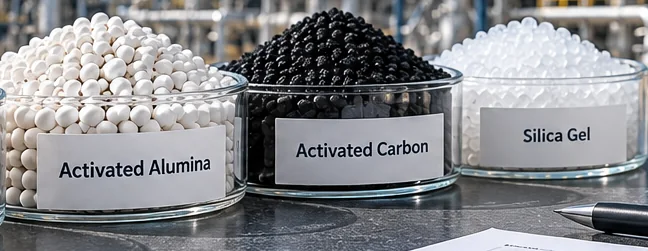
Confirm the Material, Not Just Its Packaging
Identity & form
Compare product name, approved technical grade, color/form as appropriate, bead/pellet/granule/particle range and exact lot reference.
Evidence & method
Check agreed physical and adsorption parameters, current test methods, who performed tests and how the results apply to shipped batches.
Exposure & integrity
Check broken or unsealed packs, water ingress, contamination, foreign matter, leakage, excessive dust or damage that may affect usable material.
Before approving a first-order material, review the Molecular Sieve Sample Evaluation or Activated Alumina Sample Evaluation Checklist as applicable. Pre-shipment records should follow the approved reference and contract-defined inspection basis.
Pre-Shipment Inspection Matrix for Industrial Adsorbent Bulk Orders
Use this matrix when discussing an inspection plan with a supplier or third-party inspector. Every quantitative acceptance limit should come from your PO, approved standard or technical agreement.
Swipe horizontally to view all table columns →
| Check | What to examine or record | Evidence or acceptance basis |
|---|---|---|
| Product and batch marking | Approved product/grade, lot number and pack-level identity | Purchase order, approved TDS/grade and traceability record |
| Visible physical condition | Unexpected foreign matter, damage, excessive fines, wetting or changed product form | Approved appearance criteria and physical/sample testing where needed |
| COA or test evidence | Applicable lot(s), actual tests, method, units and pass/fail versus agreed limits | Batch COA or independently agreed testing protocol |
| Net quantity | Pack count, net mass per package, total net mass and weight basis | PO quantity tolerance, weight evidence and draft packing list |
| Primary sealing | Bag/liner/drum seal condition, tamper or moisture barriers if required | Approved packing specification and buyer agreed photographs/inspection |
| Transport condition | Clean, dry pallet/container conditions, package stability and protection during loading | Shipping specification, packing plan and dispatch inspection |
| Shipping marks | Buyer-required lot, item, net/gross weight and destination marks | Shipping marks, export/customer requirements |
| Final documents | Invoice, packing list, applicable SDS, COA and contractually required certificates | Approved document list; no unsupported certification claims |
Photographs should identify the actual lot and inspection date when required; avoid substituting marketing images or generic factory stock photos as inspection evidence.
Set Sampling and Retention Rules Before Dispatch
Where an agreed lot-level test or independent inspection is necessary, the sampling method is part of the contract, not an informal choice on the loading day.
Define the lot
Establish what constitutes a production lot, how many lots are included, and which packs are sampled under the agreed plan.
Protect the sample
Use suitable sealed containers and traceable sample labels, especially for moisture-sensitive media, and document the chain of custody.
Agree the decision
Define method, lab, retest rules, nonconformance handling and whether buyer approval is a shipping condition.
For a new hydrogen PSA system or critical dryer replacement, do not conclude that a sample’s appearance or COA alone guarantees plant purity, dew point or recovery. The responsible engineering team must establish application-level acceptance.
What to Do If Pre-Shipment Inspection Finds a Problem
Keep affected material on hold until the agreed nonconformance is resolved. Document which lot and packs are affected, the evidence, any rework or replacement proposal, the reinspection method and buyer approval. Do not silently change the grade, repack unapproved goods or use an unrelated COA.
A reasonable shipment-release decision records the technical result, quantity/packaging check, approved export papers and the named person or team authorizing dispatch. Not every order requires a third-party inspector; the contract should specify when independent testing or attendance is necessary.
Swipe horizontally to view all table columns →
| Release gate | Decision |
|---|---|
| Lot identity verified | Every included lot reconciles with order and required quality records |
| Conformity evidence accepted | All agreed tests, exceptions and buyer waivers documented |
| Quantity / packing accepted | Approved net mass, package count, liner/seals and transport protection |
| Document pack ready | Applicable commercial and technical documents checked against contract |
| Shipment authorization | Customer and/or responsible party approves loading according to purchase terms |
Bulk Adsorbent Pre-shipment Inspection Questions
Is a COA enough to release a molecular sieve shipment?
Only if it satisfies the contractually agreed acceptance requirements. A COA should identify the relevant lot and agreed tests; packaging, quantity, traceability and buyer-specific inspection conditions may still need confirmation.
Should every shipment be tested by an independent laboratory?
Not universally. Independent testing should be based on the order’s risk, quality plan and contract terms. Routine lots may follow an agreed manufacturer/supplier COA process, while critical applications may require independent verification.
Why is moisture protection important for molecular sieves and activated alumina?
These materials adsorb water from the environment. An appropriate liner, sealing and handling plan can be important to preserve as-delivered condition, but the exact acceptance limits and packing type depend on the approved product.
What happens if multiple adsorbent lots are packed in one container?
Record each lot, quantity and corresponding documents. Testing/sampling and acceptance should follow the contract’s lot definition and rules rather than combining unrelated results.
Can inspection photos replace a physical sample?
No. Photographs document selected visual conditions; material identity and performance may require a traceable sample or agreed test report.
Should I check export packing and shipping documents during inspection?
Yes, if required by the purchase terms. Check packing list, marks, invoice and applicable technical documents against the final shipment; refer to the Adsorbent Packaging and Export Guide.
Request Lot, Packaging and Shipment Details With Your Adsorbent Quote
Send the product/grade, technical acceptance basis, required net quantity, pack protection, batch document and inspection requirements, destination and target delivery. Available documentation and inspection coordination are confirmed for the specific supply inquiry; no generic certificate or lot performance is promised.