Catalyst Carrier vs Support Media
Catalyst Carrier vs Support Media is a functional distinction, not simply a difference in color, shape or alumina content. A catalyst carrier is normally selected to hold and disperse active catalytic components, while reactor support media is selected mainly to support the bed, distribute flow and protect active material. This Adsorbent Source guide explains the data and reactor information needed before specifying either material.
Which Material Does the Project Actually Need?
First determine whether the material will become part of a supported catalyst or remain as a separate structural layer inside the reactor. Similar-looking alumina or ceramic balls may have very different porosity, surface area, density, strength and intended loading position.
Catalyst Carrier
A porous solid used to receive or disperse an active component. Selection centers on pore structure, surface area, chemistry, particle form, impregnation behavior and compatibility with the catalyst formulation.
Support Media
An inert or functional layer used below, above or between active materials. Selection centers on particle size, crush strength, chemical stability, loading position, flow distribution and bed protection.
“Catalyst Support” Needs Clarification
In catalyst science, “support” can mean the porous carrier holding the active phase. In reactor loading, “support media” often means separate inert balls. Confirm the function rather than relying on the word “support.”
Catalyst Carrier vs Support Media: Core Differences
The same base chemistry does not make two products interchangeable. Compare intended function, structure, location and qualification method before comparing price.
| Selection Point | Catalyst Carrier | Reactor Support Media |
|---|---|---|
| Primary function | Provides a porous structure for depositing, dispersing or stabilizing active catalytic components. | Supports catalyst or adsorbent layers, distributes flow and helps protect the active bed mechanically. |
| Relationship to active material | Normally becomes part of the finished catalyst after impregnation, coating or another preparation step. | Normally remains a separate layer and does not replace the active catalyst. |
| Typical structure | Often porous, with controlled surface area, pore volume and pore-size distribution. | Often denser and mechanically robust; porosity may be secondary unless a functional support grade is specified. |
| Typical reactor position | Loaded as the active catalyst body after preparation or supplied as part of a finished supported catalyst. | Placed at the bottom, top or transition zones according to the reactor bed design and support-grid arrangement. |
| Main data | Chemical composition, BET surface area, pore volume, pore distribution, impurity limits, shape, size and strength. | Material grade, particle size, individual crush strength, chemical and thermal stability, density and dimensional consistency. |
| Qualification route | Carrier characterization plus catalyst-preparation and process-performance evaluation under the intended formulation. | Mechanical, chemical and thermal review against the reactor design, loading plan and operating conditions. |
| Common mistake | Buying a dense ceramic ball as a catalyst carrier because the chemistry or appearance seems similar. | Using a small porous carrier as structural bed support without confirming load, pressure drop and support-grid compatibility. |
A Catalyst Carrier Must Match the Catalyst Preparation Route
A catalyst carrier is not a finished catalyst unless active catalytic components have already been applied or incorporated. The carrier must first provide the required pore system, surface chemistry, particle geometry and strength for impregnation, drying, calcination and later process service.
Surface area alone does not determine suitability. The active precursor must enter and distribute through accessible pores, interact appropriately with the carrier and remain stable through preparation and operation. Impurities, pore-size distribution, water absorption, acidity or alkalinity and thermal transformation can all matter depending on the formulation.
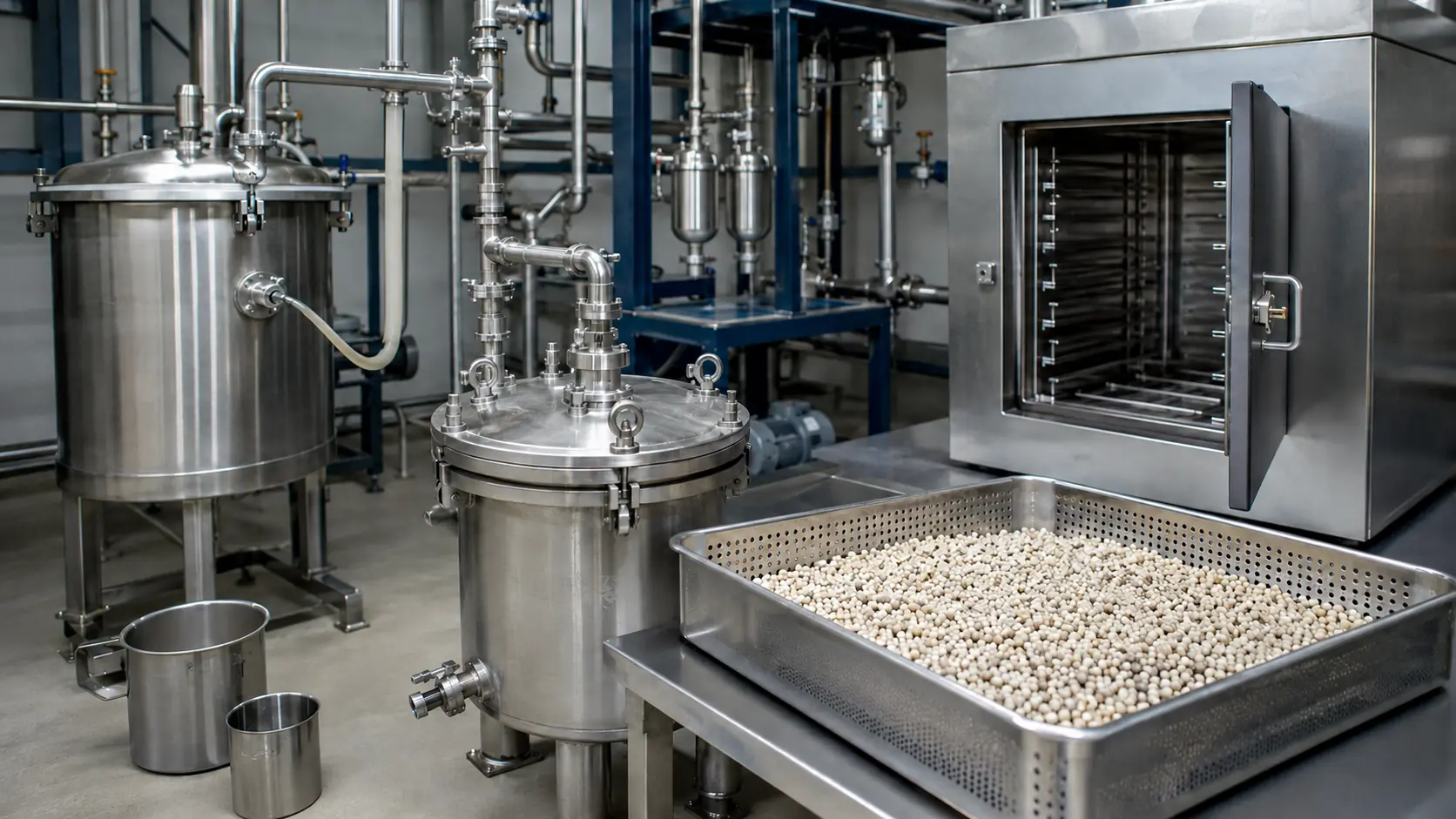
Activated Alumina Catalyst Carrier
Review carrier form, pore data, strength, chemistry, preparation conditions, sample requirements and documentation before selecting a grade.
Support Media Must Match the Reactor Loading Plan
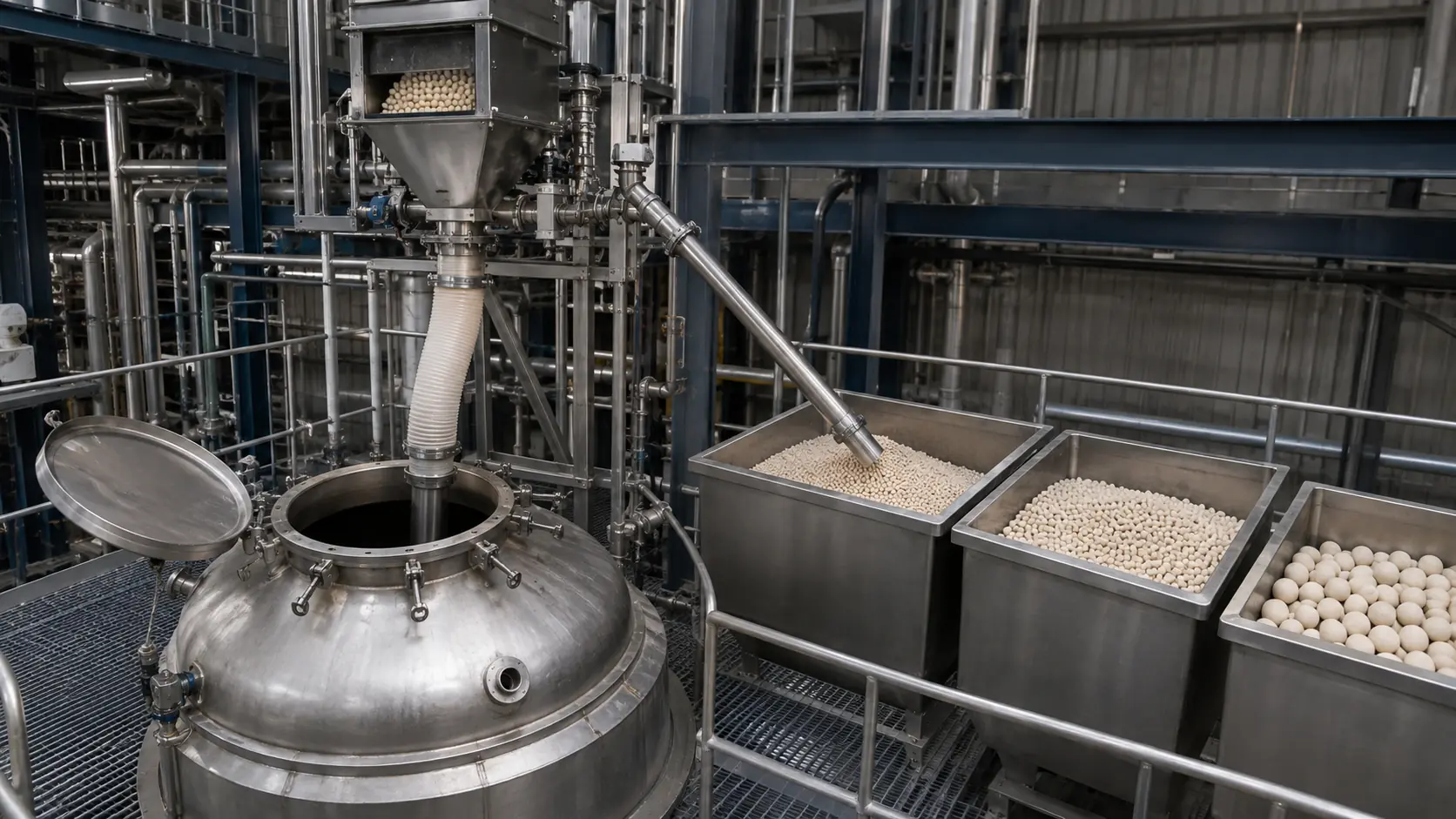
Reactor support media is normally selected as part of the complete bed design. It may support an active catalyst or adsorbent layer above the support grid, provide a size transition, improve distribution or protect the active layer from movement and handling damage.
Several particle sizes may be arranged in graded layers, but no universal sequence should be copied from another reactor. Sphere diameter, layer thickness and loading order must match the support-grid openings, active-media size, vessel internals, flow direction, pressure drop and allowable load.
For reactor-level selection factors, loading positions and RFQ inputs, see the Catalyst Bed Support Media application guide.
Reactor Support Media
Compare inert ceramic balls and other support options using the reactor design, loading position, media sizes, strength, chemical environment and required documents.
Define Both the Material and Its Position in the Process
A useful inquiry should make clear whether the buyer needs a carrier for catalyst preparation, a finished supported catalyst, or a separate reactor support layer. The following inputs prevent technically different products from being compared as if they were equivalents.
Required Function
State active-component carrier, finished catalyst base, bottom support, graded transition, top hold-down, flow distribution or bed protection.
Process and Reactor
Identify the reaction or treatment duty, reactor or vessel type, internal arrangement, support grid and available bed drawing.
Operating Conditions
Provide temperature, pressure, gas or liquid composition, flow direction, start-up and shutdown conditions and possible thermal cycling.
Material Chemistry
State required alumina or ceramic direction, impurity restrictions, corrosive components and any known compatibility limits.
Physical Form
Provide shape, dimensions, particle-size tolerance, bulk density, existing grade and required filling quantity.
Carrier Pore Data
For catalyst preparation, define surface area, pore volume, pore distribution, absorption behavior and active precursor information.
Support-Layer Design
For reactor media, provide loading position, layer thickness, grading sequence, active-media size and grid opening.
Documents and Supply
State sample quantity, TDS, SDS, COA, test-method needs, packing format, lot traceability, annual quantity and destination.
Compare Results Only When the Test Basis Matches
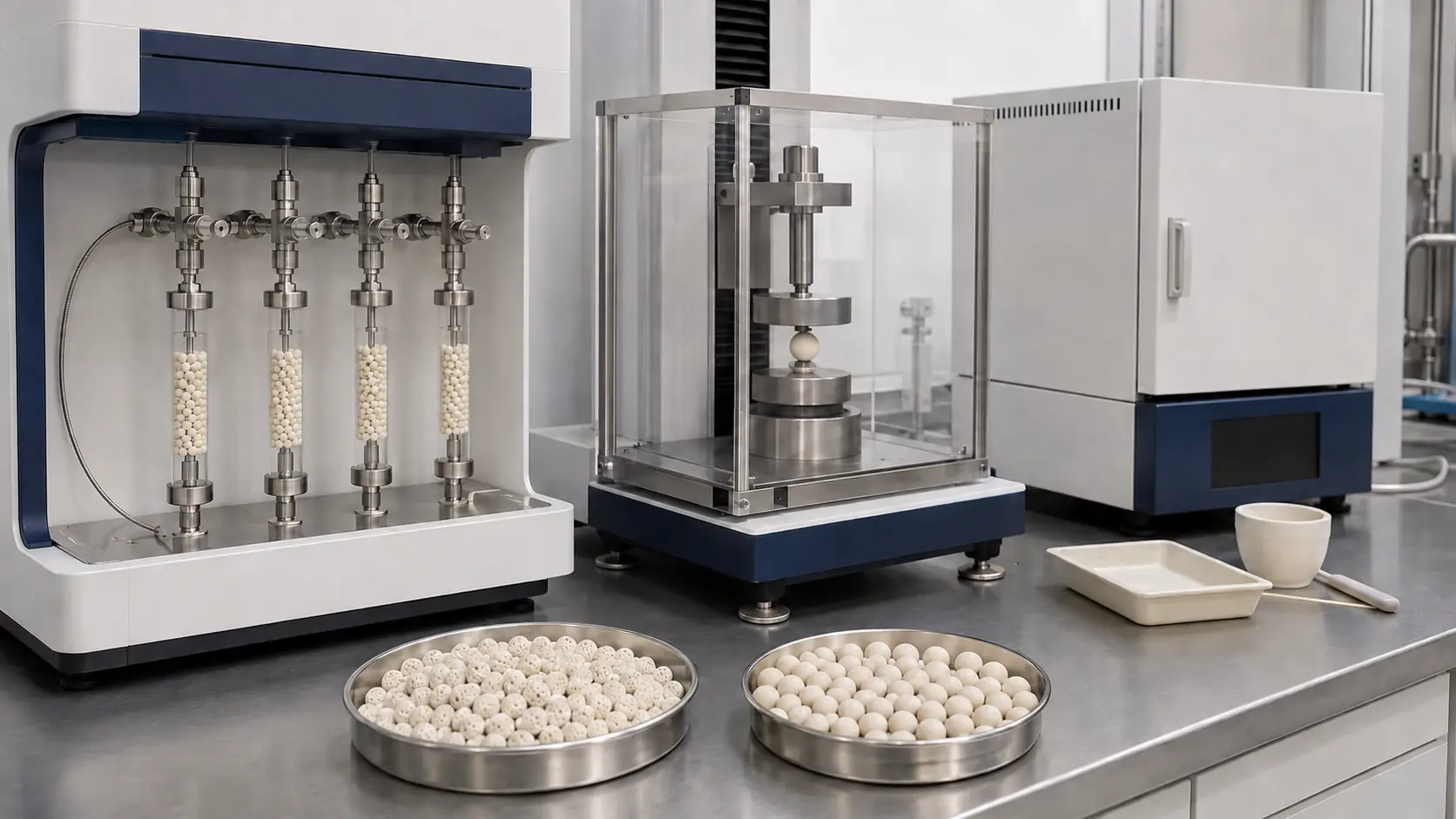
Catalyst carriers and support media may both list strength and alumina content, but their decisive properties are different. Carrier qualification commonly adds pore-structure and preparation data. Support-media qualification emphasizes individual-particle strength, size consistency, chemical resistance, thermal stability and fitness for the designed bed position.
Numbers from different suppliers are not automatically comparable. Crushing geometry, loading rate, sample conditioning, particle size, calculation basis and reporting units can change the result. The same caution applies to BET surface area, pore volume, water absorption and chemical analysis.
Clarify the Function
Decide whether the material holds an active phase or forms a separate structural layer.
Describe the System
Provide catalyst-preparation data or the reactor drawing, bed position and operating conditions.
Compare Relevant Data
Use pore and formulation data for carriers; use structural and stability data for support media.
Validate and Approve
Confirm samples, test basis, selected grade, packing and final engineering approval.
Catalyst Carrier vs Support Media FAQ
These answers define the purchasing boundary. Final suitability still depends on the catalyst formulation, reactor design, operating conditions and verified supplier data.
What is the main difference between catalyst carrier and support media?
A catalyst carrier provides a structure for holding or dispersing active catalytic components and usually becomes part of the finished catalyst. Reactor support media normally remains a separate layer used for mechanical support, flow distribution and active-bed protection.
Is catalyst support the same as reactor support media?
Not always. “Catalyst support” often means the porous carrier on which the active phase is deposited, while “reactor support media” commonly means separate inert balls or graded layers. The intended function must be stated clearly.
Can inert ceramic balls be used as catalyst carriers?
They should not be assumed to be catalyst carriers. Dense inert balls may not provide the pore structure, surface area or impregnation behavior required for active-component loading. Use them as carriers only when the exact grade has been qualified for that formulation.
Can activated alumina balls be used as reactor support media?
Some alumina grades may be reviewed for support or functional-layer duties, but suitability is not established by appearance or alumina content alone. Strength, porosity, chemical stability, particle size, loading position and reactor design must be checked.
How is catalyst carrier performance evaluated?
Evaluation may include chemical composition, impurities, surface area, pore volume, pore-size distribution, absorption or impregnation behavior, strength, thermal treatment and catalyst-performance testing after the active component is applied.
How is reactor support media particle size selected?
Particle size should be selected from the support-grid opening, active-media dimensions, layer position, grading sequence, flow distribution, pressure-drop and mechanical-load requirements. There is no universal size sequence for every reactor.
What information should I send for a quotation?
Send the required function, process, reactor or vessel details, loading position, bed drawing, operating temperature and pressure, stream composition, material grade, shape, particle sizes, strength or pore requirements, filling quantity, existing product, documents, packaging and destination.
Select Carrier and Support Materials by Function
Send your catalyst-preparation requirement or reactor loading plan. Adsorbent Source supplies industrial adsorbents and reviews the requested carrier or support media against the application data. Sample and document availability, packing and quotation requirements can be checked for each inquiry.
TDS vs SDS vs COA for Adsorbents →
Adsorbent Packaging and Export Guide →