INSULATING GLASS · SPACER DESICCANT PROCUREMENT
Molecular Sieve Desiccant for Insulating Glass
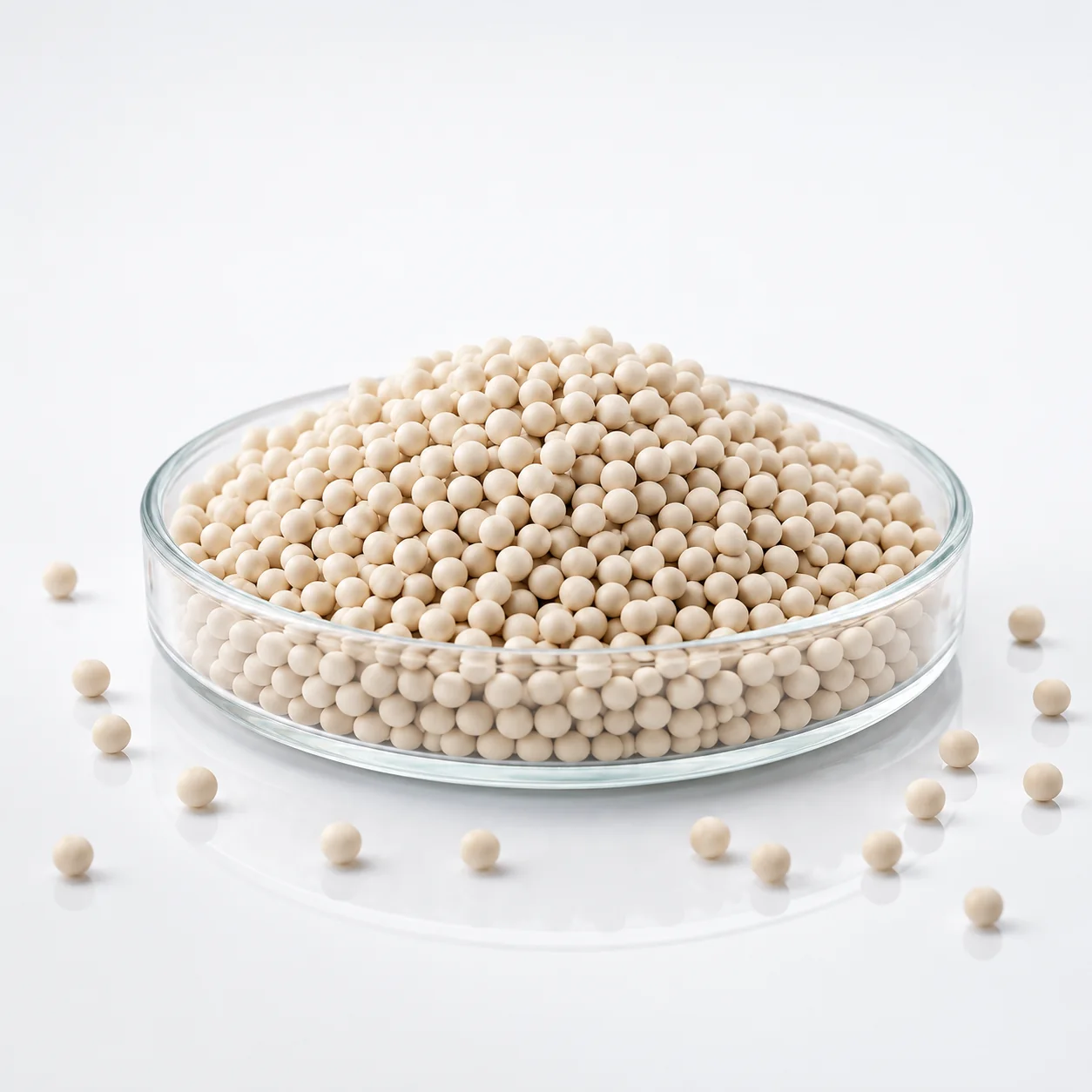
Find the right molecular sieve desiccant specification for insulated glass (IG) spacer filling and sealed glazing production. Compare dedicated 3A-grade suitability, bead size, filling compatibility, moisture capacity, gas adsorption risk and packaging before bulk procurement.
Which Adsorbent Direction Fits This Duty?
For many insulating glass units, an application-qualified 3A molecular sieve desiccant is chosen to adsorb water vapor while limiting uptake of common fill gases. The nominal 3A label is only a starting point; final approval requires the glazing process specification and the supplier’s supporting data.
Adsorbent Source helps industrial buyers review product selection, samples, technical documentation, packing and supply requirements. A final suitability decision should be based on the manufacturer’s current test data and the buyer’s operating conditions, not a generic product claim.
What the Desiccant Does Inside a Sealed IG Unit
Moisture remaining in the airspace or entering over the unit’s service life can cause condensation and loss of visual clarity. Molecular sieve is normally incorporated into spacer systems to help control the moisture level inside the sealed cavity.
IG desiccant procurement is therefore not simply an ordinary drying-media purchase. Particle-size distribution, moisture uptake, compatibility with gas-filled units, filling equipment and sealing materials must be assessed together.
- Perforated hollow spacer: requires dry, free-flowing beads that fit the spacer and filling system.
- Warm-edge and alternative spacers: confirm format with the system supplier; some designs use incorporated or formulated desiccants.
- Argon-filled units: pay special attention to the grade’s selectivity and the spacer-system performance requirements.
How to Compare IG Molecular Sieve Offers
Water adsorption
Review moisture capacity under the applicable test method, plus handling and filling exposure. Compare test values on an equivalent basis.
Gas compatibility
For gas-filled units, require documented suitability for the spacer system and filling gas rather than assuming every generic desiccant is acceptable.
Filling consistency
Choose size distribution and dust/attrition limits that suit automated spacer filling, vibration and downstream sealing operations.
Insulating Glass Desiccant Purchasing Checklist
| Specification item | What to confirm before ordering |
|---|---|
| Glazing construction | Hollow spacer, warm-edge system or other format; expected cavity and sealing arrangement |
| Filling gas | Air, argon, krypton or another gas; system compatibility requirements |
| Desiccant grade | Application-qualified type, producer grade code and compatibility documents |
| Particle size | Required nominal size and distribution tolerance for the spacer/filling machine |
| Adsorption performance | Moisture capacity, test conditions, gas uptake/selectivity as relevant |
| Physical integrity | Crush strength, dust, attrition, flowability and packaging exposure |
| Quality evidence | Current TDS, COA/sample result and agreed incoming acceptance protocol |
| Commercial order | Monthly consumption, trial quantity, packaging, destination and delivery schedule |
The checklist intentionally contains no unsupported universal bead-size specification or claim of compliance with a particular glazing standard.
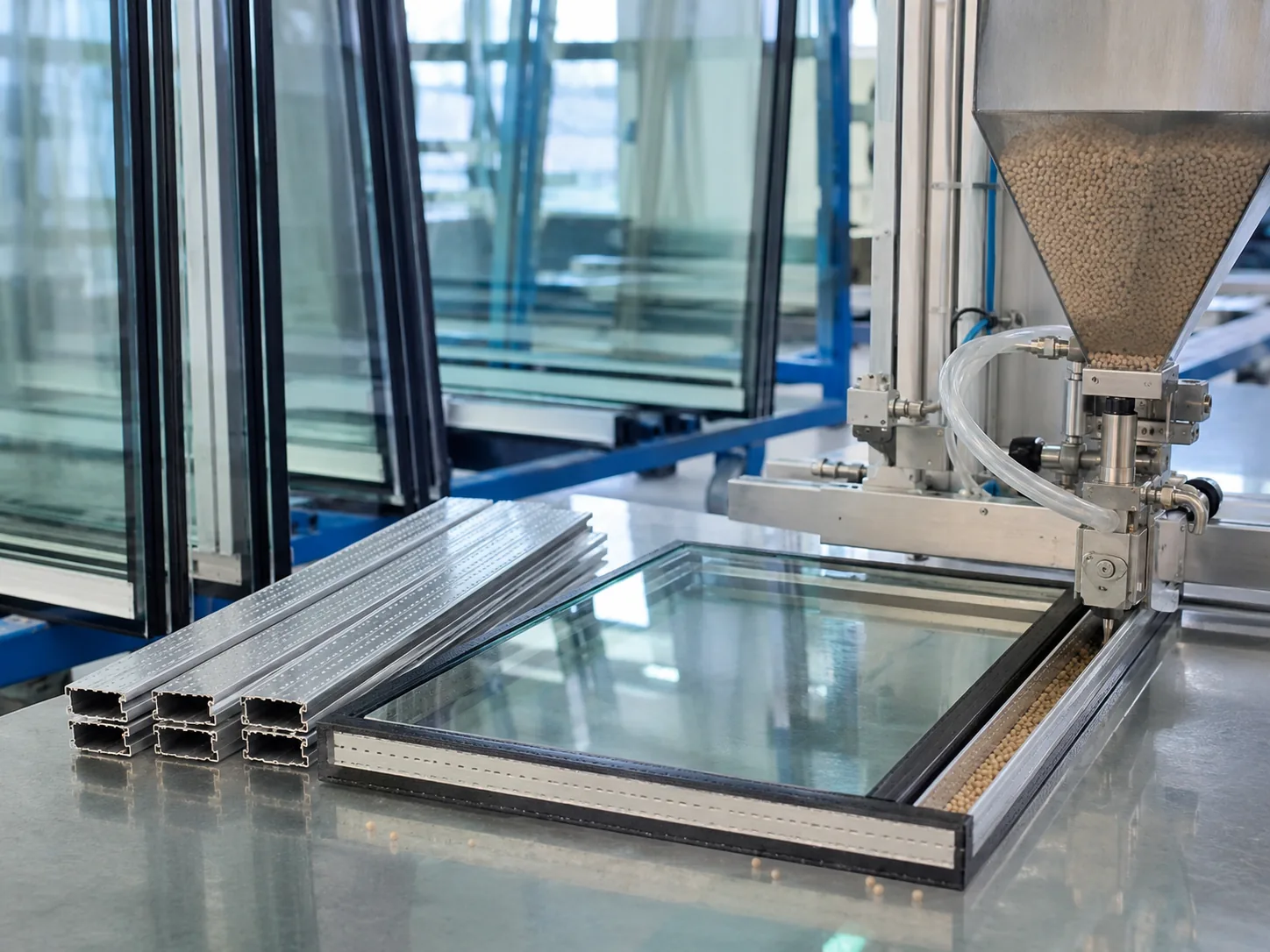
Trial the Product on the Actual Spacer Line
Before changing suppliers, request samples and compare them with the currently accepted desiccant on your own production equipment. A practical evaluation should include filling flowability, bead or dust carryover, feeding speed, compatibility with the selected spacer and validated moisture-performance requirements.
Supply samples with traceable grade identification and agreed documentation. If the buyer has a reference TDS or incoming inspection specification, use it as the comparison baseline.
Need a general procurement framework? See Molecular Sieve Sample Evaluation Checklist and TDS/COA Comparison.
Insulating Glass Molecular Sieve FAQ
Is every 3A molecular sieve suitable for insulating glass?
No. IG production requires an appropriate particle form, filling performance and application-specific quality evidence. Request a grade intended for the glazing system and complete approval trials.
Why does gas-filled glazing need special attention?
Desiccant selection should help remove moisture without undesirable adsorption of the intended insulating fill gas. Confirm the desiccant, gas and complete spacer construction as a system.
Can one bead size work with every spacer filling line?
No. Spacer cross-section, opening geometry, hopper and filling mechanism determine acceptable particle size and flowability. Provide the current bead specification or line requirements.
What should we ask for before a container or bulk order?
Confirm application-specific TDS, sample/COA information, size tolerance, handling requirements, packaging protection, expected monthly volume and a clear acceptance procedure.
Is powder desiccant interchangeable with beads?
Not by default. Some spacer technologies use integrated powder-based systems, while perforated hollow spacers commonly use bead filling. Follow the spacer-system manufacturer’s format and validation.
For industry context on IG spacer formats and gas selection, see the insulating-glass technical FAQ. Independent source information does not certify a particular supplied batch.
Request Product Grade, Sample and Bulk Supply Details
Send the information available now. Missing operating data can be discussed during technical review before final grade or quantity approval.
Include These Five RFQ Items
- Spacer type and desiccant feed method
- IG construction and intended cavity gas
- Current grade, particle size and quality standard
- Trial sample and recurring order volume
- Packaging, documents and shipment destination