3A Molecular Sieve for Olefin & Cracked Gas Drying
Water removal from ethylene, propylene and other olefin-containing streams requires more than a generic molecular sieve selection. A 3A molecular sieve is commonly considered where selective water adsorption and limited co-adsorption of larger hydrocarbon molecules are important.
On this page
Why 3A Is Considered for Olefin Drying
Type 3A molecular sieve has a nominal pore opening of approximately 3 Å. Its pore structure is selected for water adsorption while restricting access for many larger molecules. This makes 3A a common candidate for drying unsaturated hydrocarbon streams where unnecessary co-adsorption of the process hydrocarbon should be limited.
The exact performance still depends on the actual 3A grade, binder, particle form, feed composition, operating temperature and regeneration cycle. A pore-size label alone does not qualify a replacement product.
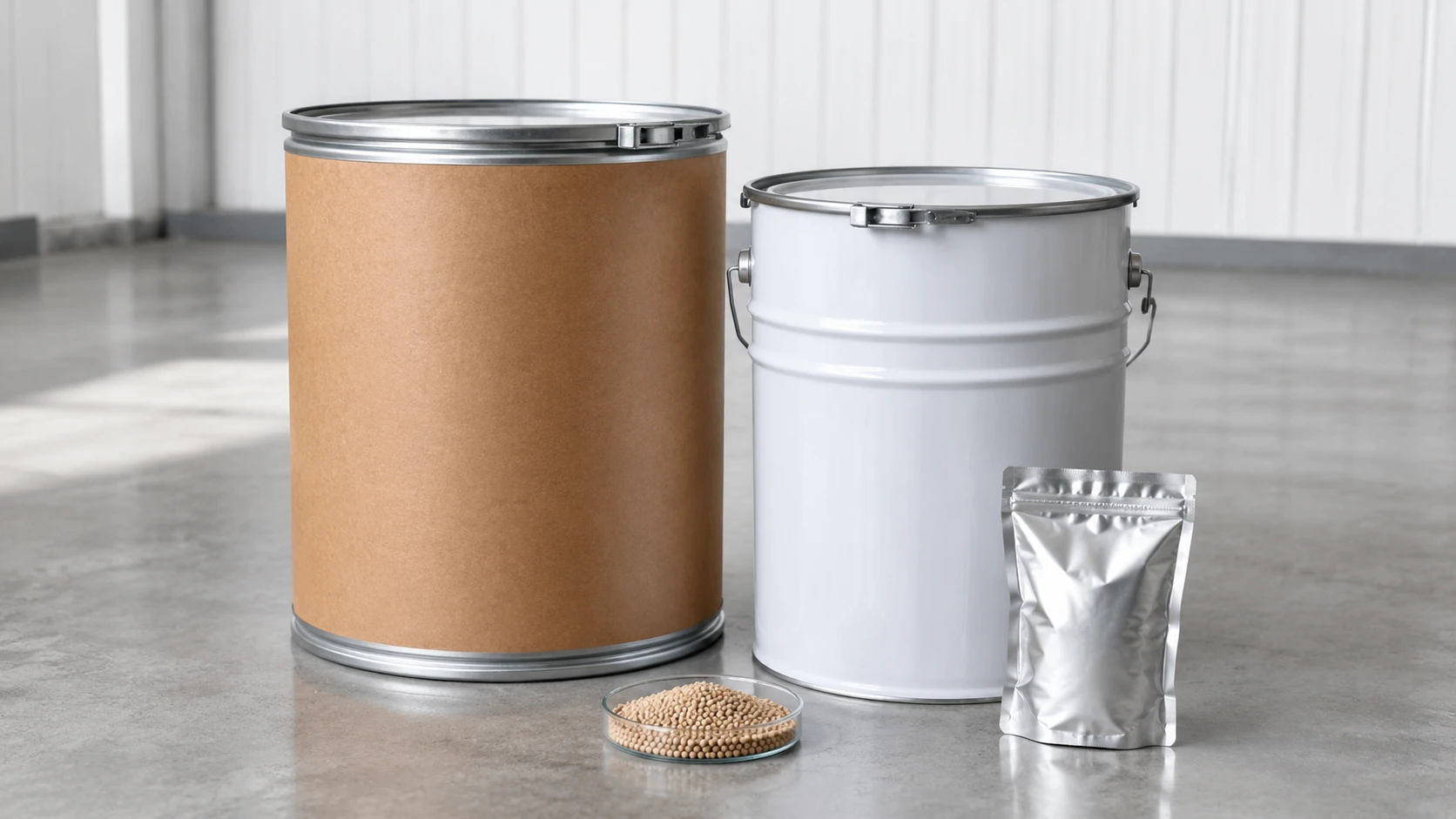
Product form must match the vessel
Beads and pellets are not automatically interchangeable. Confirm particle size, bed retention, pressure drop, mechanical strength and the existing equipment loading specification.
Olefin Service Has a Regeneration and Binder-Quality Dimension
3A selection for olefin drying is not only a pore-size decision. Merck’s technical overview lists commercial dehydration of unsaturated hydrocarbon streams—including cracked gas, propylene, butadiene and acetylene—as a major application of Type 3A. It also notes that regeneration temperature matters because excessive or poorly controlled heating can promote olefin polymerization on the molecular-sieve surface. A further distinction matters in cracked-gas service: Merck lists acetylene at a critical diameter of about 2.4 Å, below the nominal 3 Å opening, while ethylene is about 4.2 Å. Acetylene can therefore enter the 3A pore system; the feed impurity profile and intended adsorption duty must be reviewed rather than assuming the bed only adsorbs water.
There is also a material-quality issue behind the grade name. A 2022 peer-reviewed study of 3A molecular sieves for olefin dehydration reported that binder acidity and the degree of potassium ion exchange affected coke formation and performance in the samples studied. This does not establish a universal commercial acceptance limit, but it shows why a buyer should not qualify a 3A replacement from nominal pore size or static water capacity alone.
| Qualification question | Evidence to request | Why it matters |
|---|---|---|
| Is the material designed for olefin service? | Grade-specific application statement and technical data for the named stream. | A general 3A label does not establish suitability for every unsaturated hydrocarbon. |
| What is the binder / formulation basis? | Available formulation, binder or ion-exchange information; supplier confirmation of olefin-service grade. | Binder chemistry and ion exchange can influence side reactions and long-term bed behavior. |
| How is the bed regenerated? | Approved heat-up profile, purge gas, flow direction, end-point and cooling instructions. | Regeneration conditions can affect both drying performance and unwanted polymer deposition. |
| How is performance evaluated? | Agreed water loading, outlet moisture, cycle conditions and sample / plant validation basis. | Static water capacity alone does not describe cyclic performance in an olefin dryer. |
Technical references: Merck, Molecular Sieves—applications and regeneration guidance; Investigating the properties and performance of 3A molecular sieves as an adsorbent to prevent coke formation in olefin dehydration process.
Streams Commonly Reviewed
These are application directions for technical review, not a statement that one grade is suitable for every feed or plant.
3A, 4A and 13X: Do Not Treat Them as Direct Substitutes
| Grade family | General selection direction | What must be checked for olefin service |
|---|---|---|
| 3A | Commonly reviewed for selective water removal from unsaturated hydrocarbons. | Water capacity, olefin co-adsorption, particle form, contaminants and regeneration behavior. |
| 4A | Broader pore opening than 3A; used for other gas and liquid drying duties. | Do not substitute based only on water capacity. Review hydrocarbon adsorption and process compatibility. |
| 13X | Used for selected gas purification and air pre-purification duties. | Confirm whether co-adsorption of feed components is acceptable and whether the process specification calls for 13X. |
Data Required Before Selecting a 3A Grade
Replacement and Bulk Procurement Review
For an existing olefin dryer, send the original media specification and the operating records before requesting an equivalent. The review should compare the proposed grade against the installed bed, not only the model name or nominal particle size. If the original media is unavailable, provide the equipment manufacturer’s approved specification and the process engineer’s acceptance basis.
For a new bed, the process designer must establish the required capacity, vessel arrangement, regeneration cycle and outlet specification. Adsorbent supply information cannot replace process design or equipment approval.
Olefin Drying with 3A Molecular Sieve: FAQ
Why is 3A molecular sieve used for ethylene and propylene drying?
Its nominal pore opening is suited to admitting water while restricting many larger hydrocarbon molecules. This selective behavior is why 3A is commonly reviewed for olefin dehydration. The exact grade still needs process-specific qualification.
Can 4A or 13X replace 3A in an olefin dryer?
Do not assume direct interchangeability. The pore opening and adsorption behavior differ. Any substitution should be checked against the feed composition, co-adsorption risk, regeneration conditions and equipment specification.
Can the same 3A grade be used for ethylene and propylene?
Not automatically. Both are olefin streams, but the feed composition, operating conditions and plant specification may differ. Confirm the required grade and performance basis for each project.
What documents should be reviewed before bulk purchase?
Request the grade-specific TDS, applicable test methods, lot COA, particle-size information, packaging details and any equipment or process approval required by the plant.
What should I send for a quotation?
Send the stream composition, inlet and outlet moisture, flow, pressure, temperature, vessel dimensions, cycle and regeneration data, particle form, quantity and destination.
Technical References
For general molecular-sieve application context, see the Merck molecular sieve technical overview and the International Adsorption Society overview of adsorption applications. Their published application information is general reference material; confirm the selected supplier’s actual grade data and the plant’s approved operating specification.
Review a 3A Molecular Sieve Requirement
Send the olefin stream composition, moisture target and dryer operating data. We can review the inquiry against the available 3A product information and identify the documents needed for technical approval.