5A Molecular Sieve for Normal Paraffin Separation
5A molecular sieve is used in selected hydrocarbon-separation processes to adsorb linear normal paraffins while restricting larger branched and cyclic molecules. This is a specialized separation duty: feed composition, phase behavior, cycle design and adsorbent qualification matter as much as the nominal 5 Å pore opening.
On this page
How 5A Molecular Sieve Performs This Separation
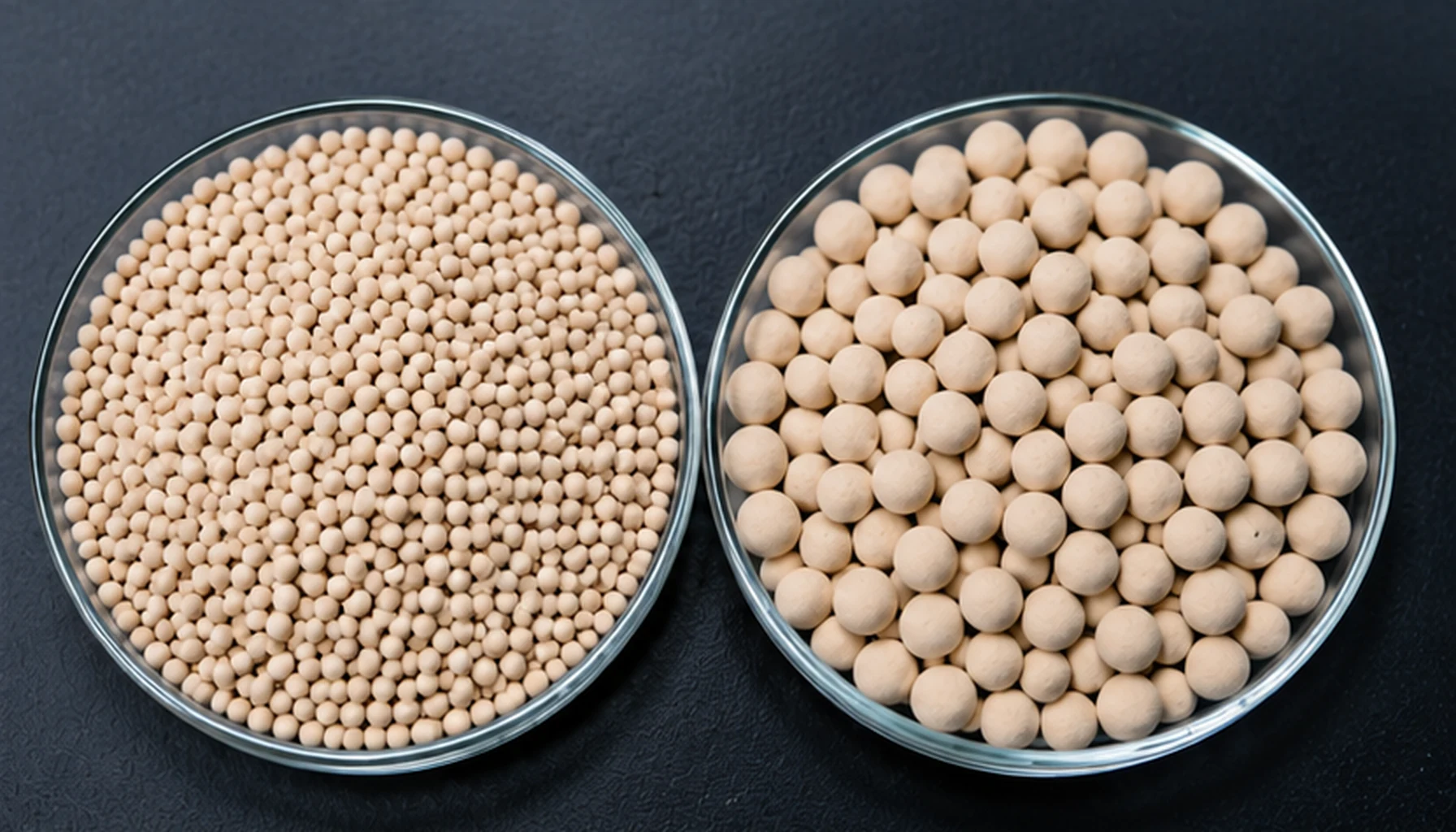
Type 5A molecular sieve has an effective pore opening of approximately 5 Å. Its pore structure can admit many linear hydrocarbon molecules while restricting larger branched or cyclic molecules. This molecular-size selectivity is the basis for using 5A in selected normal-paraffin separation duties.
The separation is not determined by nominal pore size alone. Adsorption rate, internal diffusion, pellet dimensions, feed composition, temperature and the chosen process cycle affect actual performance.
Separation is different from drying
A 5A grade used for a drying duty is not automatically qualified for normal-paraffin recovery. The intended separation, feed phase and process conditions must be stated before grade approval.
Where This Application Is Relevant
Published technical literature describes 5A molecular sieve adsorption for separating normal paraffins from branched and cyclic hydrocarbons, including selected refinery and wax-related feedstocks. The exact feed range and process arrangement are project-specific.
| Feed or process context | Separation question | Information to verify |
|---|---|---|
| Hydrocarbon mixtures | Can linear normal paraffins be selectively adsorbed from the non-normal fraction? | Carbon-number distribution, normal / iso / cyclic composition and feed phase. |
| Kerosene or light gas-oil fractions | Is the feed within the process licensor’s approved range for molecular-sieve separation? | Feed assay, temperature, pressure, viscosity and process configuration. |
| Slack wax or heavier paraffinic feeds | Will molecular diffusion and molecule size limit the adsorption rate? | Chain-length distribution, feed properties, operating temperature and validated test basis. |
| Existing 5A separation beds | Can a replacement material match the original adsorbent’s function and operating basis? | Original grade, particle dimensions, loading mass, cycle history and OEM / licensor approval. |
Normal-Paraffin Separation Is a Defined Process Duty—not a Generic 5A Claim
A useful technical distinction is the difference between a 5A molecular sieve used as a general adsorbent and a 5A adsorbent qualified for a particular normal-paraffin separation process. A 1969 published review of the UOP Molex process describes 5A molecular sieve in an isothermal, liquid-phase separation of normal paraffins from kerosene / gas-oil fractions. Honeywell UOP’s own Sorbex process documentation adds an important operating distinction: the commercial process is continuous simulated-moving-bed adsorption. The solid adsorbent remains in chambers while a rotary valve indexes feed, desorbent, extract and raffinate streams among the chambers.
Honeywell UOP describes the Sorbex system as a simulated moving bed of solid adsorbent with counter-current extraction and indexed stream connections. See its Adsorbent Chamber Control System technical overview.
| What the process reference establishes | What it does not establish for a new purchase |
|---|---|
| 5A molecular sieve is used in a defined normal-paraffin separation process. | That any commercial 5A grade is automatically interchangeable with the process-approved adsorbent. |
| The described Molex operation is fixed-bed and isothermal in the liquid phase. | That the same operating configuration or conditions apply to every refinery feed or separation project. |
| The paper discusses n-paraffin production from kerosene / gas-oil fractions. | That the feed assay, product carbon-number range, purity or recovery target can be assumed without the project specification. |
Reference: Hiratsuka, “Production of n-Paraffins by UOP Molex Process,” Journal of the Fuel Society of Japan, 1969.
What Must Be Confirmed Before a 5A Grade Is Quoted
Why a Generic 5A Specification Is Not Enough
Two products described as “5A molecular sieve” may differ in pellet geometry, binder system, pore accessibility, mechanical strength, attrition resistance and adsorption kinetics. Those differences can affect a separation process even when the nominal pore size is the same.
For a replacement project, compare the proposed grade with the original specification and the process owner’s acceptance basis. For a new project, use the process licensor’s approved adsorbent specification and test requirements. Do not approve a substitute based only on a product name or one static adsorption figure.
5A Molecular Sieve for Paraffin Separation: FAQ
What does 5A molecular sieve separate?
In selected applications, 5A can adsorb linear normal paraffins while restricting larger branched and cyclic hydrocarbons. Actual separation performance depends on the feed and the process conditions.
Is normal-paraffin separation the same as molecular-sieve drying?
No. Drying removes water from a gas or liquid. Normal-paraffin separation uses molecular-size selectivity to separate hydrocarbon components. The qualification data and operating cycle are different.
Can any 5A molecular sieve be used for a normal-paraffin process?
No. Grade-specific pore structure, pellet properties, adsorption kinetics and process approval must be checked. A generic 5A product label is not sufficient evidence of process equivalence.
What is required for a replacement quotation?
Provide the original grade, feed assay, process phase, temperature, pressure, adsorber information, operating cycle, required product specification and current COA or TDS if available.
Does Adsorbent Source provide the complete separation process?
This page concerns adsorbent product enquiries. Process licensing, plant design, operating guarantees and equipment engineering remain with the qualified process licensor, plant designer or equipment supplier.
Technical References
For the general 5A pore-selectivity and normal-paraffin application, consult Merck’s molecular sieve technical overview. For published work on molecular-sieve separation of normal paraffins from slack wax, see the Journal of the Fuel Society of Japan article on the UOP Molex process and the Industrial & Engineering Chemistry study of normal-paraffin adsorption by 5A.
Send a 5A Molecular Sieve Separation Specification
For a new or replacement project, send the feed assay, process conditions, target separation and the process owner’s approved adsorbent specification. This allows the grade and available technical documents to be reviewed on a comparable basis.