Resources / Nitrogen PSA RFQ
Technical Resource · Procurement Preparation
Carbon Molecular Sieve for Nitrogen PSA: What to Include in an RFQ
A practical RFQ checklist for buyers sourcing carbon molecular sieve (CMS) for a nitrogen PSA generator—covering the duty, compressed-air basis, existing beds, cycle information, test criteria, documents, and delivery scope a supplier needs to quote responsibly.
Use this page to organize plant data before requesting a grade recommendation or replacement quote. The aim is to make the supplier’s assumptions visible and reduce avoidable back-and-forth.
Request a CMS quote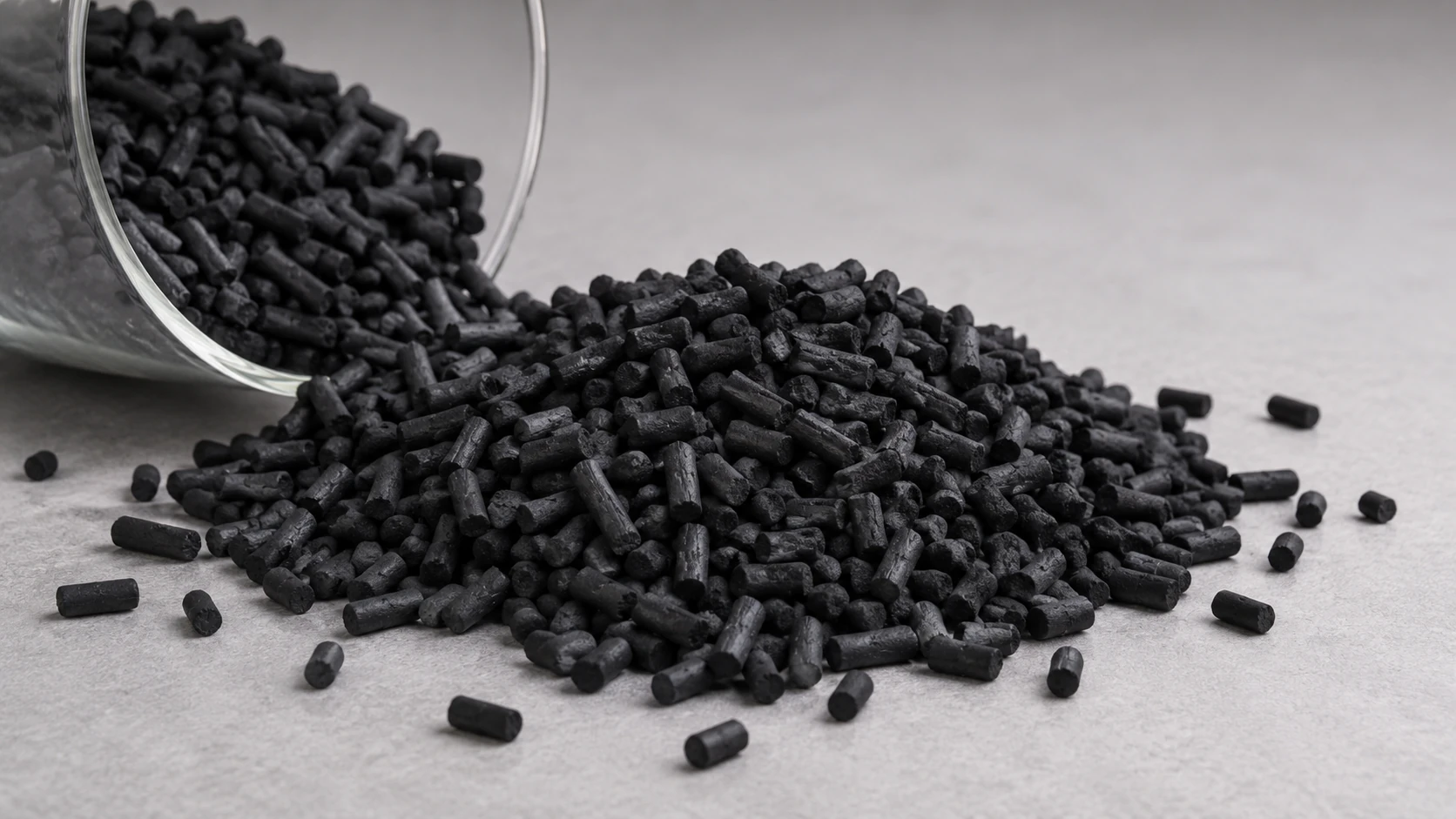
Quick Answer
A quoteable nitrogen PSA CMS RFQ connects the required nitrogen service to the actual generator and operating conditions. State the target purity, flow and delivery pressure with their measurement basis; describe feed-air preparation; provide the adsorber and current-fill details; share the operating cycle where available; and define the requested supply, evaluation, and delivery scope. Ask the supplier to identify assumptions, proposed grade, test basis, and any data still needed.
There is no single CMS grade or loading quantity that can be specified responsibly from the words “nitrogen PSA” alone. Use the checklist below to support a supplier review; the system designer and CMS supplier should confirm compatibility against the plant’s actual duty.
Why the System Context Matters
CMS is used in PSA nitrogen generation because gases are separated through cyclic adsorption and depressurization, with selected gas constituents preferentially adsorbed during the pressurized step while product gas passes through the bed. The exact performance depends on the material and the application conditions. Osaka Gas Chemicals describes the pressure-swing cycle and the CMS role in its CMS nitrogen-generation overview.
CMS products are not interchangeable by name alone: suppliers may offer grades with different performance parameters and selection depends on matching the product to the PSA plant. Request the supplier’s current grade-specific TDS and written recommendation for your service; see NECATEC’s CMS product information for an example of supplier-described grade variation.
1. Define the Nitrogen Duty and Product Basis
Start with what the generator must deliver at the point where nitrogen is used. Distinguish normal operating targets from design maximums, startup conditions, or future expansion. State the measurement units and reference conditions so the supplier can compare like with like.
Swipe horizontally to view all technical comparison fields →
| RFQ field | What to provide | Why to state the basis |
|---|---|---|
| Application and use point | Process served, location of the measurement or tie-in, and whether this is a new unit, replacement fill, or performance review. | Clarifies scope and where product conditions apply. |
| Nitrogen purity target | Required purity, how it is expressed, whether the target is continuous or occasional, and the analyzer location / method if specified. | “Purity” needs a defined measurement and operating point for a comparable offer. |
| Product flow | Required flow at normal, peak, and minimum load if known; specify the flow unit and its reference temperature and pressure. | Different standard reference conditions can make the same numeric flow represent different quantities. |
| Delivery conditions | Required delivery pressure, pressure at the point of use, and any downstream pressure loss or buffer receiver information available. | Links generator output to the actual plant demand. |
| Operating profile | Hours per day, starts/stops, seasonal or batch variation, turndown needs, and future capacity plans. | Helps distinguish steady operation from variable service. |
| Design / acceptance basis | Applicable project specification, code requirements if any, guarantee boundary, and who owns system performance calculations. | Prevents an adsorbent quote being read as a complete plant guarantee. |
2. Describe Feed Air and Pretreatment
Attach measured or design data for the air reaching the PSA skid. If you do not have a value, label it “unknown” and ask what needs to be measured. Include the upstream filters and dryer in the scope description so the supplier can identify the boundary of its recommendation.
Swipe horizontally to view all technical comparison fields →
| Information | Useful RFQ detail |
|---|---|
| Inlet pressure and temperature | Normal range, stated measurement point, and any known excursions or ambient extremes. |
| Air quality / contamination | Available oil, aerosol, dust, or particulate data; filter type and service status; lubricant carryover concerns. |
| Moisture control | Dryer type, pressure dew point or other available moisture specification, and alarm / bypass history. |
| Pretreatment equipment | Filter stages, dryer, drains, receiver, and maintenance status; note whether these are existing or part of the project. |
| Evidence | Operating log, maintenance report, instrument trend, or test record with dates and sampling location. |
Avoid treating an air-quality assumption as a measured plant value. Ask the supplier to list the feed-air conditions assumed in its proposal and note any pretreatment data required before final grade selection.
3. Document the Existing Adsorbers and Bed
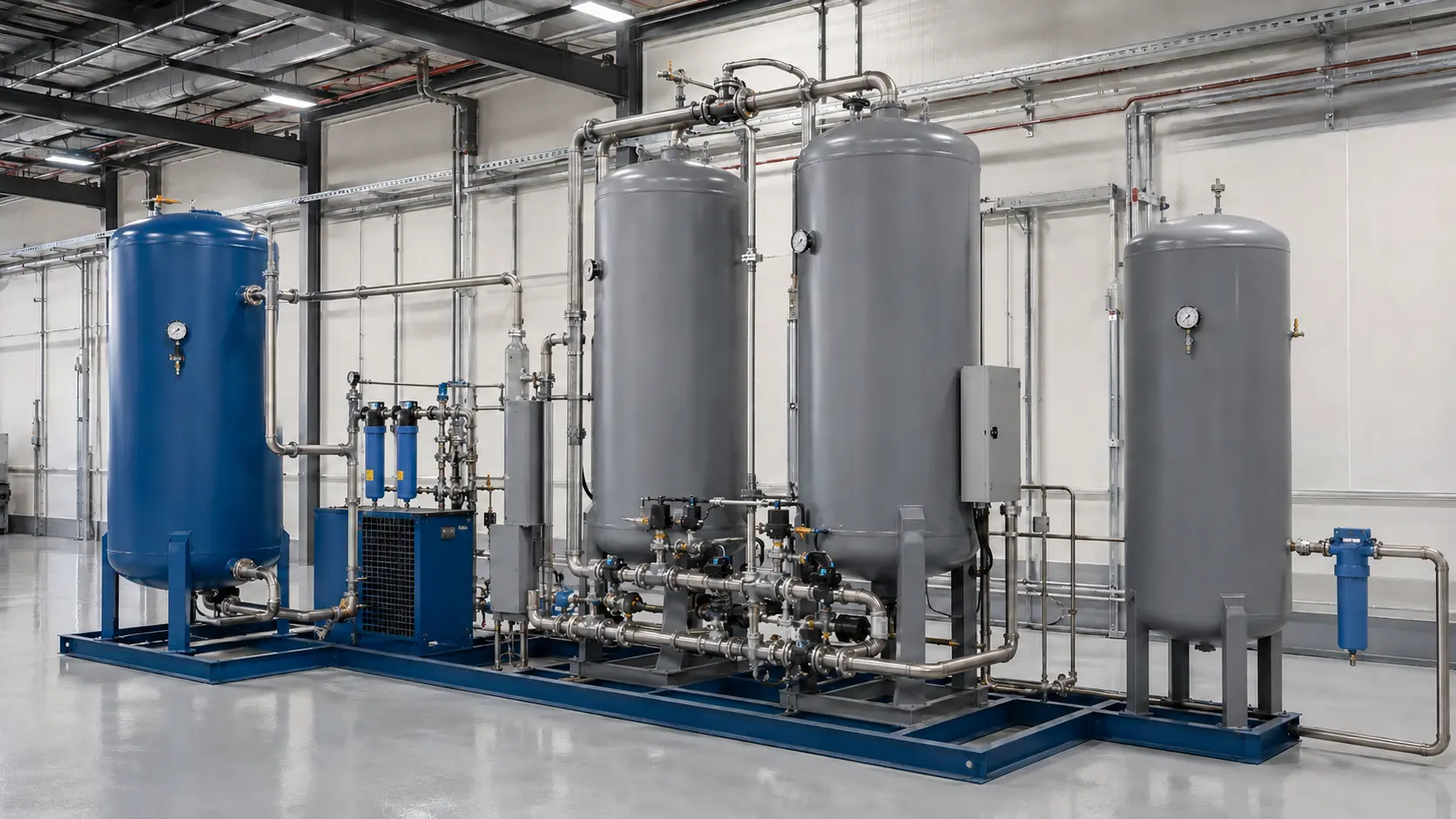
For replacement or refill work, equipment details are often the fastest way to establish whether a candidate material and fill scope can be reviewed. Attach drawings or nameplate photos where possible; do not rely on a vessel volume estimate alone.
Swipe horizontally to view all technical comparison fields →
| Equipment item | Provide where available | For replacement / refill |
|---|---|---|
| Generator identification | OEM, model, serial / asset number, installation year, and project or skid tag. | Confirm whether the original OEM or system designer will review compatibility. |
| Adsorber vessels | Number of vessels, orientation, internal diameter / height, design documents, and available internal drawings. | Identify screens, distributors, supports, retainers, and access constraints. |
| Existing CMS charge | Current supplier / grade if known, nominal particle size, fill quantity per vessel, and fill date. | Provide loading records and any material changes since original commissioning. |
| Bed condition | Settling, channeling, dust, contamination, unusual pressure drop, or inspection findings. | Attach photos / inspection notes and state whether unloading, disposal, and refilling are in scope. |
| Handling and installation | Access opening, lifting / conveying restrictions, site location, and planned outage window. | Clarify who supplies labor, equipment, disposal, and commissioning support. |
4. Share Cycle and Operating Information
A short process description or controller export can help the supplier understand the service better than a generic “two tower PSA” label. Share what you have and mark confidential plant details for the recipient through your normal business process.
Swipe horizontally to view all technical comparison fields →
| Cycle / operating data | What to attach or record |
|---|---|
| Cycle sequence | Step list or simplified control narrative: adsorption, depressurization, purge / equalization / repressurization steps used on the actual unit. |
| Pressure and timing | Operating pressure range and step durations, with units, instrument location, and normal / abnormal values if available. |
| Switching and controls | Valve sequence, cycle timing, alarms, interlocks, and recent changes to PLC logic or control settings. |
| Operating history | Trends for product purity, flow, pressure, temperature, cycle alarms, and maintenance events around the period of interest. |
| Observed issue | When the issue began, symptoms, troubleshooting already completed, and whether the problem changes with load or ambient conditions. |
Do not change cycle timing, pressure, or controls solely on the basis of a CMS quotation. Any operating change should be reviewed by the generator’s responsible engineer or OEM.
5. Agree on a Performance and Evaluation Basis
Request that quoted or guaranteed performance be tied to stated conditions and a written test method. If the purchase is material-only, separate the supplier’s material data from the PSA package’s system guarantee. Agree who measures each value, where it is measured, and how operating stability is established.
Swipe horizontally to view all technical comparison fields →
| Item to agree | Questions to put in the RFQ | Record in the offer |
|---|---|---|
| Acceptance measures | Which purity, flow, pressure, or other measures are included in acceptance? | Value / limit, unit, measurement point, and responsible party. |
| Test conditions | Which feed air, ambient range, load, controls, and stabilization period apply? | Assumptions and permissible operating window. |
| Measurement method | Which calibrated analyzer / meter and sampling procedure will be used? | Instrument, calibration status, sampling location, and record format. |
| Evaluation period | When will results be taken after fill / startup and for how long? | Agreed sequence, hold points, and party sign-off. |
| Responsibility boundary | Does the offer cover CMS only, engineering review, refill support, or complete system performance? | Inclusions, exclusions, and items requiring OEM / owner confirmation. |
6. State Supply, Documents, and Delivery Scope
Close the RFQ with the purchasing details needed to return a comparable offer. When a detail is undecided, request the supplier’s available options and state what must be confirmed before order placement.
Swipe horizontally to view all technical comparison fields →
| Commercial field | Include in the request |
|---|---|
| Quantity | Estimated total quantity, whether a sample or trial lot is also required, and expected split by vessel / phase if known. |
| Packaging and handling | Required package type, net quantity per package if specified, moisture / contamination protection needs, labels, and site handling limits. |
| Destination and logistics | Delivery city / country, requested delivery window, preferred Incoterm and named place if applicable, and import / document needs. |
| Documents | Current TDS, SDS, batch COA, grade / size description, packing list, origin / export documents, and any project-required declarations. |
| Quote terms | Validity, lead-time basis, payment / commercial terms, and any pricing assumptions required by your procurement process. |
| Supplier response | Proposed grade, deviations from the request, data gaps, compatibility assumptions, exclusions, and information needed before order. |
For terminology on technical and lot documents, see TDS, SDS and COA for Adsorbents. Document availability and format should be confirmed with the supplier for the specific offered product and shipment.
Copyable Nitrogen PSA CMS RFQ Checklist
Attach this filled checklist to an RFQ email or purchase request. Mark unavailable fields as unknown rather than estimating them.
Subject: Request for quotation — CMS for nitrogen PSA [new supply / replacement / evaluation]
- Site / application and generator OEM, model, asset tag:
- New installation, replacement fill, or troubleshooting / review:
- Nitrogen purity target and measurement basis:
- Required minimum / normal / peak nitrogen flow, unit, reference conditions:
- Delivery pressure and measurement / tie-in point:
- Duty profile, operating hours, starts / stops, load variation:
- Feed-air pressure, temperature, quality, and moisture data:
- Pretreatment equipment and maintenance status:
- Adsorber count, vessel dimensions, drawings, internals:
- Existing CMS supplier / grade / particle size / quantity / fill date, if known:
- Cycle sequence, pressure / timing data, and relevant control / operating history:
- Observed performance issue or reason for replacement:
- Required scope: material only / sample / engineering review / unloading and refill / commissioning support:
- Acceptance criteria, test method, measurement point, and responsibility boundary:
- Estimated quantity, packaging, destination, delivery window, Incoterm if applicable:
- Required TDS / SDS / COA / export and project documents:
- Please state proposed grade, assumptions, deviations, exclusions, and outstanding data needed:
For incoming sample assessment after receipt, use the separate Carbon Molecular Sieve Sample Evaluation Checklist. That page covers the sample inspection stage; this RFQ checklist is for defining the service and quote scope before purchase.
Common RFQ Mistakes to Avoid
- Requesting only “CMS for a nitrogen generator.” Add target duty and identify the PSA equipment so the supplier can state what the recommendation covers.
- Sending purity without flow or pressure. Record the complete delivery requirement and the conditions where each value is measured.
- Using an undocumented flow unit. Include reference temperature and pressure, and name the measurement point.
- Copying a grade or loading from another unit. Ask for a compatibility review against your vessels, cycle and feed-air basis; do not assume a grade or charge is universal.
- Leaving out the existing bed history. Include the last fill date, operating changes, and available inspection or trend data.
- Combining material price with system guarantee. Define the supplier’s scope and acceptance responsibilities in writing.
- Requesting a sample without an evaluation plan. State what question the sample should answer, who will test it, and what acceptance measure will be used.
Frequently Asked Questions
What information does a CMS supplier need to quote for nitrogen PSA?
At minimum, send the nitrogen purity, flow and delivery pressure with their measurement bases; feed-air conditions and pretreatment details; PSA generator and adsorber information; existing fill details if this is a replacement; quantity, destination, scope and required documents. The supplier may request additional process data before confirming a grade.
Can I specify a CMS grade by particle size alone?
No. Particle size is one part of a material description. Ask the supplier to recommend a specific offered grade for the actual PSA duty and provide its current technical data, assumptions, and compatibility comments.
Should I include the PSA cycle sequence in the RFQ?
Yes, where available. A control narrative, step timing, pressure range, and relevant operating trends give the supplier and system designer a clearer context. Identify unavailable or confidential items and ask what information is essential for the review.
What should I send for a CMS replacement fill?
Include generator and vessel identification, drawings or dimensions, vessel internals, the current material and charge records if available, the last fill date, operating history, the planned outage window, and a clear statement of whether unloading, disposal, refill, or commissioning support is requested.
Does a CMS material quotation guarantee nitrogen purity or flow?
A material-only quotation should not be interpreted as a complete PSA system guarantee. If performance is required, define the conditions, measures, test method, measurement points, and responsibility boundary in the RFQ and written offer.
What is the difference between this RFQ checklist and a sample evaluation checklist?
This RFQ checklist defines the process duty, equipment, commercial scope, and evaluation basis before quotation. A sample evaluation checklist helps inspect and record a received sample before bulk purchase. See the CMS sample evaluation page for the latter.
How can I make supplier quotations easier to compare?
Use the same duty data, flow reference conditions, feed-air basis, scope boundary, acceptance measures, documents, quantity, packaging, destination, and delivery timing for each request. Ask each supplier to list deviations and assumptions separately.
Related Resources
Technical References
- Osaka Gas Chemicals: Carbon Molecular Sieves and PSA nitrogen generation
- NECATEC: Carbon molecular sieves for PSA applications
Publisher: Adsorbent Source supplies and coordinates industrial adsorbents for export buyers. Product availability, specifications and documents are confirmed for each product and project.
These sources describe their own products and the general PSA/CMS context. They do not establish specifications or guarantees for another supplier’s CMS or a specific plant.
Prepare a CMS RFQ for Your Nitrogen PSA System
Share the available duty, equipment, operating, and delivery information. ADS can coordinate the request with suppliers and identify gaps that should be confirmed by the system designer.
Request a CMS quoteReview CMS product information