Carbon Molecular Sieve vs Activated Carbon
Carbon Molecular Sieve vs Activated Carbon is a comparison between a kinetic gas-separation material and a broad purification adsorbent. CMS is engineered for cyclic PSA nitrogen generation, while activated carbon is selected to capture suitable VOCs, odors and other contaminants. This Adsorbent Source guide explains the operating and purchasing differences before grade selection.
Which Carbon Material Fits the Process?
Choose CMS when the job is PSA nitrogen separation from clean, dry compressed air. Choose activated carbon when the job is adsorption of a defined impurity from a gas or liquid stream. Similar color does not mean similar function.
PSA Nitrogen Generation
Review carbon molecular sieve for a pressure swing adsorption generator where nitrogen purity, product flow, recovery, cycle timing, feed-air quality and adsorber design must work together.
Purification and Contaminant Removal
Review activated carbon for suitable VOCs, odors, organic vapors, color bodies and selected contaminants after defining the feed, adsorption target, operating condition and carbon-bed format.
Black Appearance Is Not a Specification
General activated carbon does not replace CMS in a nitrogen generator, and CMS should not be selected as a general VOC or water-treatment carbon without application-specific evidence.
Carbon Molecular Sieve vs Activated Carbon: Main Differences
Both products are porous carbon materials, but their pore structures, performance tests, operating cycles and intended systems are different. Compare them by required function and validated grade data rather than by appearance or one headline value.
| Evaluation Area | Carbon Molecular Sieve | Activated Carbon |
|---|---|---|
| Primary function | Kinetic separation of oxygen and nitrogen in a PSA nitrogen generator. | Adsorption of suitable gas- or liquid-phase contaminants for purification, odor control, VOC treatment, decolorization or related duties. |
| Selection mechanism | Uses differences in molecular diffusion and adsorption rate. Oxygen is taken up faster than nitrogen during the short pressurized adsorption step. | Relies on contaminant affinity, accessible pore volume, pore-size distribution, surface chemistry and process contact conditions. |
| Typical physical form | Uniform small cylindrical pellets designed for packed PSA adsorber beds and rapid repeated cycles. | Granular, pelletized, powdered or specialty forms selected according to the containment and treatment process. |
| Typical system | Twin-tower or multi-bed PSA package with compressed-air pretreatment, switching valves, controls and product-gas buffering. | Fixed-bed adsorber, filter, cartridge, dosing and mixing process, or another application-specific treatment arrangement. |
| Feed requirement | Clean, dry, oil-controlled compressed air within the generator’s temperature and pressure limits. | Feed composition, humidity, temperature, pressure, concentration and competing substances must match the selected carbon grade. |
| Performance focus | Nitrogen purity, nitrogen productivity, recovery, oxygen concentration, cycle stability, bulk density, strength and moisture. | Removal of the defined contaminant, breakthrough behavior, adsorption capacity under relevant conditions, particle data, ash, moisture and strength. |
| Regeneration | Regenerated repeatedly in the PSA unit by depressurization and programmed cycle steps. | Replacement, disposal, thermal reactivation or in-process regeneration depends on the carbon, adsorbate, system and economics. |
| Common failure risk | Oil, liquid water, excessive moisture, dust, poor filling, valve faults, temperature changes or incorrect cycle settings can reduce purity and output. | Wrong pore structure, humidity competition, premature breakthrough, fouling, channeling, excessive pressure drop or unsuitable contact time can reduce removal. |
| Misleading shortcut | Iodine value does not establish CMS nitrogen-separation performance. | CMS model names, nitrogen yield or PSA purity data do not establish activated-carbon purification performance. |
| Best qualification route | Match the CMS to the actual generator design and verify performance under defined PSA conditions. | Use representative adsorption, batch, column, pilot or operating data for the target contaminant and process. |
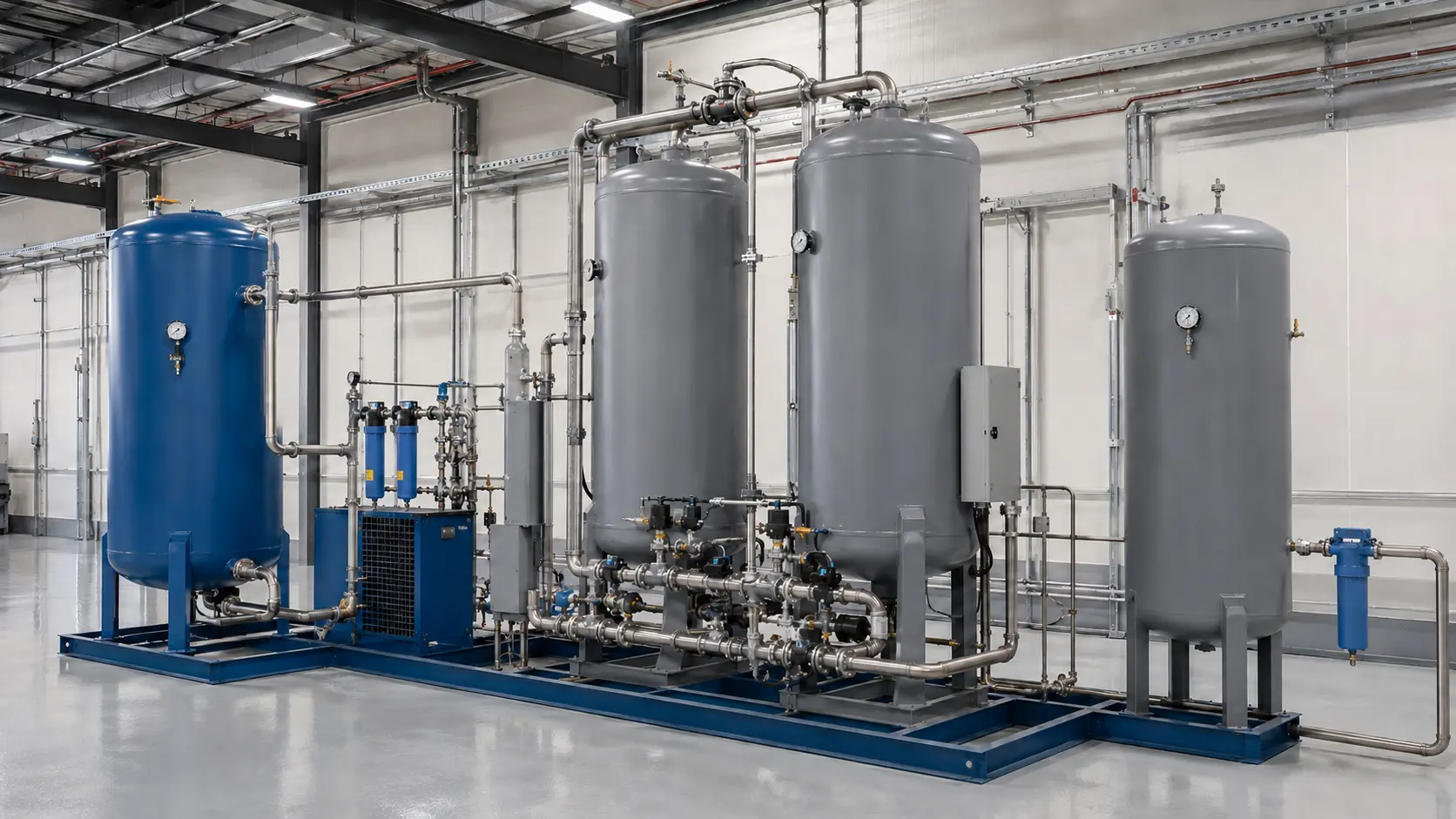
CMS Works as Part of a Complete PSA Nitrogen System
CMS is loaded into adsorber towers and operated through short, repeated pressurization and depressurization cycles. During adsorption, oxygen diffuses into the CMS pore system faster than nitrogen. Nitrogen-enriched product gas leaves the bed while the oxygen-containing adsorbed gas is released during regeneration.
The CMS cannot be evaluated independently from the generator. Tower diameter, bed depth, filling density, valve timing, equalization steps, pressure profile, air temperature and pretreatment quality all influence nitrogen purity, output and recovery.
Carbon Molecular Sieves
Compare CMS options using nitrogen target, PSA operating data, adsorber dimensions, existing grade, feed-air quality, filling requirement and available technical documents.
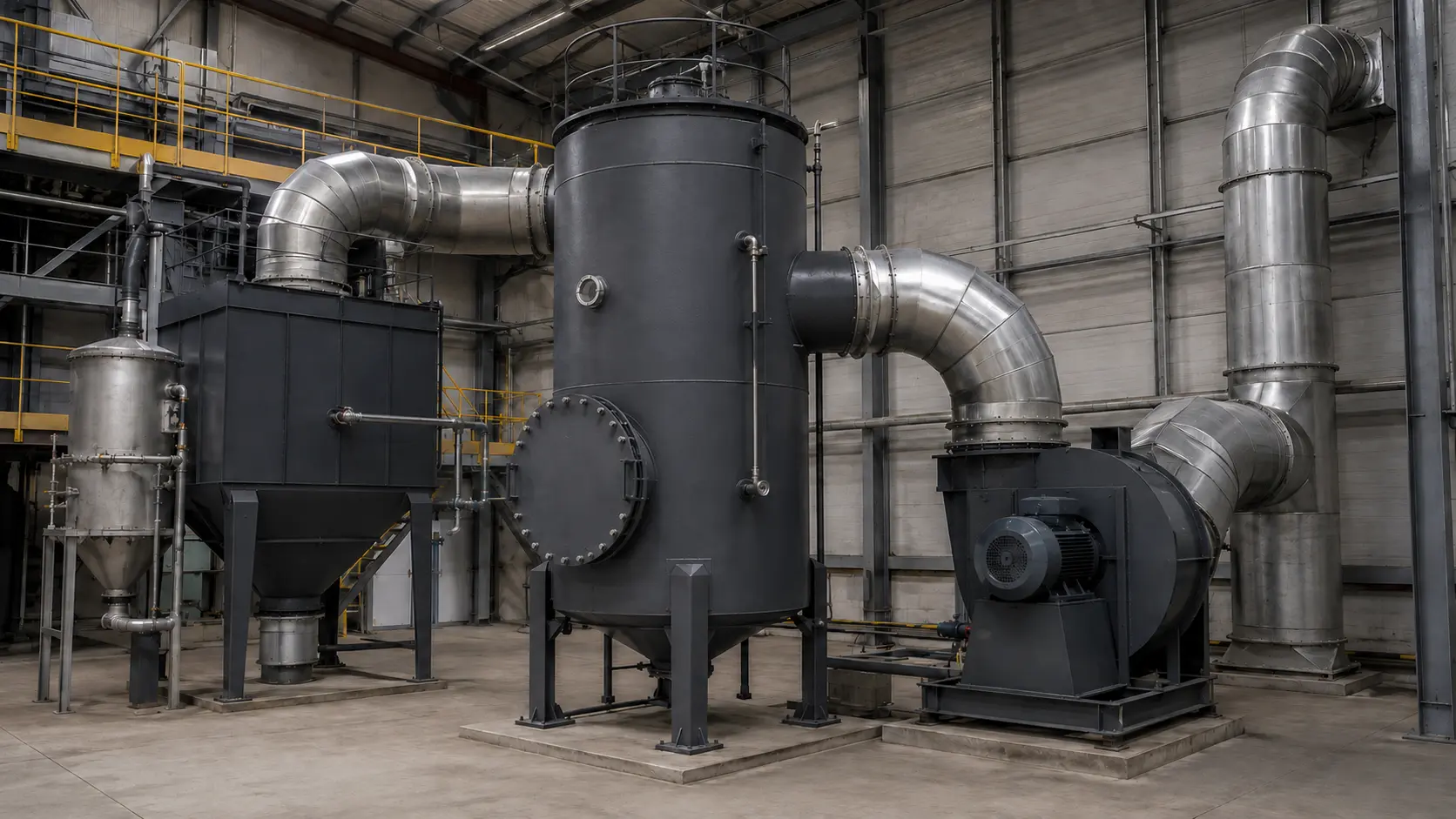
Activated Carbon Is Selected Around the Contaminant
Activated carbon is used for adsorption and purification rather than PSA nitrogen separation. The correct grade depends on what must be removed, whether the stream is gas or liquid, the contaminant concentration, competing substances, humidity, temperature, flow and the way the carbon is contained or dosed.
Iodine value, CTC activity, methylene blue value and other indicators may support comparison when relevant and when test methods are known. None should be treated as a universal predictor. The target molecule must be able to reach suitable pores and interact with the carbon surface under the actual process conditions.
Activated Carbon
Review activated carbon form, raw-material direction, pore structure, relevant adsorption data, particle properties, operating conditions, sample testing and documentation.
How the Purchasing Criteria Change
CMS and activated carbon quotations should not be compared using the same checklist. Define the system first, then request the material data and validation evidence that are relevant to that system.
CMS: Nitrogen Target
State required nitrogen purity or allowable oxygen concentration, product flow, recovery expectation and delivery pressure.
Activated Carbon: Adsorption Target
Name the VOC, odor component, organic contaminant, color body or impurity and provide its inlet level and required outlet target.
CMS: PSA Equipment
Provide tower dimensions, fill quantity, cycle program, pressures, compressor capacity, temperature and existing CMS reference.
Activated Carbon: Contact System
Provide vessel or dosing method, flow, bed depth or dose, contact time, allowable pressure drop and downstream separation route.
CMS: Feed-Air Protection
Confirm filters, oil-removal stages, dryer performance, pressure dew point and history of liquid-water or oil carryover.
Activated Carbon: Feed Matrix
Confirm humidity or pH, temperature, competing compounds, aerosols, suspended solids and any substances that may foul the media.
Physical Properties
For both materials, review moisture, bulk density, particle distribution, strength, fines and packaging using the applicable test method.
Documents and Traceability
Align the selected grade, TDS, SDS, COA parameters, lot identification, sample reference, packing and shipment requirements.
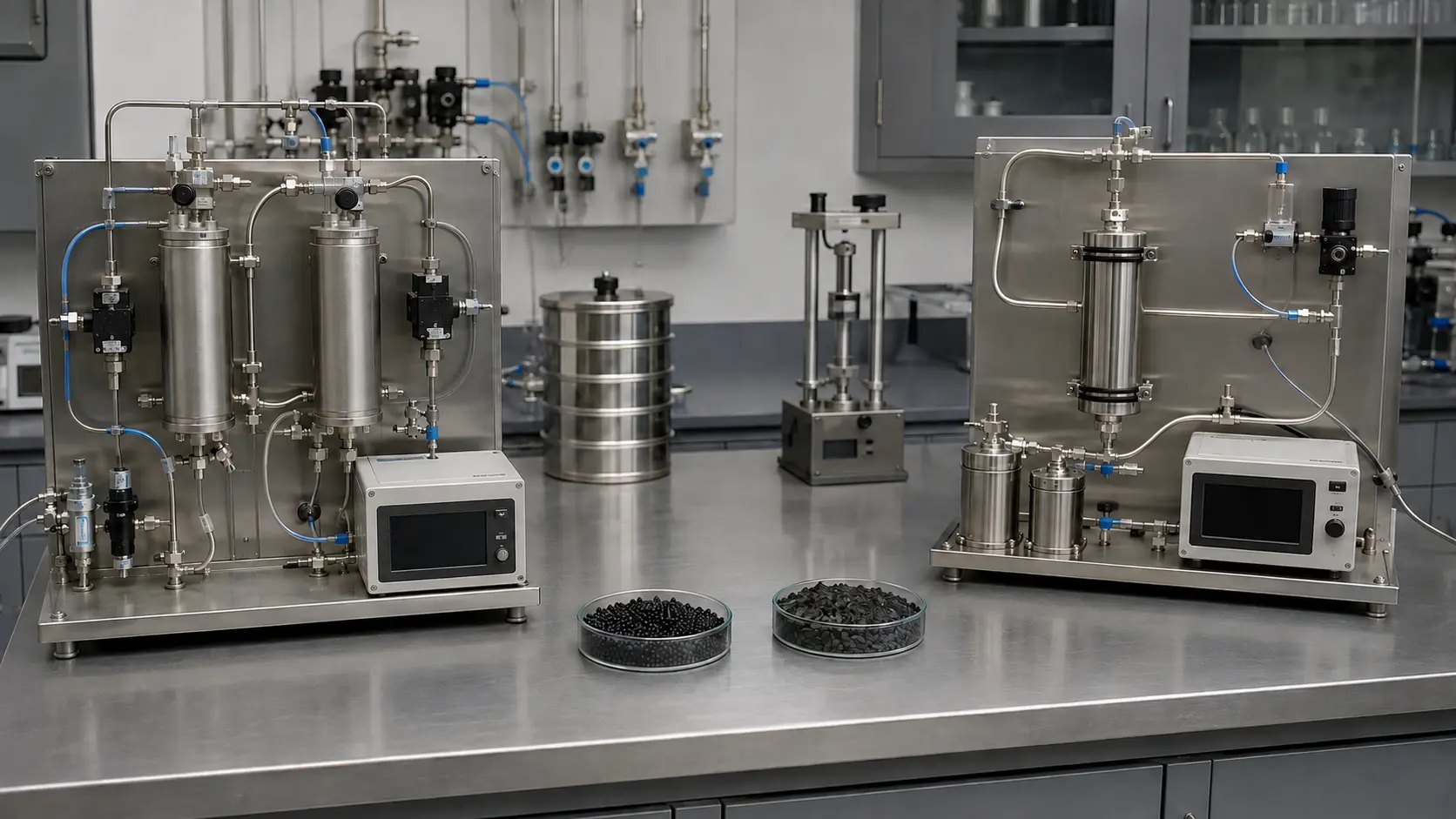
Test Each Material for Its Intended Duty
CMS evaluation uses controlled dynamic PSA or kinetic-separation conditions. Relevant results may include nitrogen productivity, recovery, oxygen concentration, pressure profile and cyclic stability at defined feed and cycle conditions. Activated carbon evaluation measures adsorption or breakthrough against a defined contaminant using a representative gas, liquid or batch method.
These results are not interchangeable. An iodine number cannot replace CMS cycle data, while a CMS nitrogen-purity result cannot predict removal of a VOC or dissolved organic compound. Compare samples only when test conditions, conditioning, analytical method and acceptance criteria are recorded.
Define the Function
Separate nitrogen from compressed air, or remove a specified contaminant from a gas or liquid stream.
Describe the System
Provide PSA operating data or the activated-carbon contact, containment and replacement method.
Compare Relevant Data
Use CMS cycle performance for nitrogen generation and application-specific adsorption evidence for purification.
Validate and Specify
Confirm the selected grade, test conditions, physical limits, documents, packaging and batch requirements.
Carbon Molecular Sieve vs Activated Carbon FAQ
These answers define the main selection boundary. Final suitability depends on the actual PSA generator or purification process, selected grade and verified operating data.
What is the main difference between carbon molecular sieve and activated carbon?
CMS is a kinetic gas-separation adsorbent used mainly in PSA nitrogen generators. Activated carbon is a broader adsorption material used to remove suitable contaminants from gas or liquid streams. Their pore functions, performance tests and operating systems are different.
Can activated carbon replace CMS in a PSA nitrogen generator?
No, not as a direct replacement. General activated carbon is not qualified by the oxygen-versus-nitrogen kinetic selectivity and cyclic PSA performance needed for nitrogen generation. A replacement must be matched to the generator and its operating target.
Can CMS be used for VOC or odor removal?
CMS should not be selected as a general VOC or odor-control carbon merely because it is porous and black. Activated-carbon grades are normally screened around the actual contaminant and process. Any alternative use of CMS would require specific supporting data.
Does iodine value show how well CMS produces nitrogen?
No. Iodine value is an activated-carbon characterization indicator and does not establish CMS kinetic selectivity, nitrogen productivity, recovery or PSA cycle performance.
How is CMS regenerated?
CMS is regenerated inside the PSA system through depressurization and the programmed cycle sequence. Its normal operation depends on repeated adsorption and regeneration rather than one-time saturation followed immediately by replacement.
Why do oil and moisture matter for CMS?
Oil mist, liquid water and excessive moisture can occupy pores, contaminate the bed and reduce PSA performance. Feed-air filtration, oil control and drying should be checked before filling and whenever nitrogen purity or output declines.
What information should I send for material selection?
For CMS, send nitrogen purity, flow, pressure, cycle, tower dimensions, fill quantity, feed-air condition and existing grade. For activated carbon, send the gas or liquid composition, target impurity, concentration, temperature, humidity or pH, flow, contact system, current carbon, sample quantity and required documents.
Select Carbon Adsorbents by Function, Not Appearance
Send your PSA nitrogen-generator data or purification requirement. Adsorbent Source supplies industrial adsorbents and reviews the requested CMS or activated-carbon grade against the PSA or purification data. Sample and document availability, packing and quotation requirements can be checked for each inquiry.
TDS vs SDS vs COA for Adsorbents →
Adsorbent Packaging and Export Guide →