Hydrogen PSA adsorbents · Material selection & RFQ
PSA Hydrogen Purification Adsorbents
Source and compare adsorbent materials for hydrogen pressure swing adsorption (PSA) systems. Review activated carbon, activated alumina and selected zeolite molecular sieves against your feed impurities, bed arrangement, pressure-swing cycle and existing material specifications before requesting a bulk offer.
02 · PERFORMANCEPurity & recoveryState required hydrogen specification, process cycle and the acceptance basis.
03 · EXISTING BEDSApproved layer listSend OEM grade codes, bed records and original per-layer quantities.
04 · PURCHASEGrade-specific RFQMatch material identity, test documents and shipment terms to each ordered grade.
Procurement information only. No adsorbent bed arrangement, pressure cycle or hydrogen-process design is represented here. Hydrogen drying for water removal is a separate application.
Which Adsorbents Are Used in Hydrogen PSA Purification?
Hydrogen PSA units can use several complementary adsorbent materials. Depending on the feed and the licensed process design, these may include activated alumina for moisture-related pretreatment, activated carbon for selected gas impurities and zeolite molecular sieve grades for selected additional impurity removal. The correct material mix, sequence, quantity and performance are process-specific—not determined by a generic PSA label.
In a hydrogen PSA system, many non-hydrogen components are preferentially adsorbed while hydrogen is recovered as the hydrogen-rich product. The beds undergo coordinated adsorption and regeneration steps through a pressure-swing cycle. Feed composition, adsorbent loading and cycle engineering all affect product purity and hydrogen recovery.
Adsorbent Source supports material comparison, grade review, sample discussion, available documentation, export packaging and bulk purchasing. This page is a procurement guide for adsorbent media, not a complete PSA process design or claim to manufacture PSA plants.
Why Feed Gas Composition Matters More Than a Grade Name
PSA hydrogen purification may handle streams from reformers, refinery off-gas, syngas and selected industrial recovery systems. The main impurities and their concentrations differ between projects. An adsorbent package appropriate for one feed cannot be assumed to perform in another.
- Hydrogen and impurities: report H₂ along with CO₂, CO, CH₄, N₂, H₂O and any other relevant constituents.
- Variable feed: describe normal, minimum and maximum composition, gas flow and temperature.
- Target: specify hydrogen purity, required recovery where relevant and acceptance measurement method.
- Cycle: provide operating pressure, depressurization/purge or regeneration conditions and cycle constraints.
- Existing beds: include adsorbent layer drawings or the original approved loading schedule where available.
The licensed PSA system designer or responsible process engineer must approve performance-critical material changes and the resulting safety implications.
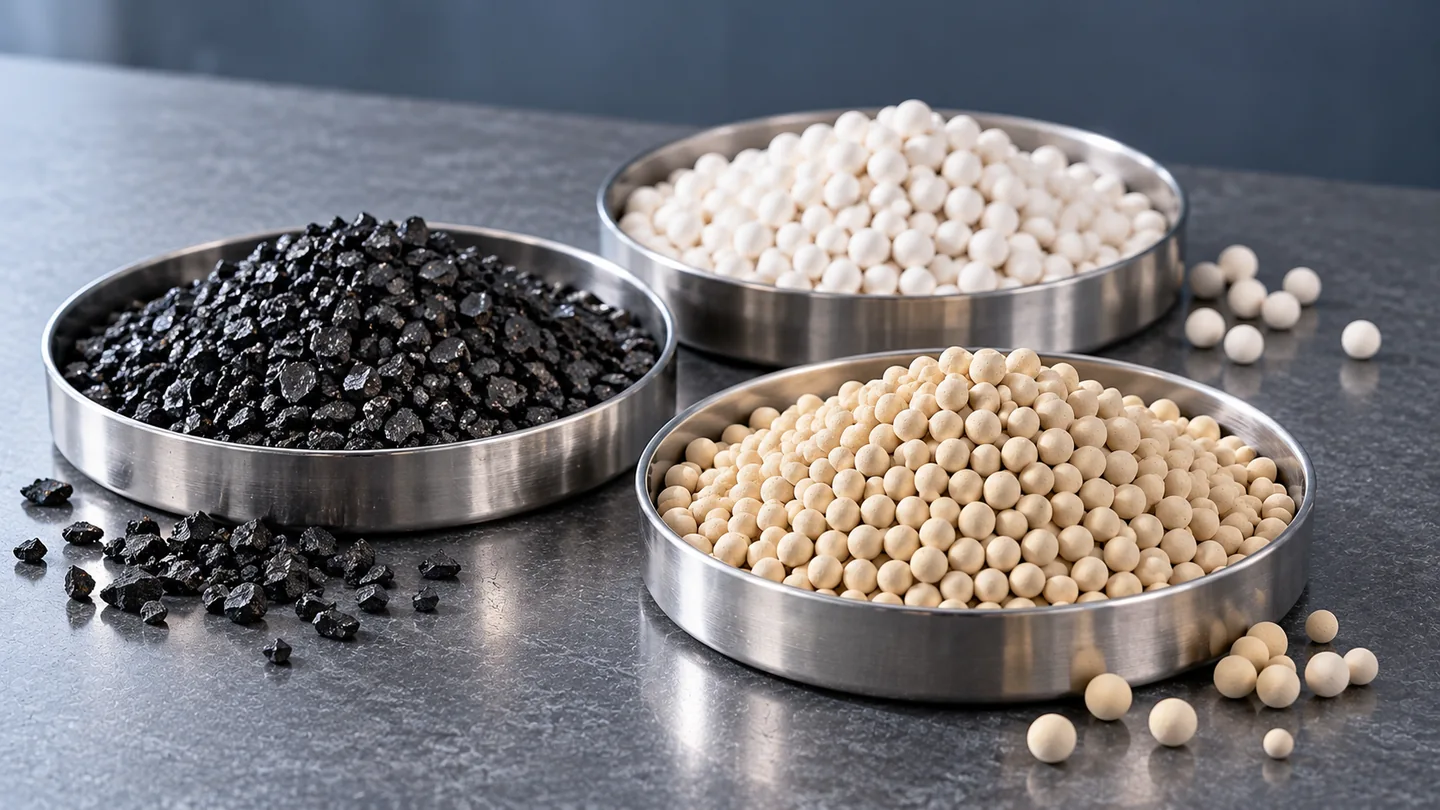
Activated Carbon, Activated Alumina and Zeolite Molecular Sieves in Hydrogen PSA
Different adsorbent families may be used together for complementary separation duties. The descriptions below are screening directions, not a prescribed multi-layer structure.
Swipe horizontally to review all technical and purchasing fields →
| Adsorbent family | Possible process role | What the buyer must verify |
|---|---|---|
| Activated alumina | Moisture-related pretreatment in selected designs and where specified in the original adsorbent package | Water loading, regeneration behavior, particle size, strength and approved layer duty |
| Activated carbon | Adsorption of selected carbon dioxide, hydrocarbon and other gas impurities depending on grade and process conditions | Gas-specific capacities, working selectivity, cycle data, bulk density and mechanical strength |
| Zeolite molecular sieve (including selected 5A / 13X options) | Removal of selected remaining impurities in processes designed for the specific zeolite grade | Actual impurity targets, competitive adsorption, product grade, temperature/pressure cycle and bed compatibility |
| Other proprietary or specialty media | Additional or alternative materials where specified by a PSA technology provider | Approved make/grade, application data, licensing and substitution restrictions |
Activated Carbon
Confirm carbon type and performance for the PSA feed; water-treatment GAC data is not sufficient evidence for hydrogen PSA operation.
5A Molecular Sieve
Review selected hydrogen-rich gas impurity-separation directions, with commercial grade validation and OEM approval.
13X Molecular Sieve
Review selected process gas purification duties. Do not assume all 13X or 13X APG grades are interchangeable in hydrogen PSA.
What Matters When Comparing PSA Adsorbent Quotes?
A PSA plant may require a qualified mix of grades rather than one adsorbent ordered by mass. Compare technical information against the specific duty and approved specification before discussing substitution.
- Grade identity: material name, make, technical grade, shape, size and any required reference product.
- Relevant performance: available impurity adsorption and working-cycle data under a stated method.
- Mechanical properties: attrition/abrasion, crushing strength, bulk density, pressure-drop implications and fines.
- Moisture/contaminants: material sensitivity, storage, pretreatment and handling requirements.
- Documentation: current TDS, SDS, available COA, sampling procedure and agreed inspection criteria.
- Commercial details: total volume by approved layer, trial quantity, sealed packaging, shipment and destination.
Adsorbent specification should be reviewed alongside vessel internals, valves and cycle data by the responsible technical team; the supplier’s material datasheet is not a substitute for a performance guarantee from the PSA system designer.
Replacing Adsorbent in an Existing Hydrogen PSA Unit
For an installed PSA plant, retain the original OEM or approved bed-loading specification wherever possible. Changes to bead size, carbon type or molecular sieve grade may affect both separation performance and pressure drop.
Collect original records
Plant license/OEM information, adsorber count, approved loading sheet, grade list and per-layer quantities.
Assess operating history
Feed changes, purity/recovery trends, cycle interruptions, temperature and pressure profile, fouling or dust.
Approve the replacement plan
Engineering validation of any substitutions, material samples and layer-specific acceptance before delivery.
For replacement procurement, refer to the existing-equipment adsorbent replacement specification and the TDS, SDS and COA guide. Adsorbent Source does not provide an unverified generic loading sequence or guarantee PSA plant performance from material specifications alone.
Hydrogen PSA Adsorbents RFQ: Information Buyers Should Send
Swipe horizontally to review all technical and purchasing fields →
| RFQ item | Required information | Purchasing purpose |
|---|---|---|
| Project and feed source | New PSA / existing plant; refinery off-gas, reformer, syngas or other source | Establish the adsorbent and system context |
| Feed gas analysis | H₂, CO₂, CO, CH₄, N₂, H₂O and other present components, with units and variation | Identify actual impurity-removal duties |
| Operating basis | Flow and reference condition (Nm³/h basis if used), temperature, adsorption/desorption pressures | Define the process envelope for technical review |
| Product and recovery goals | Target hydrogen purity and recovery; accepted analysis method | Align with the system designer’s objective |
| Adsorber and cycle data | Number of beds, vessel geometry, cycle information and regeneration/purge conditions | Check material compatibility |
| Current loading specification | Approved grade, maker, order by layer, volume or mass, bead size and support details | Enable exact replacement comparison without assuming layer order |
| Testing and documents | TDS/SDS/COA, required test results, sample quantity and acceptance criteria | Enable traceable material acceptance |
| Commercial terms | Material quantity, packaging, destination, Incoterm and delivery target | Prepare a complete quote |
PSA Hydrogen Purification Adsorbent FAQ
What adsorbents are used in PSA hydrogen purification?
Selected hydrogen PSA systems use combinations of adsorbent materials such as activated carbon and zeolite molecular sieves, sometimes with moisture-related pretreatment media such as activated alumina. The exact materials and loading depend on the feed composition, cycle and licensed design.
Are 5A and 13X molecular sieve interchangeable for hydrogen PSA?
No. Both are broad zeolite family designations with different adsorption behavior. The exact commercial grade and approved impurity-separation duty must be checked with the PSA technology provider.
Is carbon molecular sieve (CMS) the same as activated carbon for hydrogen PSA?
No. CMS commonly refers to media for nitrogen PSA generation, whereas activated carbon refers to a broad class of materials for selected impurity removal. They cannot be substituted by name alone.
How is PSA hydrogen purification different from molecular sieve hydrogen drying?
Hydrogen drying focuses on moisture removal to a water specification. PSA hydrogen purification uses pressure cycling and an engineered adsorbent package to separate multiple impurities. See the hydrogen gas drying material guide.
Can I replace one adsorbent brand with another in my existing PSA unit?
A replacement may be possible only after technical approval of the proposed grade and process impact. Provide the OEM loading sheet, original datasheets, feed analysis and operating data for comparison.
What must an adsorbent supplier confirm before quoting?
Material identity, available supply grade and size, relevant product documentation, requested quantity by approved grade, packaging and delivery terms. Performance claims require process-specific agreement and testing.
Request a Quote for Hydrogen PSA Adsorbents
Send the existing PSA adsorbent specification or a material-focused inquiry. We can review available activated carbon, activated alumina and molecular sieve product directions and arrange the next step in grade validation, samples, technical documents and export supply.
Identify the process
Feed source, impurities, hydrogen purity target, operating conditions and system type.
Provide approved materials
Specific grades, particle form, original loading and quantities by family/layer.
Specify the purchase
Sample or bulk volume, inspection criteria, packaging, destination and Incoterm.