
Carbon Molecular Sieve Replacement for Existing PSA Nitrogen Generators
Replacing CMS in an operating PSA nitrogen plant? Confirm why the bed is being replaced, identify the original material and obtain approval for the proposed new grade before placing a bulk order.
This guide addresses the procurement decision for an existing generator. For defining a new nitrogen PSA project, use the CMS Nitrogen PSA RFQ Guide.
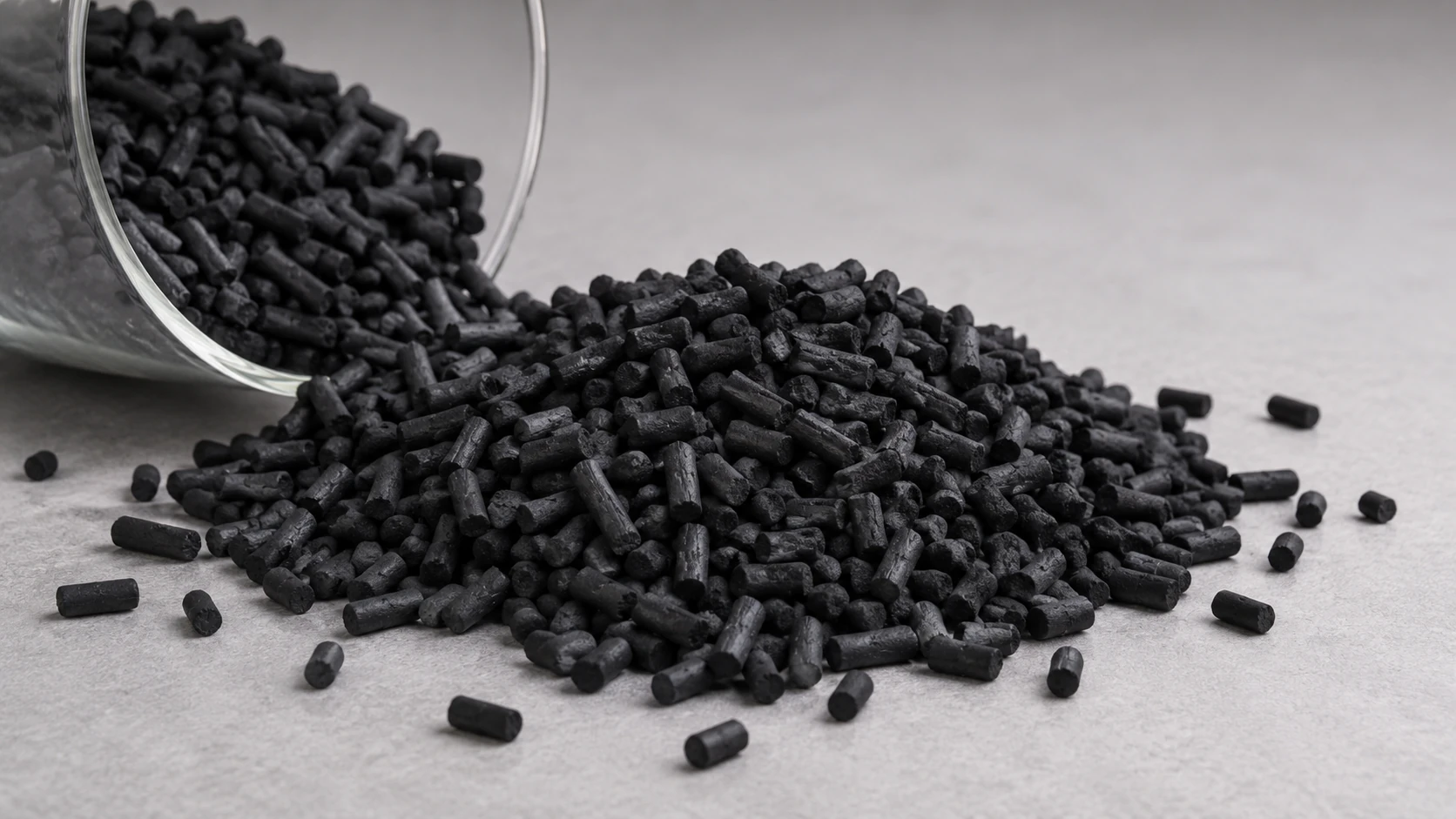
What Is Needed to Buy Replacement CMS?
Commercially similar grade names do not prove comparable oxygen/nitrogen separation performance. CMS material, pretreatment, bed loading and operating cycle act together to achieve a nitrogen specification. Supplier recommendations should clearly identify assumptions and deviations.
Before Ordering: Is CMS Replacement the Correct Corrective Action?
Early purity loss is not sufficient evidence that the CMS bed has exhausted its useful life. A competent plant engineer should check available maintenance records and investigate non-media causes before authorizing an expensive refill.
Check pretreatment records, dryer performance, air temperature and evidence of water/oil carryover or particulate contamination.
Review pressure trend, valve operation, controller timing, leaks, product demand, residual oxygen data and recent changes.
Record fill history, known contamination or handling events, pressure drop and any supplier-supported CMS tests.
Replacement Record: What to Send With the Existing-Plant RFQ
Older PSA generators may lack a complete file. Send what can be confirmed and identify missing fields explicitly; do not invent a grade, mass or regeneration setting.
Swipe horizontally to review the complete record →
| Record | Information to capture | Why it matters |
|---|---|---|
| Generator | OEM, model, commissioning year if documented, nameplate and accessible specification | Defines the installed equipment and responsible engineering authority. |
| Nitrogen duty | Product purity / residual oxygen, nitrogen flow basis and product delivery pressure | Connects material approval to the actual target service. |
| Original CMS | Brand, supplier grade, previous TDS or purchase record, pellet size, known lot | Provides the intended substitution baseline. |
| Adsorber | Number of vessels, internal dimensions, bed layers, retainers and original filling sheet | Controls usable volume and refill instructions. |
| Operation | Feed-air condition, pressure, temperature, cycle and regeneration/venting information | Allows review of proposed performance compatibility. |
| Reason to replace | Symptoms, maintenance findings, contamination evidence and recent changes | Separates diagnosed media concerns from equipment problems. |
| Purchase | Required quantity, date, packaging, destination, agreed tests and documentation | Defines the commercial supply requirement. |
Proposed Equivalent CMS: Approve More Than a Model Name
Ask each supplier to identify the exact offered CMS grade and compare product form, particle-size distribution, material and process performance data, relevant test conditions, mechanical properties, bulk density and shipment handling with the approved baseline.
- Written equivalence assessment: list technical differences from the original material, not just identical grade-label wording.
- Application-specific performance basis: nitrogen purity, output, recovery expectations and test conditions must be defined by the project.
- Test or trial approval: establish whether the equipment OEM accepts small-sample or monitored operational trials before bulk procurement.
- Delivered-lot basis: specify the actual grade, batch ID, agreed COA/TDS and handling requirements in the purchase order.
Read the CMS Sample Evaluation Checklist for test records and the TDS / SDS / COA Guide for the document roles.
Refill Quantity and Bed Condition
Review the original filling sheet, actual vessel geometry, any support or guard media and the bulk density of the selected new CMS. A change in density or pellet form may change fill mass even if volume is similar. Confirm any bedding, distributor or screen restrictions with the equipment designer.
Replacement CMS Quote, PO and Batch Release
For each offer, verify technical identity and engineering deviations before comparing total commercial price. Request a clear scope covering unit, net mass, moisture protection, packing and sealing, COA/lot traceability, delivery terms, lead time and post-delivery acceptance obligations.
- Make clear whether the supplier provides only CMS material, samples, testing, technical coordination or on-site assistance.
- Agree who is responsible for any commissioning or performance verification; do not assume a product price includes a nitrogen-output guarantee.
- Confirm inspection, sampling and seal integrity before bulk dispatch, including any nonconformance process.
- Send the same approved duty and specification to every competing supplier.
Compare offers through the Supplier Quotation Guide and define dispatch checks in the Pre-Shipment Inspection Checklist.
Existing PSA CMS Replacement — Buyer FAQ
Does nitrogen purity decline always mean that CMS must be replaced?
No. Feed-air changes, pretreatment faults, cycle/valve problems, leaks or changed generator duty can also affect output. Ask qualified maintenance personnel to investigate the system.
Can a new supplier’s CMS grade replace the original grade without testing?
Equivalence should not be assumed. Review manufacturer data, actual PSA conditions, proposed test evidence and the OEM or engineering approval process.
Can I use the previous loading weight to order exactly the same mass?
The old mass is useful but not sufficient by itself. Check usable bed volume, the new material’s density, physical form and approved fill requirements.
What if the generator nameplate is available but the CMS grade is unknown?
Provide the nameplate, commissioning or maintenance records, tower data and available supplier invoices. State the missing grade as unknown rather than guessing.
Should we sample CMS before ordering a full tower load?
A sample may support identity or application testing where the process and supplier can establish a meaningful procedure. It cannot independently reproduce full PSA generator performance.
What should be checked at shipment?
Check confirmed grade, lot identity, accepted documents, quantity, packaging moisture barriers, seals and the agreed inspection or retention sample procedure.
Related CMS Product and Project Guides
Carbon Molecular Sieve Product Supply · PSA Nitrogen Applications · New PSA CMS RFQ · Sample Evaluation
Technical context: separation performance requires matching CMS selection to PSA design and operating conditions. This page states buyer verification principles rather than supplier-specific performance values or test results.