
Packaging Moisture Control Desiccants
Packaging Moisture Control Desiccants help reduce humidity exposure inside sealed cartons, barrier bags, equipment cases and export packages. Adsorbent Source reviews silica gel packet specifications, packaging and sample requirements against package volume, barrier performance, storage duration and shipment conditions.
Moisture Can Enter Before, During and After Packing
Humidity trapped during packing, moisture released from wood and corrugated materials, permeation through packaging films and temperature changes during transport can all raise the moisture load inside a package.
For metal parts, electronics, instruments and industrial equipment, uncontrolled moisture may contribute to corrosion, staining, insulation problems, damaged cartons or reduced storage life. The real risk depends on product sensitivity, package construction, climate route and exposure time.
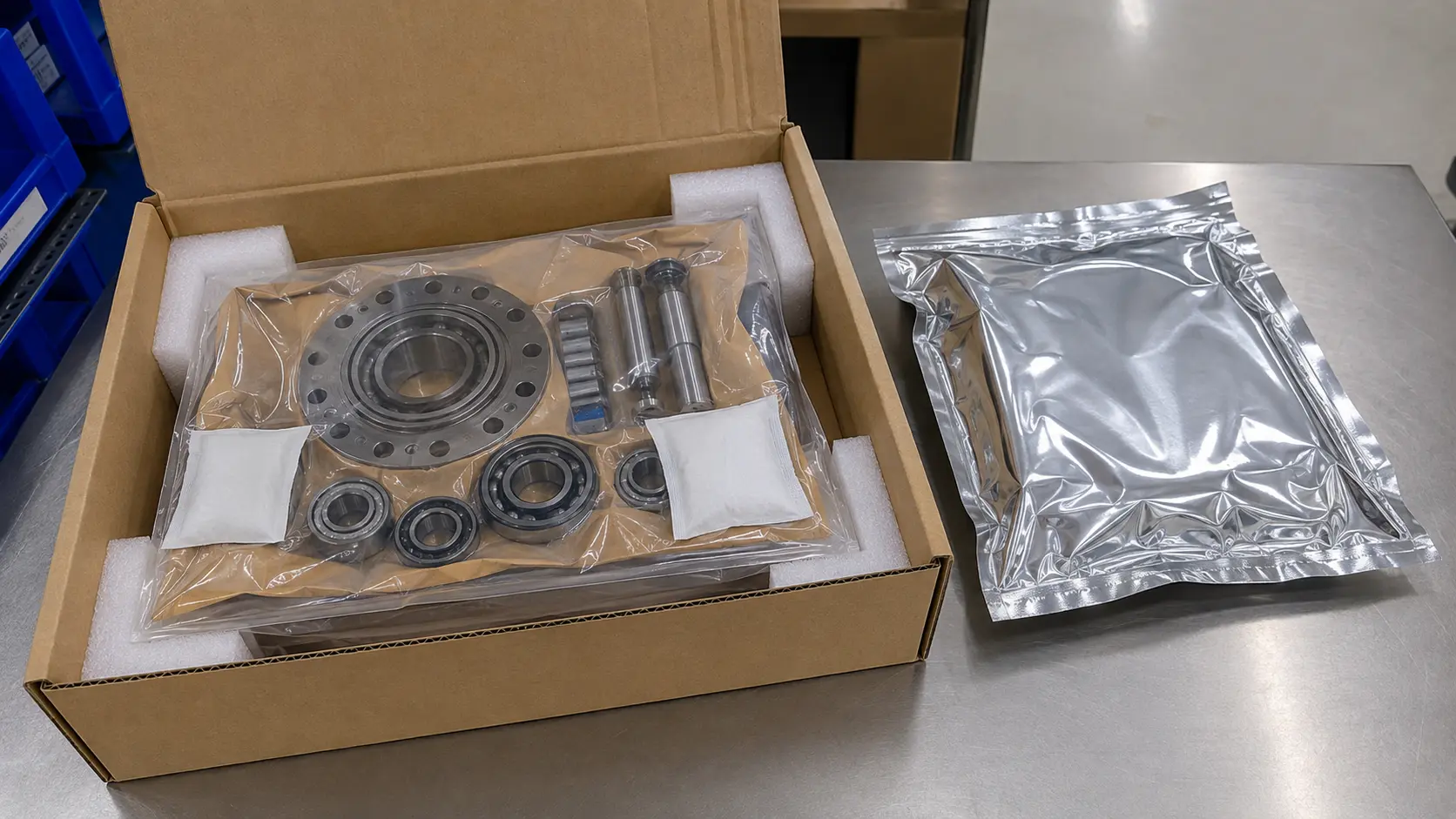
Match the Desiccant Form to the Package
Silica gel desiccants are commonly supplied as small sachets, larger packets, strips or bulk-packed units. The correct form depends on the available space, required adsorption capacity, packet placement, handling method and acceptable dust level.
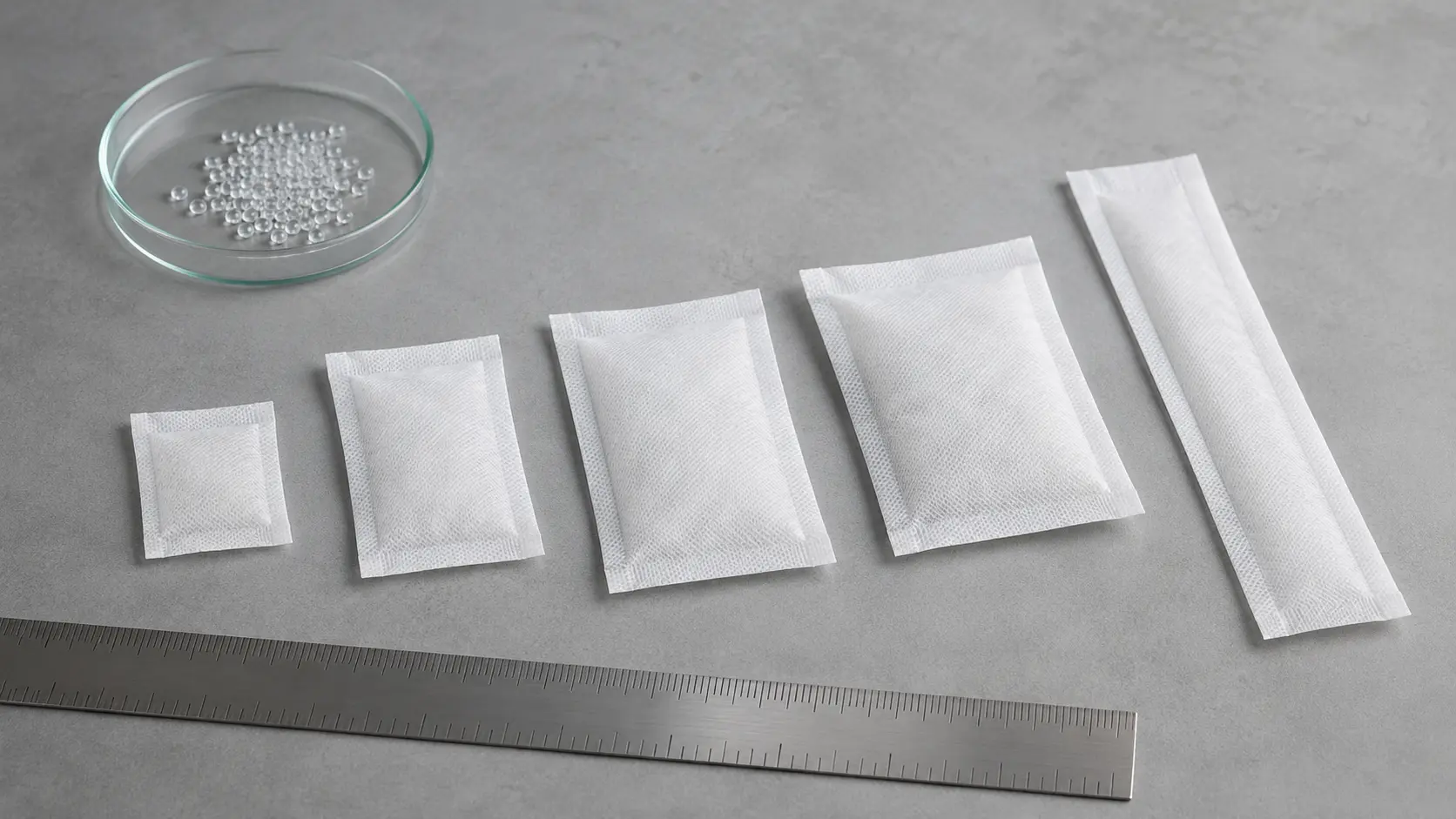
Packet Size Is Only One Part of Selection
Unit weight should be reviewed together with silica gel capacity, sachet material, seal strength, dust control and the number and location of packets inside the package. Several smaller packets may provide better distribution in some packages, while larger units may be more practical for equipment cases or crates.
Adsorbent Source reviews packet specifications, packaging and document requirements for industrial packaging projects. Sample and document availability can be checked for the requested grade and order.
Select Packaging Moisture Control Desiccants from Real Package Data
Required capacity cannot be determined from carton size alone. Review the full package, product and logistics conditions before confirming packet type or quantity.
Package Volume
Confirm internal dimensions and the actual free-air volume after the product, cushioning and fixtures are installed.
Barrier Material
Identify the bag, film, foil laminate, carton, case or crate and its sealing method and moisture-vapor transmission behavior.
Initial Moisture
Consider humidity at packing and moisture carried by wood, paperboard, cushioning, product surfaces and enclosed air.
Storage and Transit
Review route, climate, warehouse exposure, sea transit, seasonal conditions and the total protection period.
Product Sensitivity
Define the acceptable humidity range and consequences of corrosion, staining, moisture uptake or electrical damage.
Packet Requirements
Confirm unit weight, sachet fabric, seal strength, dust tolerance, placement, labeling and required compliance documents.
Combine Desiccants with Barrier Sealing and Physical Protection
A practical export package uses complementary controls. The product is cleaned and dried, protected against corrosion where required, placed inside a suitable moisture barrier, combined with calculated desiccant capacity and then sealed. The outer crate or frame provides mechanical protection and secure fixing.
For equipment packages, the barrier cover should fit the product without excessive empty volume, while the crate should match the equipment dimensions and provide suitable base fixing, bracing and handling clearance.
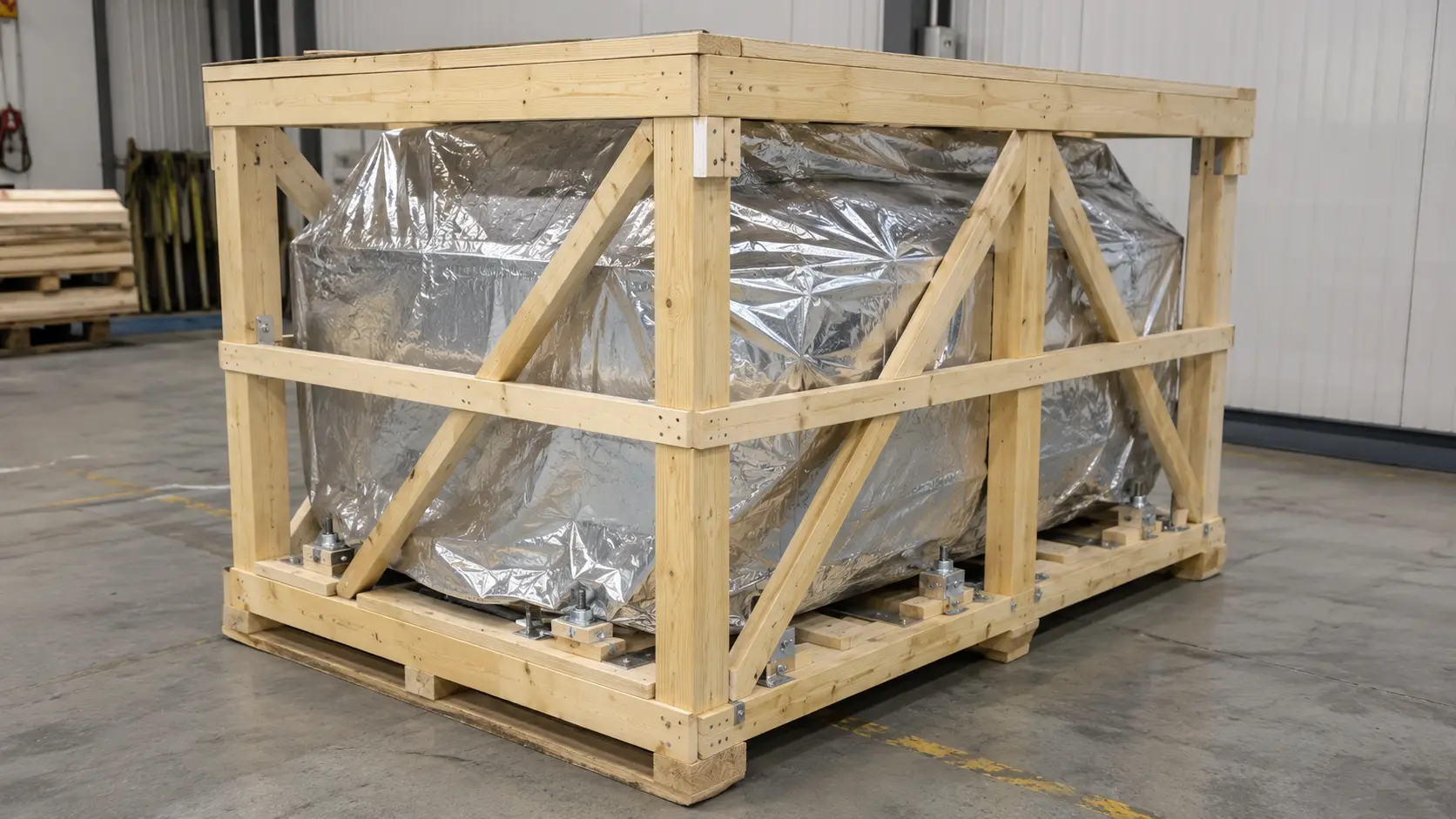
Where Silica Gel Packets May Support Moisture Protection
Final suitability depends on product sensitivity, contact conditions, packaging materials and the applicable technical or regulatory requirements.
| Packaging Area | Common Moisture Concern | Evaluation Focus |
|---|---|---|
| Industrial machinery and export crates | Condensation and corrosion during sea transport or long storage | Barrier-bag integrity, enclosed volume, wood moisture, route and protection period |
| Metal components and spare parts | Surface rust, staining and moisture trapped inside sealed parts packs | Cleanliness, corrosion protection, pack size, packet placement and seal quality |
| Electronics and instruments | Humidity exposure affecting circuits, contacts, sensors or optical components | Humidity target, static-control requirements, dust, sachet material and barrier performance |
| Cartons and general products | Moisture pickup, carton softening or humidity-sensitive contents | Carton liner, outer wrap, initial humidity, storage conditions and transit time |
| Regulated or direct-contact packaging | Moisture control combined with product-contact and compliance requirements | Approved grade, contact condition, sachet material and region-specific documentation |
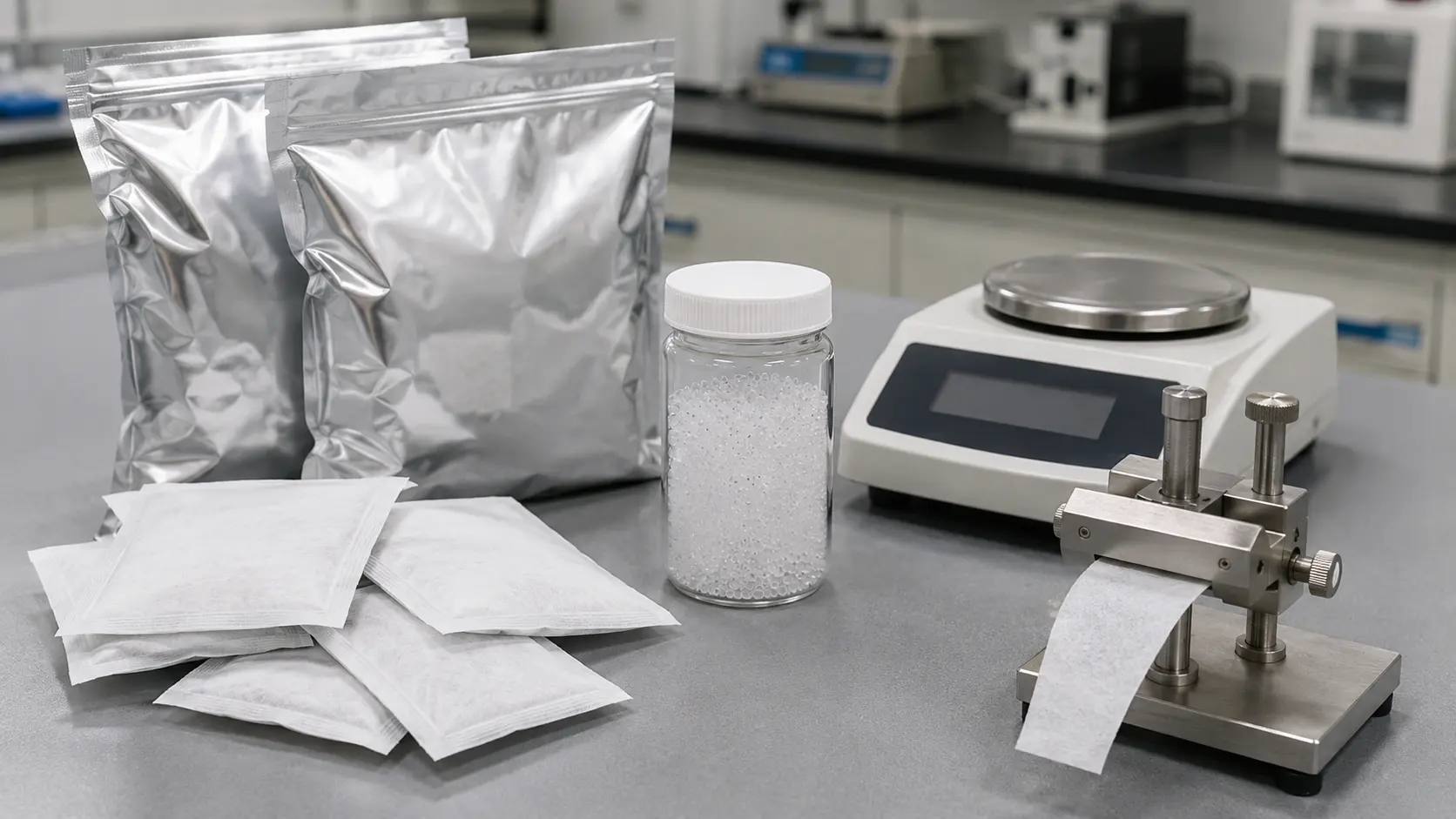
Confirm Packets, Packaging and Documents Before Supply
Silica Gel Desiccant Packets
Share the product to be protected, package dimensions, barrier material, target storage period, shipping route, packet preference, quantity and document requirements. Adsorbent Source reviews packet specifications, quantity and quotation requirements against the package data provided. Sample and document availability can be checked for each inquiry.
For broader packaging, documentation and export-supply information, see our services or review other adsorbent applications.
Packaging Moisture Control Desiccants FAQ
How do I determine the required amount of silica gel?
Calculate it from package volume, barrier permeability, initial moisture, moisture carried by packaging materials, storage or shipment duration, climate and the product’s humidity limit. A universal packet count is not reliable.
Can desiccant packets work inside an unsealed carton?
Performance will be limited because ambient moisture continues entering the carton. Desiccants work more effectively inside a sealed barrier bag, closed case or other package with controlled moisture ingress.
Should one large packet or several small packets be used?
It depends on package geometry, available placement, airflow paths, handling and total required capacity. Several units may improve distribution, but packets must not damage the product or interfere with installation and unpacking.
Does silica gel prevent metal corrosion by itself?
No. It helps reduce humidity, but corrosion control may also require clean and dry surfaces, a suitable barrier, corrosion inhibitor or protective coating, correct sealing and appropriate storage conditions.
What packet details should be confirmed?
Confirm silica gel grade, unit weight, sachet material, dimensions, seal strength, dust control, printing or label requirements, carton quantity and required TDS, SDS, COA or compliance documents.
What information is needed for a recommendation?
Provide the protected product, package dimensions, free-air volume, barrier material, sealing method, initial humidity, route, storage period, temperature range, target humidity, packet preference and estimated quantity.
Discuss Your Packaging Moisture-Control Requirement
Send your package dimensions, barrier material, product sensitivity, shipment route and protection period. Adsorbent Source can review silica gel packet requirements, sample availability, packaging and quotation details for your application.
How to Choose Silica Gel Desiccant →
TDS vs SDS vs COA for Adsorbents →
Adsorbent Packaging and Export Guide →