How to Choose Silica Gel Desiccant
How to Choose Silica Gel Desiccant depends on the protected product, package construction, moisture load, target humidity, exposure period and desiccant format—not package volume alone. This Adsorbent Source guide explains how to compare standard beads, indicating grades, sachets, canisters and bulk material before testing the complete package.
Which Silica Gel Format Fits the Requirement?
Choose the desiccant format according to how it will be contained, placed, inspected and replaced. Then determine required capacity from the moisture entering or already contained in the package under the intended storage and transport conditions.
Sachets, Bags or Canisters
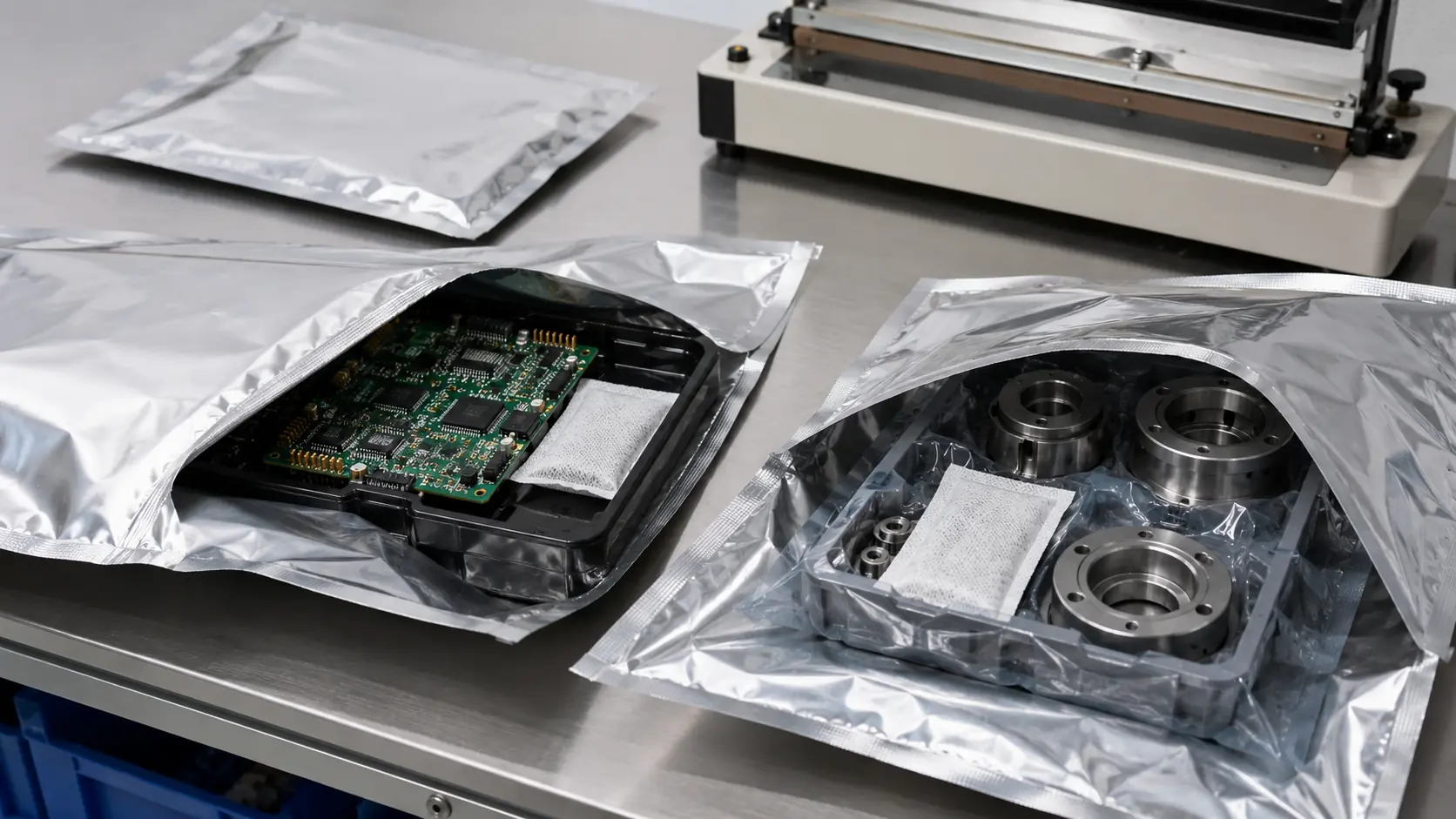
Use contained units when silica gel must stay separated from electronics, instruments, metal parts or other protected products. Confirm unit weight, packet material, seal strength, dust control and placement.
Indicating Silica Gel
Use an indicating grade only when a visible color response is useful. Confirm the indicator chemistry, dry and saturated color range, documentation and whether the material is used alone or mixed with non-indicating silica gel.
Bulk Beads or Granules
Use bulk material for refillable breathers, cartridges, drying containers or controlled industrial systems only after checking particle size, dust, containment, replacement and any regeneration requirements.
Compare Silica Gel Types Before Selecting Unit Size
Silica gel type and packaging format are separate decisions. The bead chemistry affects adsorption and indication, while the packet, canister or refillable container determines handling, contact protection, dust containment and placement.
| Option | Typical Direction | What to Confirm |
|---|---|---|
| Standard non-indicating silica gel | General static moisture adsorption in sealed packages, storage containers and selected drying applications. | Adsorption data at relevant relative humidity and temperature, particle form, moisture at supply, dust and packaging. |
| Indicating silica gel | Visual indication of moisture exposure in inspectable containers, breathers, instruments or maintenance systems. | Indicator chemistry, color-change range, interpretation, applicable restrictions, SDS and whether visual inspection is possible. |
| Desiccant sachets or bags | Contained use inside barrier bags, cartons, cases and product packaging without loose beads contacting the product. | Net desiccant weight, sachet material, dimensions, seal strength, permeability, dust control, printing and placement. |
| Rigid canisters or capsules | Compact contained placement where a rigid form, defined geometry or controlled fit is preferred. | Container material, venting, dimensions, closure, product-contact requirement and available internal space. |
| Bulk beads or granules | Refillable cartridges, breathers, drying columns, maintenance containers and industrial use with separate containment. | Particle size, attrition, pressure drop where relevant, filling method, dust control, disposal and grade-specific regeneration guidance. |
How to Choose Silica Gel Desiccant for the Actual Package
The required quantity cannot be established reliably from carton dimensions or headspace alone. The desiccant must handle moisture initially enclosed with the product and packaging, plus moisture that enters through the barrier and seals during the full protection period.
Use the supplier’s working adsorption capacity at the relevant temperature and relative-humidity range—not a maximum capacity quoted under unrelated test conditions. Add an appropriate design margin only after the package inputs and test basis are defined.
Silica Gel Desiccants
Compare standard, indicating, packet and bulk options according to package conditions, required format, quantity, documents and sample-testing needs.
Information to Provide Before Requesting a Quote
A complete inquiry makes it possible to compare the material, packet format and quantity on the same service basis. It also reduces the risk of selecting a convenient packet size that does not match the real moisture load.
Protected Product
Identify electronics, metal parts, instruments, equipment, food, pharmaceutical or other goods and explain how moisture affects them.
Package Dimensions
Provide internal dimensions, actual free space after packing, number of packages and whether packets can be distributed in several locations.
Barrier and Closure
Identify film, foil laminate, bag, carton, case or container; include sealing method and available moisture-vapor transmission data.
Initial Moisture Sources
Describe packing-room humidity and moisture carried by paperboard, wood, cushioning, product surfaces or hygroscopic contents.
Service Conditions
State packing location, destination, shipment mode, seasonal climate, storage temperature and total protection period.
Humidity Target
Define the maximum acceptable relative humidity or the product-protection objective and how failure will be assessed.
Packet or Bulk Format
Confirm unit weight, dimensions, sachet or canister preference, loose-fill restrictions, dust limit and placement constraints.
Compliance and Documents
State direct-contact conditions, destination-market needs, TDS, SDS, COA, composition declarations, labeling and lot-traceability requirements.
Use Color Change as an Aid, Not Proof of Protection
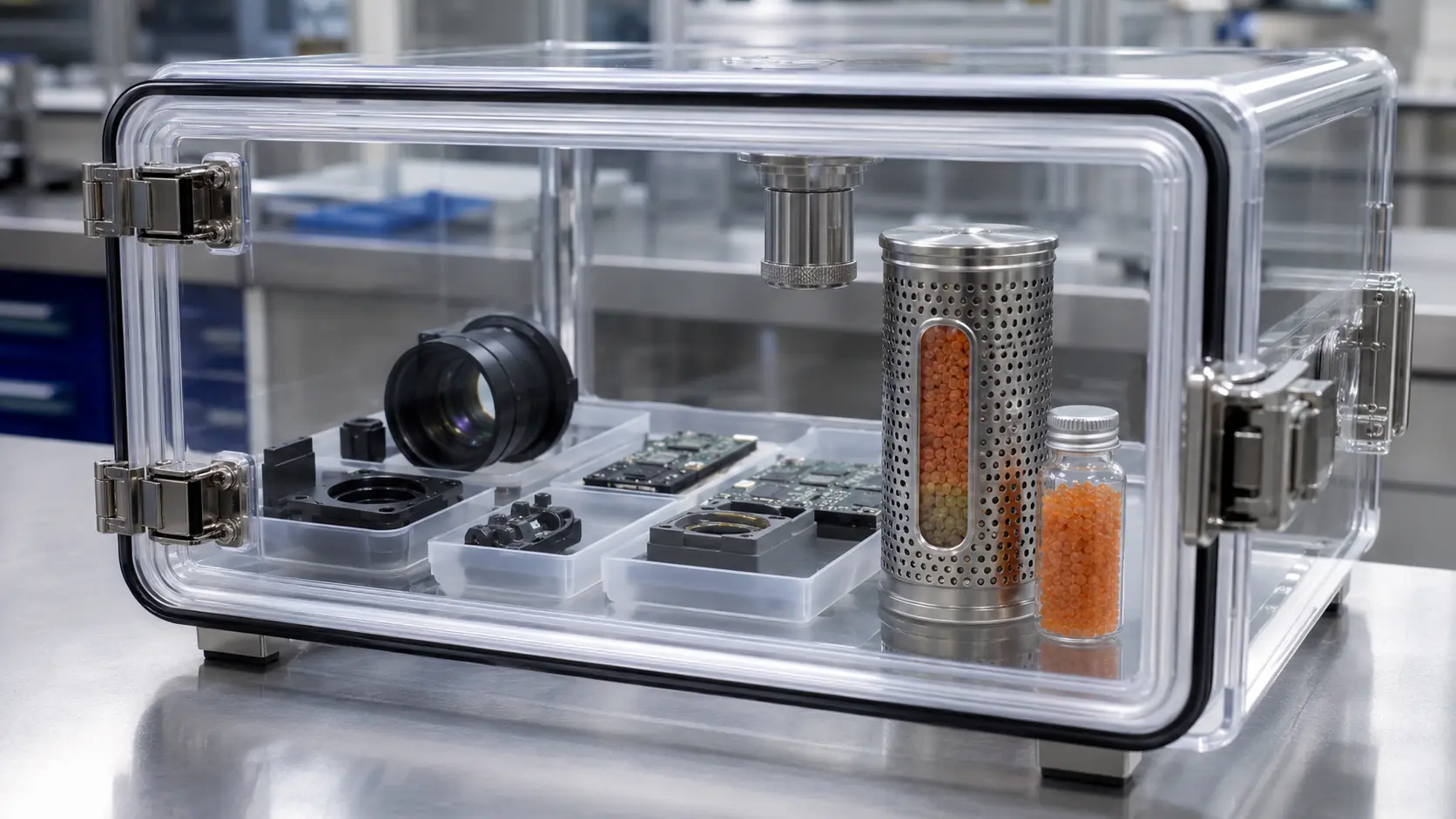
Indicating silica gel provides a visible response as moisture exposure increases, but the color should not be treated as an exact humidity reading unless the specific system has a documented relationship and is used under the defined conditions. Placement, lighting, indicator concentration and color interpretation can also affect the observation.
Indicator chemistries differ. If cobalt-free material or another composition restriction is required, request the relevant declaration and SDS rather than inferring chemistry from color alone. Also confirm whether the indicator is supplied as a full indicating charge or blended at a small proportion with standard silica gel.
Verify the Complete Moisture-Control System
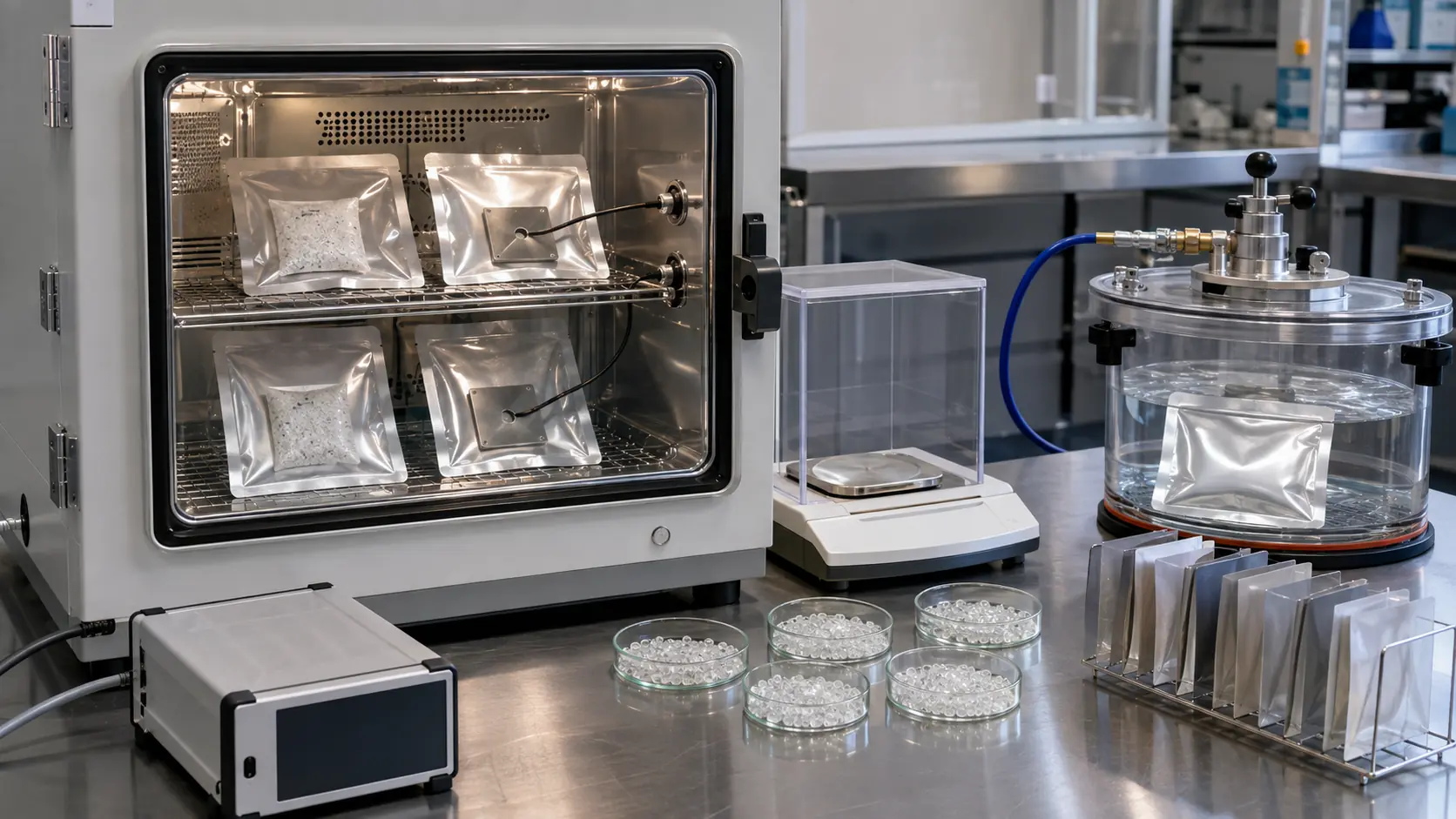
Laboratory adsorption data helps compare silica gel grades, but the final protection result also depends on the barrier, seals, initial moisture, packet placement and service environment. A representative package test is therefore more meaningful than testing desiccant mass alone.
Build the trial with the actual product or a representative moisture load, production packaging materials, intended packet arrangement and realistic temperature-humidity exposure. Record package humidity over time, check seal integrity and weigh conditioned desiccant samples when mass gain is part of the validation method.
Preparing a purchasing review? Use the Silica Gel Sample Evaluation Checklist Before Bulk Purchase → to align sample identity, documents, test basis and approval records.
Define the Risk
Identify the product’s moisture sensitivity, acceptable humidity range and required protection period.
Describe the Package
Provide internal volume, barrier material, closure, initial moisture sources and expected climate exposure.
Select the Format
Choose standard or indicating material and a sachet, canister or bulk form that fits handling and contact requirements.
Calculate and Validate
Use relevant working capacity, define a documented quantity and verify it in a representative sealed-package trial.
How to Choose Silica Gel Desiccant FAQ
These answers establish the main selection boundaries. Final quantity and suitability depend on the confirmed silica gel grade, package, exposure conditions and validation method.
How much silica gel should I use in a package?
There is no reliable universal packet count. Determine the moisture initially enclosed with the product and packaging, expected ingress through the barrier and seals, protection period, temperature, humidity target and the selected grade’s working adsorption capacity. Verify the result in the actual or representative package.
Can I select silica gel by package volume alone?
No. Volume accounts for only part of the initial air load. Moisture in wood, paperboard, cushioning and the product, plus continuing permeation through the package, can be more important over a long storage or shipment period.
What is the difference between standard and indicating silica gel?
Standard silica gel adsorbs moisture without a visible status signal. Indicating silica gel contains or uses an indicator system that changes color with moisture exposure. The exact chemistry, color range and interpretation must be confirmed for the selected grade.
Does a color change show the exact relative humidity?
Not normally. It is primarily a visual exposure indication unless the supplier documents a defined relationship under controlled conditions. A calibrated humidity indicator card or electronic logger may be more suitable when a threshold or time history must be recorded.
Can silica gel work in an unsealed carton?
Its protection period will be limited because ambient moisture can continue entering the carton. Silica gel normally works more effectively inside a suitable sealed barrier bag, closed case, canister or other package with controlled moisture ingress.
Can silica gel be regenerated and reused?
Some bulk silica gel grades may be regenerated under the manufacturer’s defined conditions. Do not assume every product is reusable. Packets, indicators and container materials may have different temperature limits, and contaminated material may be unsuitable for reuse.
Can one silica gel grade be used for food, pharmaceutical and electronics packaging?
Do not assume so. Product-contact status, sachet material, indicator chemistry, cleanliness, dust, destination-market requirements and documentation vary by application. Confirm the exact grade and contact condition before selection.
What should I send for a silica gel quotation?
Send the protected product, internal package dimensions, barrier material, sealing method, humidity target, packing conditions, shipment route, storage duration, preferred packet or bulk format, quantity, destination and required documents.
Build the Silica Gel Choice Around the Real Package
Send your product, package construction, humidity target, shipment conditions and required format. Adsorbent Source supplies silica gel desiccants and reviews the requested grade and format against the package data. Sample and document availability, packing and quotation requirements can be checked for each inquiry.
TDS vs SDS vs COA for Adsorbents →
Adsorbent Packaging and Export Guide →