PSA Nitrogen Generation Adsorbents for Industrial Nitrogen Systems
PSA nitrogen generation adsorbents must be selected from the complete operating requirement: nitrogen purity, residual oxygen, product flow, air consumption, pressure cycle, feed-air condition, adsorber dimensions and replacement background. Carbon molecular sieve is the primary active adsorbent, but final performance depends on the CMS and PSA system working together.
TDS vs SDS vs COA for Adsorbents →
Carbon Molecular Sieve vs Activated Carbon →
Before requesting a quotation, review the Adsorbent Packaging and Export Guide to prepare CMS packaging, palletizing, shipping-mark and destination requirements.
Define the PSA Requirement Before Selecting CMS
The application should be defined first. CMS grade comparison comes after the nitrogen target, PSA operating conditions and adsorber information are understood.
Nitrogen Target
Confirm nitrogen purity, maximum residual oxygen, product flow and operating hours.
PSA Conditions
Provide pressure, cycle time, feed-air temperature, pretreatment and air-consumption data.
Adsorber Data
Confirm tower diameter, bed height, existing filling quantity and original CMS information.
CMS Approval
Compare supplier-specific CMS data only after the system operating point and replacement requirements are clear.
How PSA Nitrogen Generation Uses Carbon Molecular Sieve
Carbon molecular sieve, commonly called CMS, is the main adsorbent used inside PSA nitrogen generators. It separates nitrogen from compressed air mainly through the difference between oxygen and nitrogen adsorption rates inside a controlled micropore structure.
Oxygen is adsorbed more rapidly during the pressurized stage. Nitrogen-enriched gas passes through the active bed and becomes the product stream. Twin adsorption towers normally alternate between adsorption and regeneration to provide continuous nitrogen production.
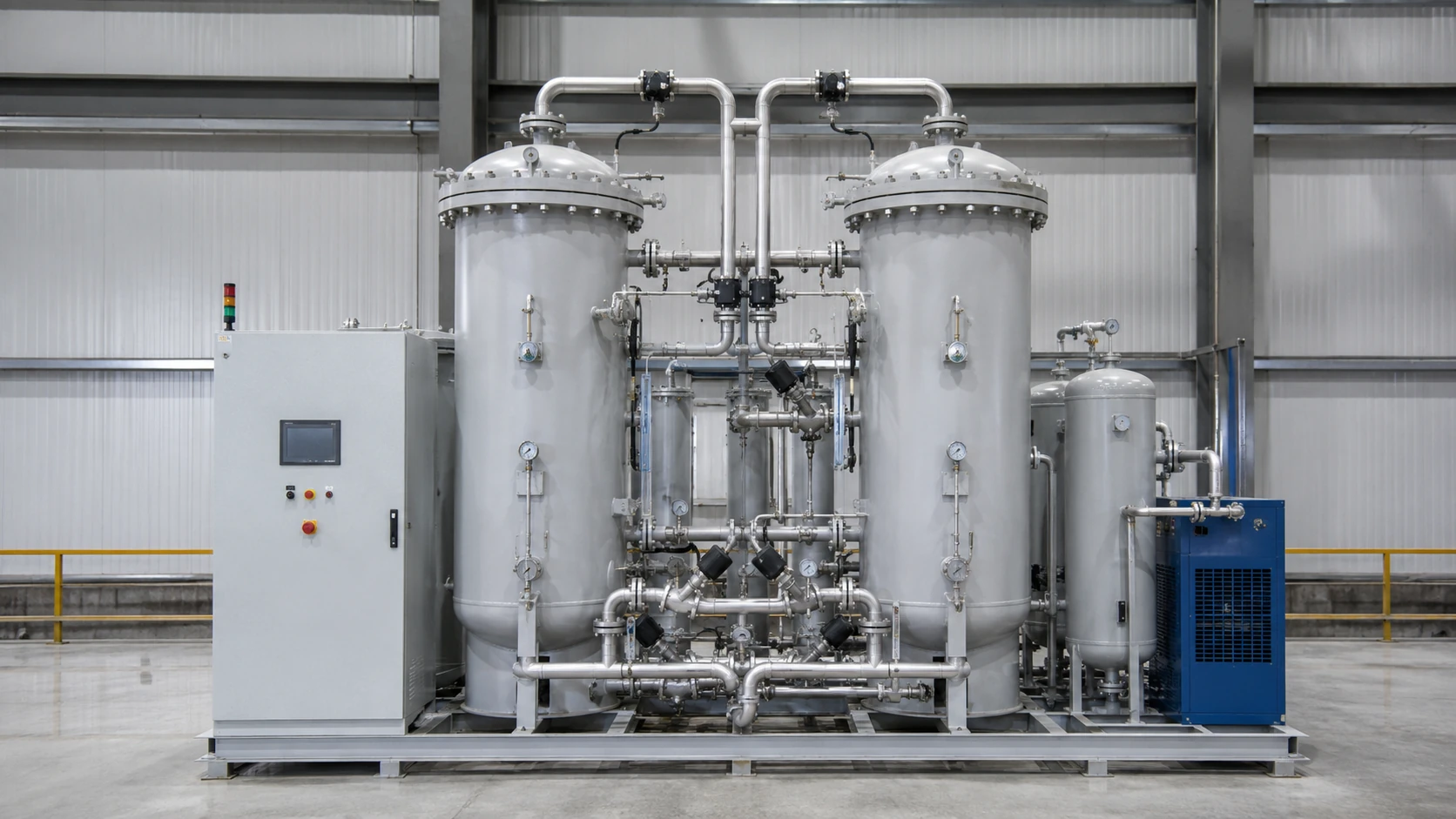
Four Main Stages in a PSA Nitrogen System
The exact valve sequence depends on the generator design, but most industrial systems combine pretreatment, pressurized adsorption, nitrogen production and depressurization regeneration.
Feed-Air Pretreatment
Compressed air is cooled, separated, filtered and dried to reduce water, oil and particles before the CMS towers.
Pressurized Adsorption
Air enters the active vessel and oxygen is adsorbed more rapidly than nitrogen under the operating pressure.
Nitrogen Production
Nitrogen-enriched gas exits the tower and enters the product receiver or downstream process.
Regeneration
The offline tower is depressurized so adsorbed gas can be released before the next adsorption cycle.
Choosing Carbon Molecular Sieve for a PSA Nitrogen Application
PSA nitrogen generation adsorbents should be selected from the required nitrogen purity, residual oxygen, product flow, working pressure, air consumption, tower dimensions, cycle program, existing CMS and feed-air treatment.
This page defines the application requirement. Final supplier-specific CMS grade approval should continue on the Carbon Molecular Sieves product page.
Buyers comparing the functional difference between CMS and purification carbon can also review Carbon Molecular Sieve vs Activated Carbon .
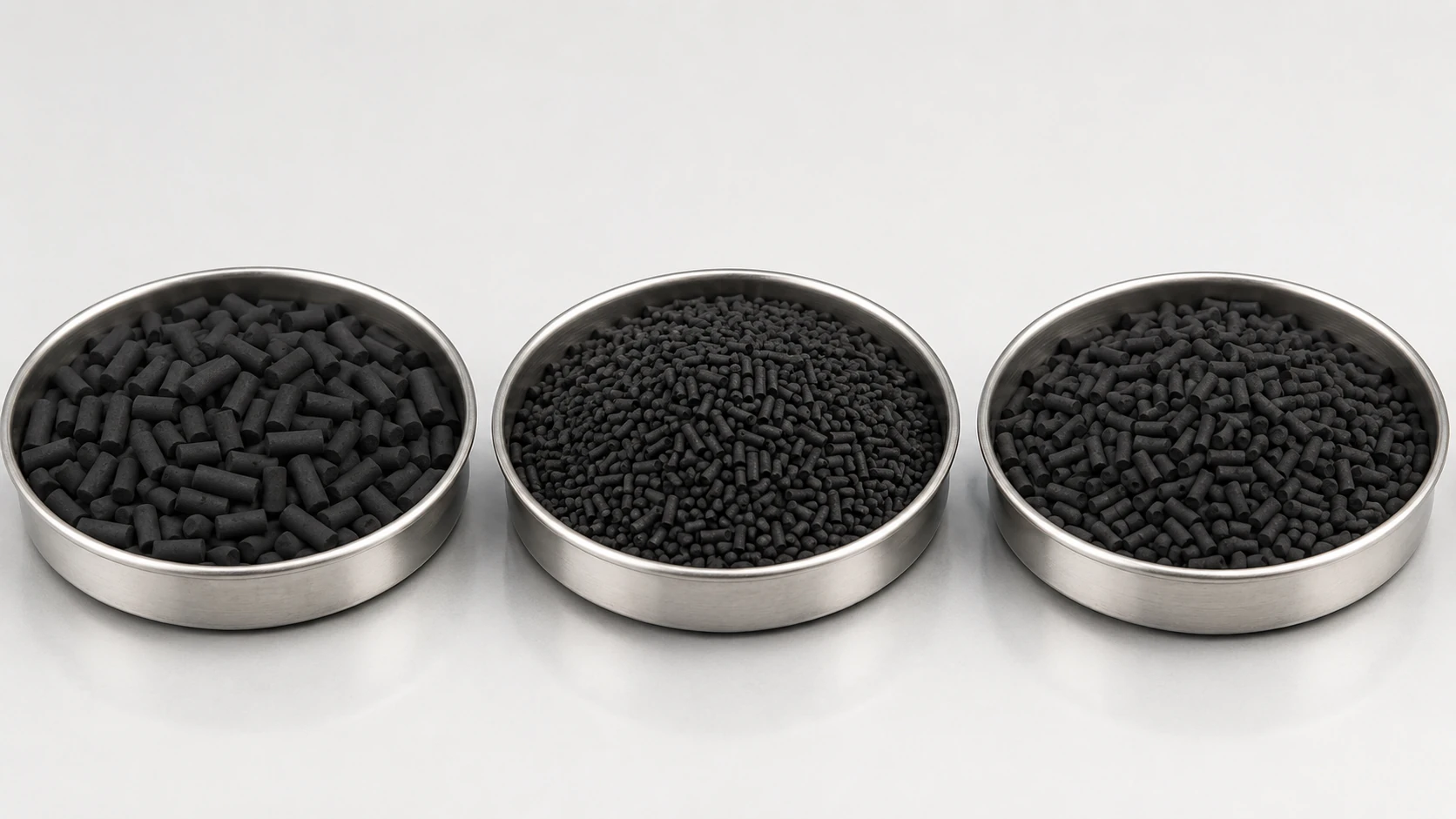
Standard PSA Nitrogen Direction
Used for industrial nitrogen generators where stable gas supply, practical purity, output and operating reliability must be balanced.
- General industrial nitrogen supply
- Food, chemical and metal-processing applications
- New filling and scheduled replacement
- Purity, flow and air consumption compared together
High-Purity Nitrogen Direction
Relevant when lower residual oxygen is required and the PSA cycle, feed-air condition and productivity target support the higher-purity duty.
- Higher-purity process nitrogen
- Selected electronics and heat-treatment duties
- Purity and recovery reviewed together
- Higher purity may reduce flow or increase air demand
Replacement CMS Direction
Replacement projects require the original grade, pellet size, bulk density, filling quantity, tower dimensions and current generator performance.
- Purity or capacity decline
- Moisture, oil contamination or powdering
- Scheduled full-bed replacement
- Cross-brand compatibility review
CMS-180, CMS-200 and CMS-220 Are Not Universal Standards
Commercial CMS model names are useful references, but they do not define one internationally standardized performance level.
Two suppliers may use similar names while providing different pellet size, bulk density, productivity, nitrogen recovery or recommended cycle conditions.
Compare the original supplier data, target purity, product flow, air consumption, bulk density, tower volume, filling weight and actual PSA cycle.
Review CMS Product DataApplication-Side CMS Selection Matrix for New and Replacement PSA Systems
This matrix helps define the selection direction before product approval. Final grade selection still requires supplier-specific CMS data and confirmed PSA operating conditions.
| Selection Factor | General Industrial Duty | High-Purity Duty | Replacement Project |
|---|---|---|---|
| Main Direction | General PSA nitrogen production | Lower residual oxygen | Existing generator compatibility |
| Main Target | Stable industrial nitrogen supply | Higher nitrogen purity under suitable conditions | Restore or maintain original performance |
| Key Comparison | Flow, purity, recovery and air consumption | Purity, productivity, recovery and cycle | Original grade, bed and operating data |
| Particle Form | Black cylindrical pellets | Supplier-specific cylindrical pellets | Match original size and system needs |
| Filling Quantity | Equipment-design dependent | Bulk-density and bed-volume dependent | Compare original weight and actual tower volume |
| Main Risk | Selecting by price or model name alone | Ignoring reduced flow, recovery or higher air demand | Assuming similar model names mean equal performance |
| Final Approval | Generator + supplier data | Full purity and productivity comparison | Replacement compatibility review |
Nitrogen Purity, Flow, Recovery and Air Consumption Are Connected
A PSA nitrogen system should be evaluated as a balance between nitrogen quality, useful gas output and the compressed-air cost required to reach the operating target.
Why Clean and Dry Feed Air Is Essential for CMS
Water, liquid carryover, oil mist and particles can occupy adsorption capacity, contaminate the CMS bed, increase pressure drop and shorten service life.
Before replacing CMS, review the compressor, aftercooler, separator, drain system, oil-removal filters, dryer and particulate filtration.
Review Compressed Air Drying Adsorbents →
Factors That Control PSA Nitrogen Performance
PSA nitrogen generation adsorbents operate inside a complete equipment cycle. CMS grade, equipment design and operating conditions should therefore be evaluated together.
Why Nitrogen Purity May Remain Low After CMS Replacement
Poor performance after refilling does not automatically prove the new CMS is defective. Loading, settlement, valves, pretreatment, pressure and cycle settings should be checked together.
New PSA Systems and CMS Replacement Need Different Data
New PSA Nitrogen Generator Filling
New equipment should be reviewed from its design purity, nitrogen output, air consumption, cycle and bed calculation.
- Designed nitrogen purity and residual oxygen
- Designed nitrogen flow rate
- Adsorption and regeneration pressure
- Tower dimensions and CMS bed height
- Designed CMS size and bulk density
- Designed filling weight or volume
- Air-consumption target and pretreatment train
Existing CMS Replacement
Replacement should begin with the original material, actual loading record and change in generator performance.
- Equipment manufacturer and model
- Original CMS supplier and grade
- Original TDS and pellet size
- Quantity loaded into each tower
- Original and current purity and flow
- Current air consumption and pressure
- Evidence of moisture, oil or powdering
Information Needed for a PSA Nitrogen Adsorbent Review
Complete equipment and operating data makes it possible to compare the application requirement and then select a suitable CMS product direction.
Use the Carbon Molecular Sieve for Nitrogen PSA RFQ checklist to organize the system, feed-air, vessel and cycle data for a supplier review. For replacement beds in existing PSA generators, see the CMS Replacement Buyer Guide for failure review, original grade checks and refill specifications.
Send the Generator and Existing CMS Data
Adsorbent Source supplies carbon molecular sieve and reviews the requested CMS grade, system data, replacement requirements and quotation details for each inquiry.
Sample availability, TDS, SDS, COA, pellet-size information, bulk density, packaging and available export documents can be confirmed for the selected CMS grade and project.
Request CMS Review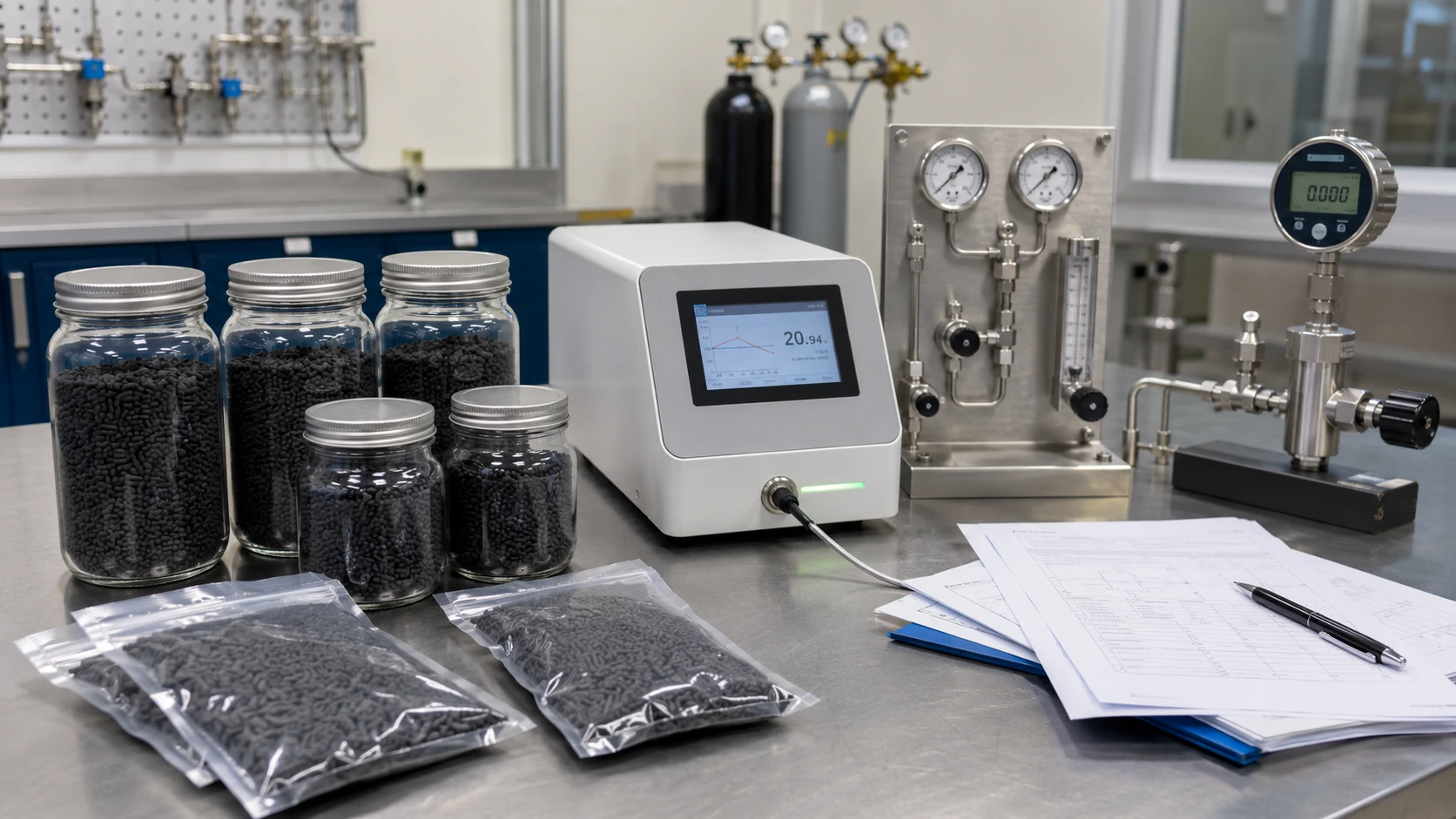
Compare the Original CMS and PSA Cycle Together
Adsorbent Source supports PSA equipment manufacturers, industrial gas users and replacement-media buyers by reviewing generator data, original CMS information, operating history and available supplier documents together before comparing options.
Nitrogen purity, flow, recovery, air consumption or service life should not be confirmed from a commercial CMS model name alone.
PSA Nitrogen Generation Adsorbents FAQ
What adsorbent is used in PSA nitrogen generation?
Carbon molecular sieve is the main adsorbent used in PSA nitrogen generators. It separates nitrogen from compressed air through the different adsorption rates of oxygen and nitrogen.
How does carbon molecular sieve separate nitrogen from air?
Oxygen is adsorbed more rapidly within the CMS pore system under pressure, while nitrogen-enriched gas passes through the active bed as product gas.
What information is required to select CMS?
Important inputs include nitrogen purity, residual oxygen, product flow, pressure, cycle conditions, feed-air quality, tower dimensions, existing CMS and filling quantity.
Are CMS-180, CMS-200 and CMS-220 universal standards?
No. They are commercial model references and may represent different performance ranges from different suppliers.
What nitrogen purity can a PSA generator produce?
Final purity depends on the CMS, generator design, product flow, pressure, cycle, equalization, feed-air condition and residual oxygen requirement.
Why can higher purity reduce nitrogen flow or recovery?
Lower residual oxygen can require changes in flow, cycle or compressed-air input. Purity, output, recovery and air consumption should be evaluated together.
Why must PSA feed air be clean and dry?
Water, oil and particles can occupy adsorption capacity, contaminate CMS pellets, increase pressure drop and shorten bed life.
Why can nitrogen purity remain low after CMS replacement?
Causes can include underfilling, uneven tower loading, settlement, wrong pellet size, different bulk density, valve leakage, low pressure, poor equalization, contamination or an incompatible replacement grade.
How is CMS filling quantity determined?
Filling quantity depends on tower dimensions, bed height, CMS bulk density, support structure and equipment design. Existing projects should start from the original loading record and actual bed volume.
Can another CMS brand replace the original material?
Replacement may be possible, but purity, flow, recovery, bulk density, pellet size, pressure drop, filling quantity and cycle compatibility should be compared first.
What data is needed for a replacement project?
Provide the generator model, original supplier and grade, pellet size, filling quantity, tower dimensions, purity, flow, pressure, cycle, air consumption and replacement reason.
Which CMS technical documents can be confirmed?
The availability of samples, TDS, SDS, COA, pellet-size data, bulk density, packing details and selected export documents can be confirmed for the chosen CMS grade and inquiry.
Start With the Nitrogen Target and PSA Generator Data
Send the generator model, target purity, residual oxygen, nitrogen flow, air consumption, pressure, cycle, tower dimensions, original CMS, pellet size and filling quantity. Adsorbent Source can review CMS grade options, document availability and export-supply requirements against the generator data provided.