Air Separation Purification Adsorbents for Cryogenic ASU Systems
Compare 13X molecular sieve, activated alumina guard layers and application-specific air purification grades for removing moisture and carbon dioxide before air enters the cryogenic cold box.
How to Select Molecular Sieve →
TDS vs SDS vs COA for Adsorbents →
Adsorbent Packaging and Export Guide →
13X APG Air Separation RFQ Checklist →
Why Air Must Be Purified Before Cryogenic Separation
Atmospheric air contains water vapor, carbon dioxide and other trace components. Before compressed air enters a cryogenic air separation cold box, these impurities must be reduced to the levels required by the process design.
Air separation purification adsorbents help remove the remaining moisture and carbon dioxide after compression, cooling and bulk liquid-water separation. Effective pre-purification protects low-temperature heat exchangers and process channels from freezing or solid deposition.
How an ASU Air Pre-Purification Unit Works
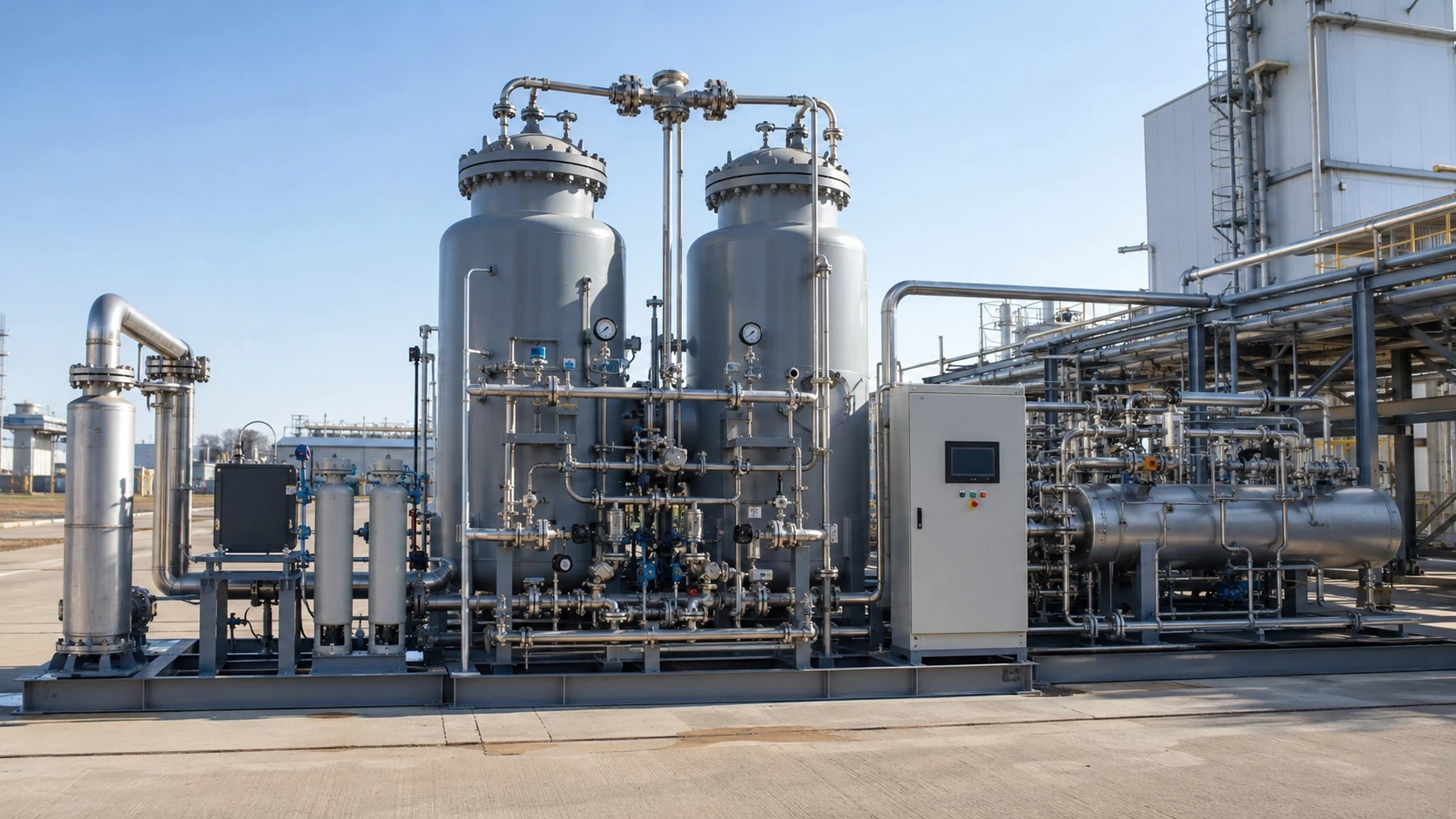
A complete air pre-purification unit combines compression, cooling, water separation, adsorption, regeneration and bed switching before the purified air enters the cold box.
Compression and Cooling
Ambient air is compressed and cooled. Cooling condenses a large portion of the incoming water vapor.
Liquid Water Separation
Separators and drains remove condensed liquid water before air reaches the adsorption vessels.
H₂O and CO₂ Adsorption
The active bed removes remaining moisture and carbon dioxide according to the selected bed structure and adsorbent grades.
Regeneration and Switching
The offline bed is depressurized, heated or purged, cooled and returned to adsorption according to the ASU cycle.
Air Separation Purification Adsorbents: Material Options
ASU pre-purification beds may use one adsorbent, multiple layers or an application-specific grade designed for the required moisture and carbon dioxide breakthrough profile.
The material name alone is not sufficient. Dynamic capacity, particle size, pressure drop, mechanical strength, cycle condition and regeneration performance must be compared with the original system design.
Activated Alumina Desiccant
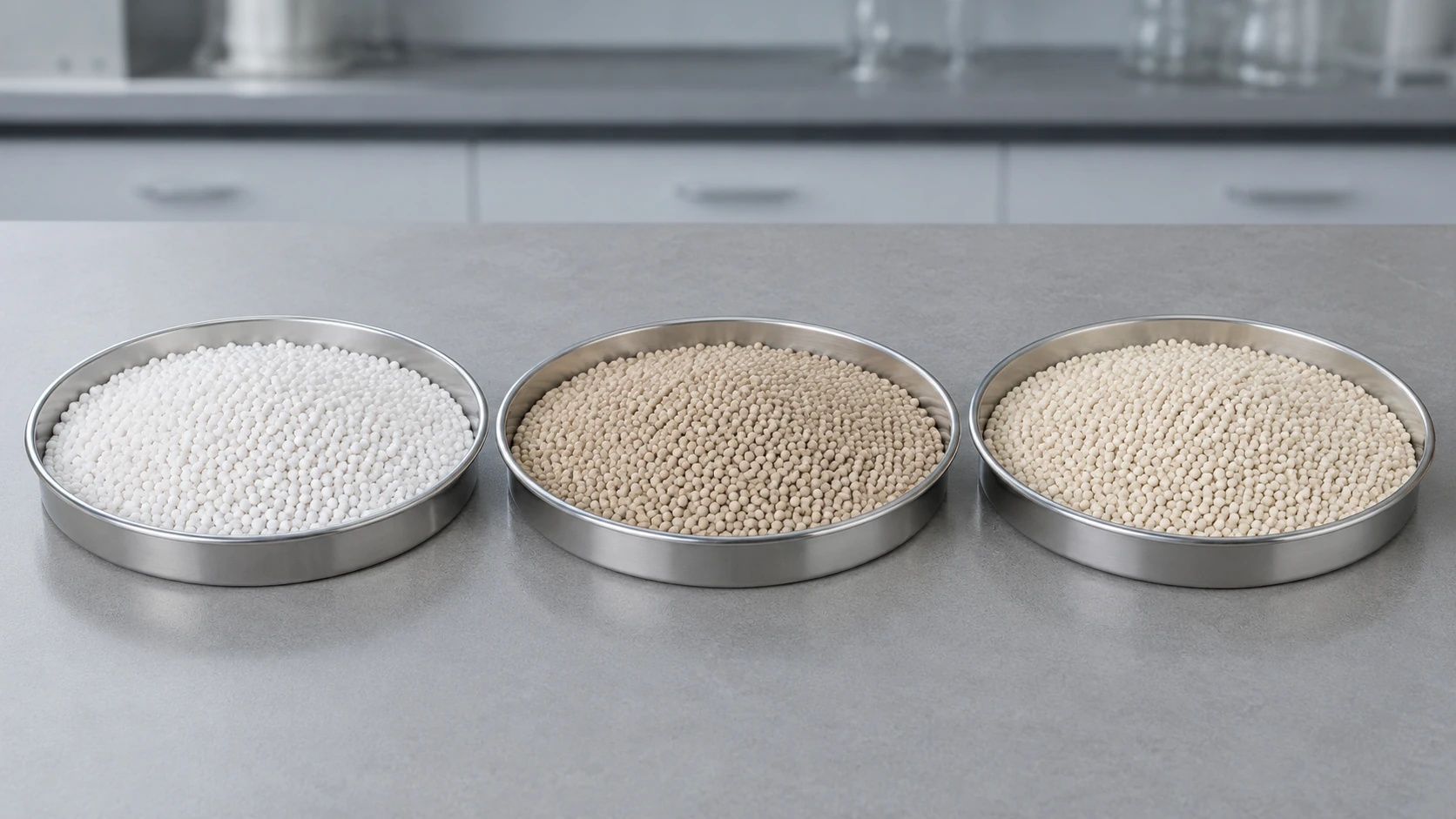
Activated alumina may be used at the bed inlet or as a separate layer to handle part of the moisture load and protect the downstream molecular sieve layer.
- Initial moisture-load management
- Selected inlet guard-layer designs
- Protection against abnormal wet-air conditions
- Layer ratio must follow the ASU design
13X Molecular Sieve
13X molecular sieve is commonly reviewed for air pre-purification where both moisture and carbon dioxide removal are required before cryogenic separation.
- Moisture and CO₂ adsorption
- Cryogenic air separation pretreatment
- Main adsorption layer in selected systems
- Dynamic ASU data must be confirmed
Application-Specific ASU Grade
Some suppliers offer molecular sieve grades optimized for air pre-purification cycles, dynamic CO₂ capacity, mass transfer, mechanical durability or reduced regeneration load.
- Supplier-specific naming and performance
- Dynamic breakthrough data required
- Original grade comparison recommended
- Not approved from a generic label alone
Activated Alumina and 13X Molecular Sieve Comparison
This table provides an initial purchasing comparison. Final approval must follow the original ASU process design and the selected supplier’s dynamic performance data.
| Selection Factor | Activated Alumina | Standard 13X | Application-Specific ASU Grade |
|---|---|---|---|
| Main Role | Moisture adsorption and bed protection | H₂O and CO₂ removal | ASU-cycle-specific purification |
| Typical Bed Position | Inlet layer or selected guard section | Main adsorption layer in selected systems | According to the original bed design |
| Water Removal | Yes | Yes | Yes |
| CO₂ Removal | Limited and grade-dependent | Common application direction | Optimized according to grade design |
| Dynamic Performance | Grade and moisture-load dependent | Supplier and cycle dependent | Application-specific data required |
| Replacement Basis | Existing layer and moisture load | Existing sieve and process conditions | Original grade and dynamic comparison |
| Main Selection Risk | Incorrect layer quantity or particle size | Assuming all 13X grades are equal | Selecting from a trade name alone |
Standard 13X and 13X APG Are Not Automatically Interchangeable
Standard 13X is commonly reviewed for gas purification, carbon dioxide removal, dehydration and air separation pretreatment.
13X APG generally identifies an air-plant-grade 13X product direction for cryogenic air-separation prepurification, where water and CO₂ removal upstream of the cold box are important. The specific grade and duty must be verified from the supplier TDS. PSA oxygen-production molecular sieves are a separate selection and cannot be assumed equivalent.
Cryogenic ASU pre-purification and PSA oxygen generation use different cycle logic, separation objectives and performance criteria. Confirm the exact equipment process before comparing grades.
Review 13X APG PositioningFactors That Control ASU Adsorbent Performance
Air separation purification adsorbents operate as part of a complete pretreatment cycle. Changes in temperature, water load, carbon dioxide concentration or regeneration can alter the breakthrough profile.
Why an ASU Pre-Purification Bed May Break Through Early
Early water or CO₂ breakthrough can be caused by upstream equipment faults, changed feed conditions, regeneration problems or an unsuitable replacement grade.
New ASU Filling and Existing Bed Replacement Require Different Data
New ASU Filling
A new project should be reviewed from the process design basis and intended bed structure.
- ASU capacity and air-flow design
- Adsorber dimensions and support layers
- Target outlet water and CO₂
- Designed adsorption cycle
- Regeneration temperature and gas flow
- Designed alumina and molecular sieve ratio
Existing ASU Replacement
A replacement project should begin with the original product, loading record and operating history.
- Original supplier and exact grade
- Original TDS and particle size
- Original filling quantity
- Service life and replacement reason
- Current outlet water and CO₂ trend
- Pressure drop, dust and bed condition
Information Needed for ASU Adsorbent Review
Complete operating and equipment data helps compare adsorbent grade, layer structure, particle size, filling quantity, regeneration compatibility, packaging and documentation.
Send the ASU and Existing Adsorbent Data
Adsorbent Source supplies industrial adsorbents and reviews the requested grade, specification and document needs against the ASU process data provided.
Sample and TDS, SDS and COA availability, particle-size information, packaging and export-supply details can be checked for the requested grade and order requirements.
Request ASU Adsorbent Review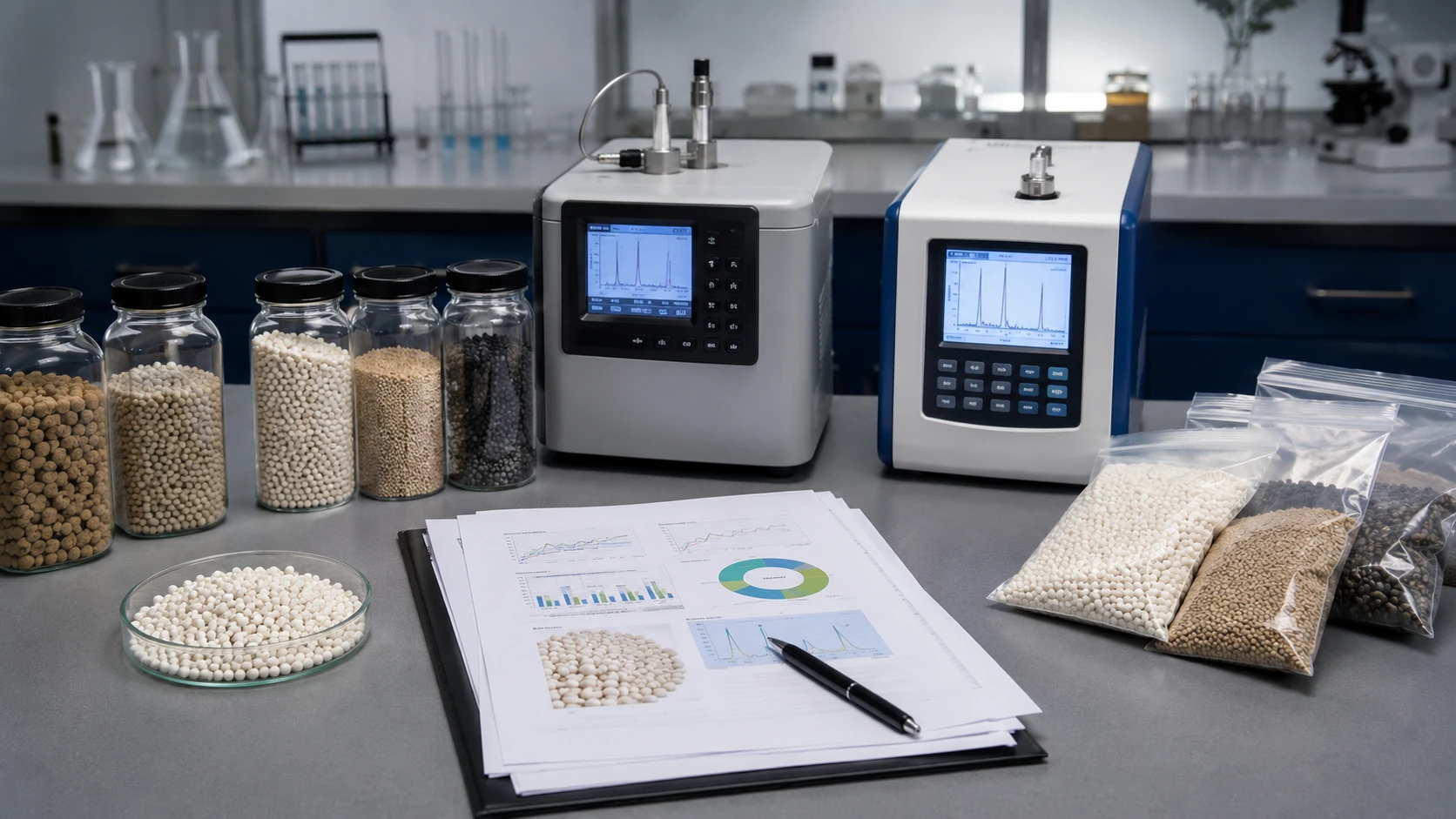
Compare the Original Grade and Operating History
Adsorbent Source supplies activated alumina and 13X molecular sieve and can review an ASU new-fill or replacement inquiry against the process data, original grade and operating history you provide. The requested grade, dynamic performance data, samples and supporting documents must be confirmed for the specific equipment and order.
We do not confirm outlet water, carbon dioxide breakthrough or expected service life from a generic product name alone. Final approval should follow actual dynamic data and the ASU process design.
Air Separation Purification Adsorbent Questions
What adsorbent is used in an ASU pre-purification system?
13X molecular sieve is commonly reviewed for moisture and carbon dioxide removal before cryogenic air separation. Activated alumina may be used as a moisture or guard layer depending on the original bed design.
Why must water and CO₂ be removed before the ASU cold box?
Water and carbon dioxide can freeze or form solid deposits at cryogenic temperatures, creating blockage and operating risk inside low-temperature heat exchangers and process channels.
Is standard 13X suitable for air separation pretreatment?
13X is commonly reviewed for air pre-purification, but final suitability depends on dynamic CO₂ capacity, water loading, cycle time, regeneration condition, particle size and the original ASU design.
Is 13X APG the same as an ASU pre-purification grade?
13X APG commonly refers to an air-plant-grade 13X product used in cryogenic ASU prepurification, but different suppliers have different grades and test data. Check the approved product and original ASU specifications. PSA oxygen-production adsorbents are a separate material selection.
Can activated alumina and molecular sieve be loaded together?
Yes, some ASU beds use separate activated alumina and molecular sieve layers. The loading sequence and ratio must follow the original process and vessel design.
How is the adsorbent loading ratio determined?
The ratio depends on inlet water and CO₂ load, bed dimensions, cycle time, regeneration conditions, target outlet levels and the original ASU design calculation.
Why does an ASU molecular sieve bed break through early?
Possible causes include liquid-water carryover, high inlet temperature, oil contamination, insufficient regeneration, low purge flow, poor cooling, bed channeling, particle breakage or increased process load.
Can another brand replace the existing ASU adsorbent?
A replacement may be possible, but the original grade, particle size, bulk density, strength, dynamic performance, bed structure and operating cycle should be compared before approval.
What data is needed for an ASU replacement project?
Provide ASU capacity, air flow, pressure, temperature, inlet and outlet water and CO₂, bed dimensions, original grades, filling quantities, particle sizes, cycle time, regeneration conditions and current operating problems.
What product documents may be available?
Availability of TDS, SDS, COA, packing details and export documents depends on the requested grade and order requirements and can be checked for each inquiry.
Select the Adsorbent From the ASU Process Data
Send the ASU capacity, inlet water and CO₂, operating pressure, temperature, cycle time, regeneration conditions, original adsorbent grades, particle sizes and filling quantities. Adsorbent Source can review requested grades, document availability and export-supply requirements against the process data provided.