Solvent dehydration · Industrial molecular sieve supply
Molecular Sieves for Industrial Solvent Drying
Need molecular sieve for drying methanol or another industrial solvent? Compare 3A and 4A product directions, solvent compatibility, water specifications, bead size and replacement requirements before requesting a bulk quotation.
Which Molecular Sieve Is Used to Dry Industrial Solvents?
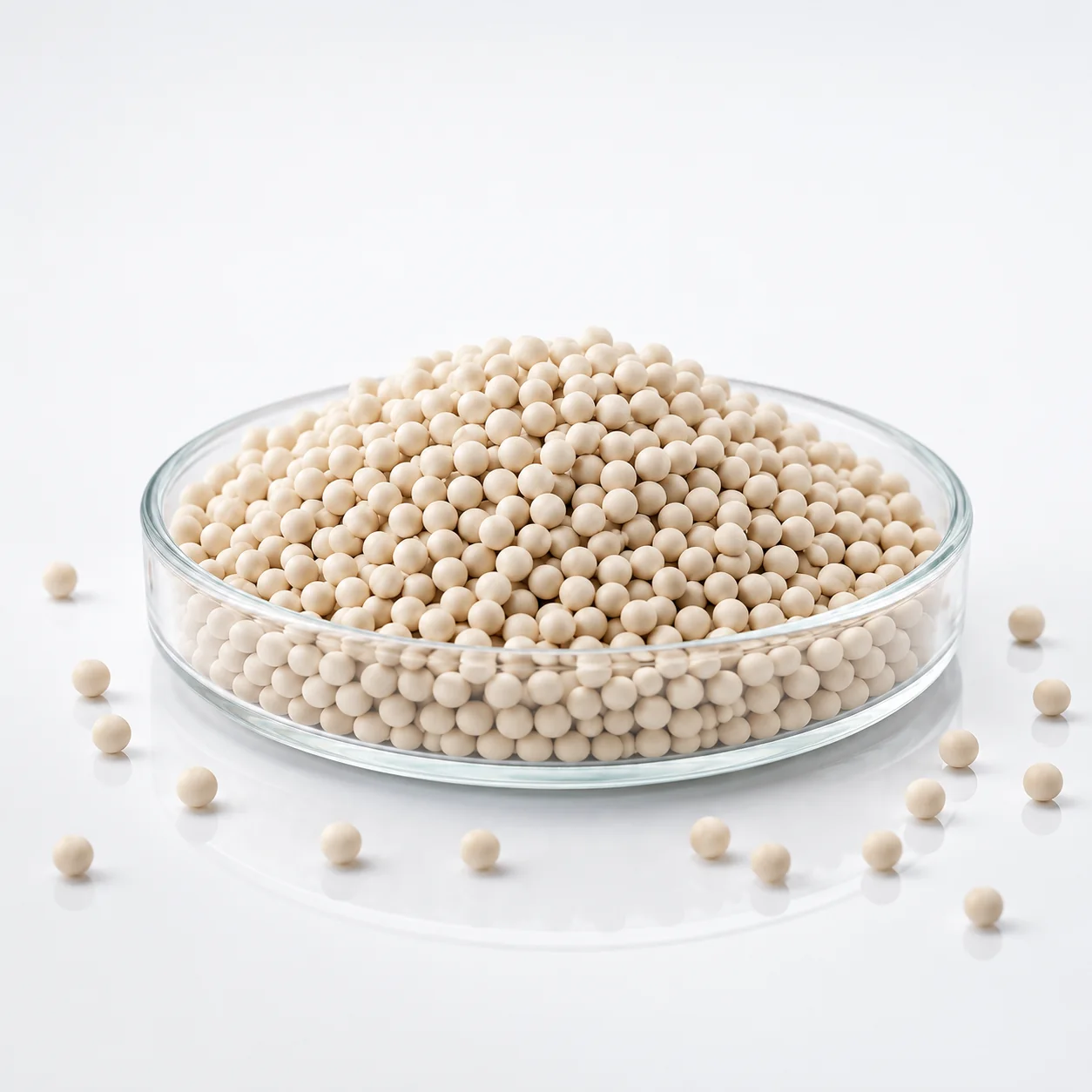
3A molecular sieve is often the first candidate for selective removal of water from compatible organic solvents. Its small pore opening admits water while limiting adsorption of many larger solvent molecules. However, 3A is not automatically suitable for every solvent, concentration, contaminant or operating cycle.
For chemical processors, formulators and plant maintenance teams, the real purchasing decision is not simply 3A versus 4A. It is whether the chosen commercial adsorbent meets the specified residual water level under actual solvent, temperature, flow, vessel and regeneration conditions.
This application guide concentrates on industrial solvent-drying RFQs, including methanol and other compatible liquid streams. Large fuel-ethanol dehydration units are covered separately in the 3A ethanol dehydration application guide.
What Changes the Solvent Drying Duty?
Water enters a solvent stream through raw materials, transfer, storage or processing. Adsorption performance depends on inlet moisture, required final water concentration and the solvent’s interaction with the adsorbent.
- Solvent identity: provide the exact solvent name, composition and any mixture components.
- Water target: give inlet and outlet water data in consistent units, along with the analytical method.
- Physical state: confirm whether drying occurs in liquid phase or vapor phase.
- Process constraints: temperature, flow, contact time, pressure, regeneration and contamination history.
Where a mixed solvent or reactive component is involved, compatibility and potential co-adsorption require additional qualification.
3A vs 4A Molecular Sieve for Solvent Dehydration
| Selection point | 3A molecular sieve | 4A molecular sieve |
|---|---|---|
| Nominal pore opening | Approximately 3 Å; emphasizes selective water uptake | Approximately 4 Å; permits a broader range of small molecules |
| Typical starting direction | Selected alcohol and organic-solvent drying where solvent exclusion is important | Selected general dehydration duties where broader adsorption is acceptable |
| Key technical question | Will the target water be removed without problematic solvent uptake or chemical incompatibility? | Could co-adsorption of solvent components lower recovery or alter regeneration behavior? |
| Purchase qualification | Confirmed grade, current TDS, physical form, test basis and process approval | Confirmed grade, current TDS, solvent compatibility and tested operating data |
3A molecular sieve
Review the 3A product page for physical forms, documentation and bulk RFQ requirements.
4A molecular sieve
Review the 4A product page if the process allows a broader adsorption window.
Uncertain grade?
Compare the intended duty using the molecular sieve grade guide before confirming samples.
Compare Actual Bed Conditions, Not Only Nominal Capacity
In a continuous or cyclic solvent-drying system, adsorbent quantity and working life depend on the loading profile and usable working capacity—not merely a laboratory equilibrium figure.
- Existing vessel: specify inside diameter, bed depth, existing charge and screens.
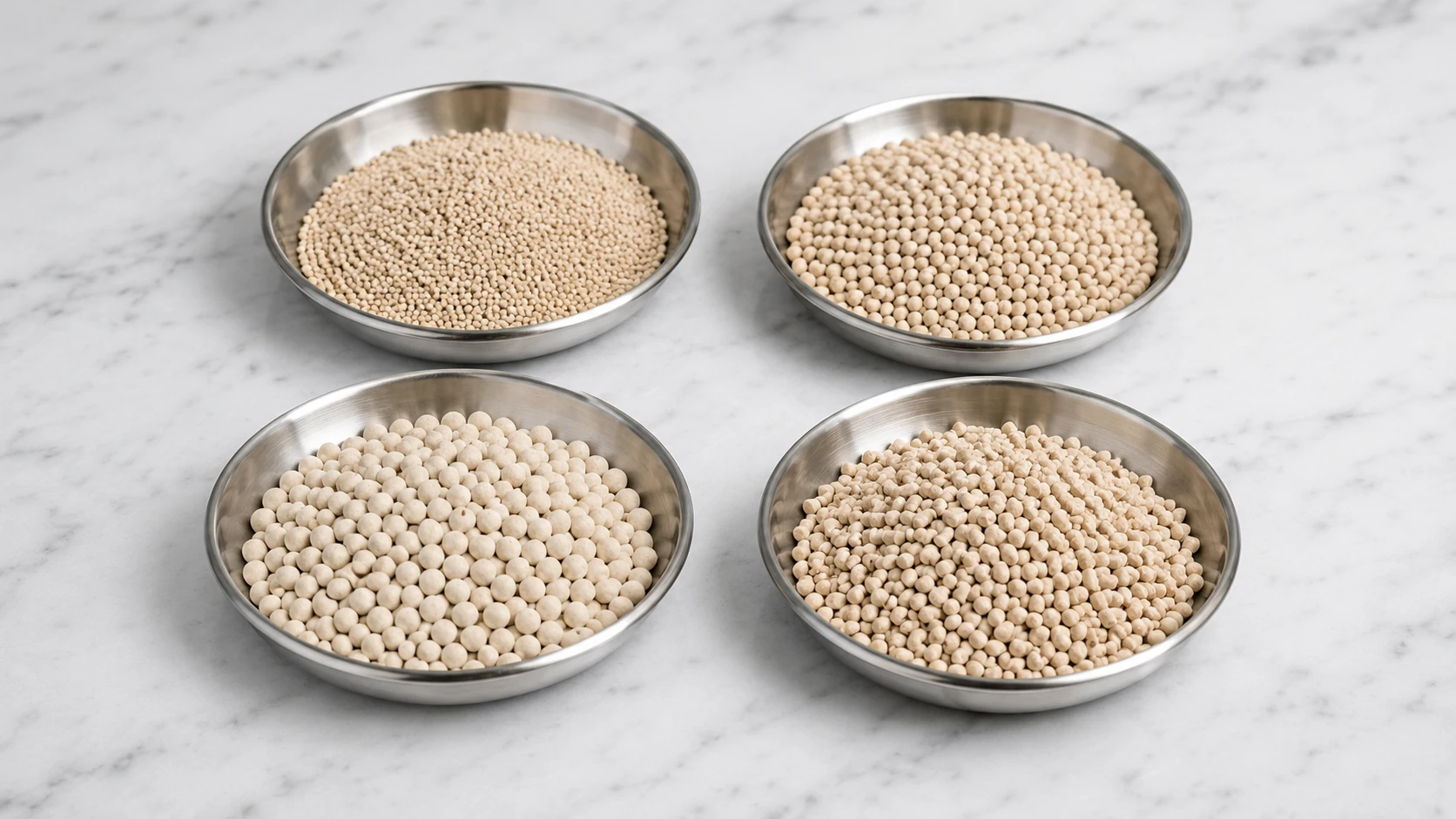
- Particle form: bead or pellet size affects pressure drop, contact and handling.
- Regeneration: determine whether the system uses thermal regeneration or disposable media and check process compatibility.
- Product quality: agree on sampling location, measurement method and acceptance limit.
- Contamination: oil, solids, additives or reactive compounds may impair performance.
For replacement projects, provide the current brand and grade instead of changing material families without testing. Refer to the replacement checklist and particle-size guide.
Information to Include in a Solvent-Drying Molecular Sieve RFQ
Send as many available fields as possible. Missing engineering information can be marked “to be confirmed” rather than replaced with assumptions.
| RFQ field | Required buyer information | Why it matters |
|---|---|---|
| Solvent and composition | Exact chemical name, mixture constituents and concentration | Grade compatibility and possible co-adsorption |
| Moisture specification | Inlet water, target outlet water and test method; specify ppmw, wt% or other units | Defines dehydration duty |
| Operating conditions | Liquid/vapor phase, flow range, temperature, pressure and operating hours | Defines adsorption and pressure-drop requirements |
| Adsorber and regeneration | Vessel size, bed depth, regeneration mode, cycle length and design restrictions | Checks physical and cyclic compatibility |
| Current product / replacement | Brand, grade, bead/pellet size, charge mass and operating history | Enables like-for-like comparison |
| Supply and documentation | Estimated mass, sample requirement, TDS/COA/SDS, packaging, destination, trade term | Supports reliable bulk quotation |
When preparing bulk orders, include acceptable particle size distribution, mechanical strength and shipping moisture criteria according to the approved grade-specific test method.
Industrial Solvent Dehydration FAQ
Is 3A molecular sieve suitable for methanol drying?
3A is a commonly considered material for removing water from methanol and selected alcohol streams. Confirm solvent composition, operating mode and the proposed grade’s technical data before production use.
Can the same molecular sieve be used for every organic solvent?
No. Solvent molecular size, reactive chemistry, impurities, required outlet moisture and regeneration method must be considered. Grade-specific compatibility should be confirmed.
Why does 4A sometimes create more solvent co-adsorption risk?
4A has a larger nominal pore opening than 3A and can admit more small molecules. Whether that affects the process depends on the particular solvent components and conditions.
How much molecular sieve should be loaded into my vessel?
Quantity depends on vessel geometry, allowable pressure drop, flow, moisture load, usable adsorption capacity, run length and regeneration. For existing systems, the approved original loading is a useful starting point.
What documents are appropriate before bulk purchase?
Ask for current grade-specific TDS and SDS, relevant batch COA when available, particle-form and packaging data, and a sample for qualification where required.
Is this the same application as ethanol dehydration?
No. The solvent-drying selection process is broader. For fuel or high-volume industrial ethanol systems, use our dedicated ethanol dehydration page.
Request a Molecular Sieve Quote for Solvent Drying
Adsorbent Source reviews your material request, available grade direction, documentation, sample needs and export-supply terms. Final suitability and any performance figures require grade-specific technical confirmation.
Tell us the solvent
Solvent name, phase, composition, moisture target and process conditions.
Provide the equipment data
Existing adsorber, grade, particle size, charge or estimated bulk quantity.
Confirm shipping needs
Sample, packaging, destination, Incoterm and required delivery schedule.