Silica Gel Sample Evaluation Checklist Before Bulk Purchase
Use the same grade, form, packaging and test conditions you intend to order. This buyer checklist helps compare sample identity, documents, agreed test results and application fit before approving a larger silica gel order.
What Should a Silica Gel Sample Evaluation Prove?
A sample review should show that the material being tested is identifiable, supported by documents, suitable for the intended package or process, and traceable to the product grade proposed for bulk supply.
Quick answer: record the sample code and lot, confirm the silica gel grade and physical form, match the TDS/SDS/available COA to that material, agree on test method and conditions, then check the result in a representative application trial. Record any deviation before approving a purchase order.
There is no universal pass value for every silica gel application. Use your product specification, supplier documentation, agreed method and actual operating or packaging conditions to define acceptance.
Keep the comparison fair
Compare like with like: same sample conditioning, test temperature, relative humidity, particle or packet form and measurement method. A number without its test conditions cannot support a useful supplier comparison.
Start With a Traceable, Representative Sample
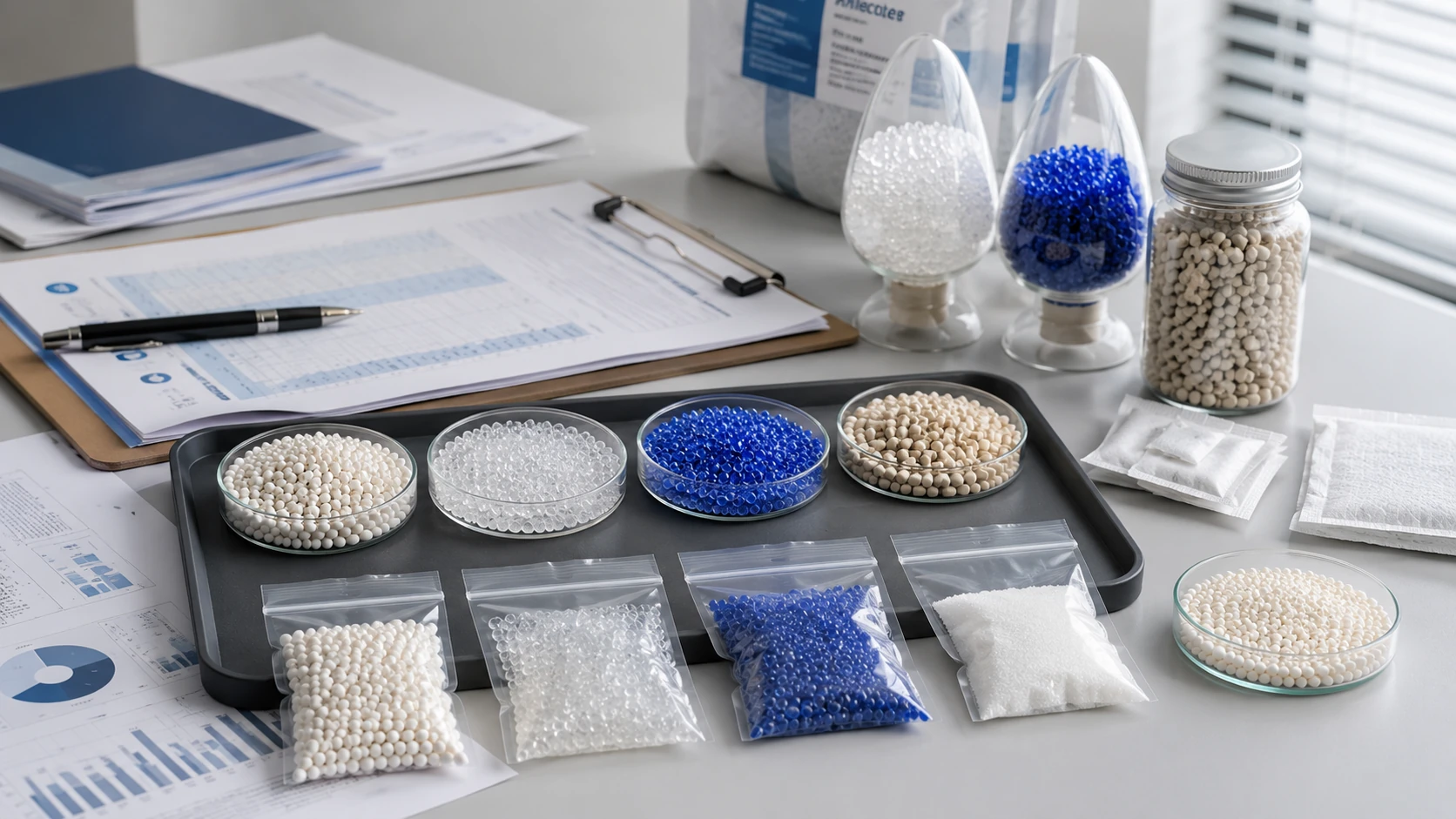
Keep the sample in its original sealed packaging until the test plan is ready. Photograph the outside label, note the date received and assign an internal sample code. If several grades or suppliers are under review, keep each sample and its supporting file set clearly separated.
Ask whether the sample is representative of routine production and how its grade, lot and physical form will be matched to a future order. For sachets or canisters, record both the desiccant specification and the package construction.
Check That Each Document Describes the Sample Under Review
Use the document set to establish identity, handling and stated product properties. Note the document revision and the test conditions behind any reported adsorption values.
| Record | What to check | Question to resolve before bulk approval |
|---|---|---|
| Sample label or packing list | Supplier, product name or grade, lot reference, physical form, package type and sample quantity. | Can the sample be matched to the exact grade and supply format quoted for the order? |
| Technical Data Sheet (TDS) | Reported properties, stated typical or specification values, test method and test conditions. | Are the conditions relevant to your service, and are typical values clearly distinguished from release limits? |
| Safety Data Sheet (SDS) | Product identity, safe handling, storage, spill response and any composition or transport information needed for your use. | Does the SDS correspond to the silica gel grade and any indicator chemistry being evaluated? |
| Certificate of Analysis (COA), if supplied | Lot identification, reported test items, units, methods and relationship to the sample lot. | Will the production shipment have a lot-specific record using the agreed release criteria? |
| Packaging or compliance declarations | Sachet or canister material, labeling, contact condition, destination requirements and lot traceability. | Are package material and documentation acceptable for the intended product, market and handling process? |
Test the Property That Will Drive the Purchase
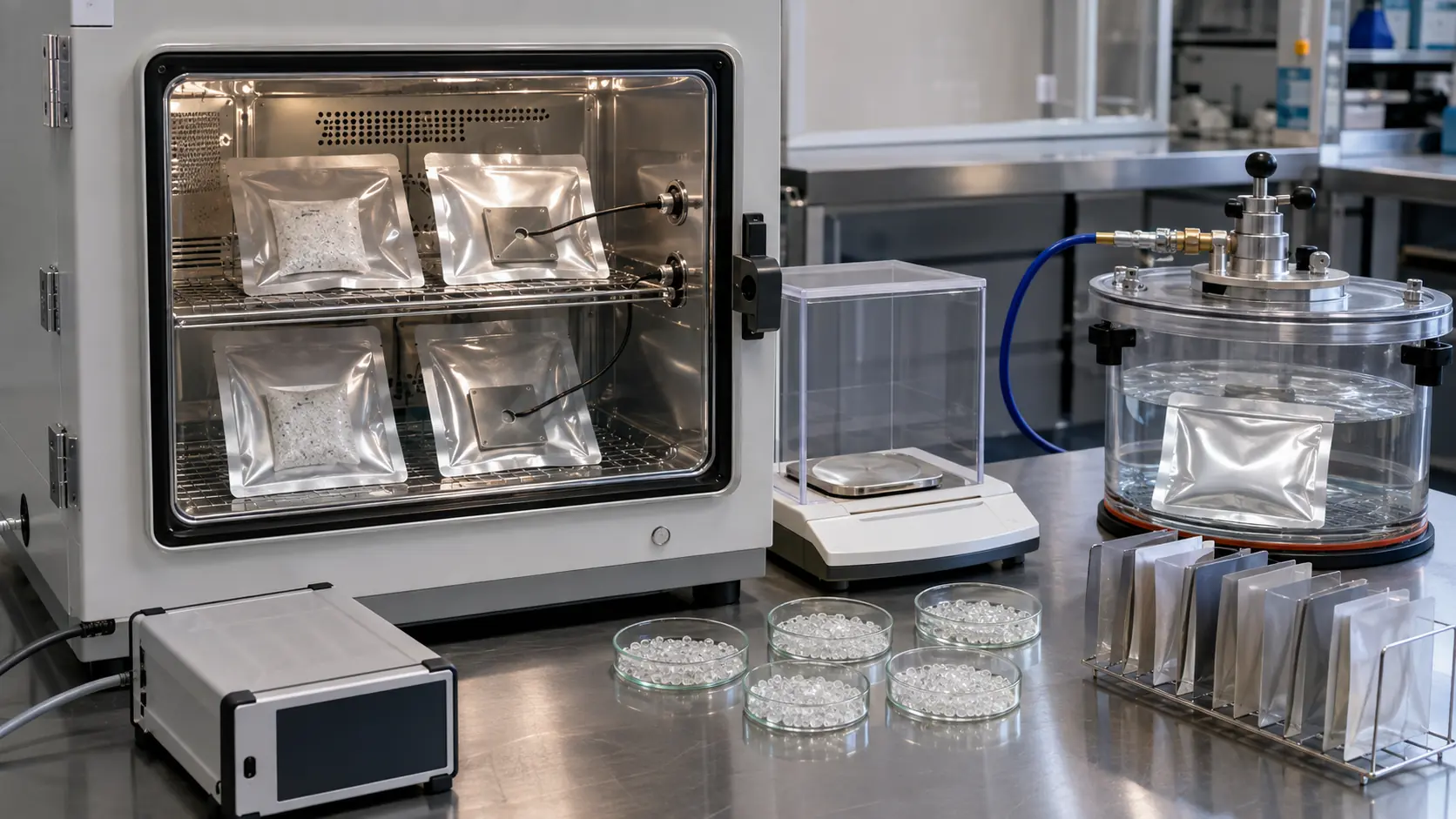
Do not rely on appearance alone. Define what will be measured, how the sample will be prepared, the test conditions, the method, the comparison baseline and who will review the result. Use the supplier’s documented method where it matches the application, or agree on a buyer method before the sample is tested.
For packaging, the most useful validation may involve the actual barrier bag, seal, packet placement, initial moisture and expected storage or transit exposure. For bulk beads used in equipment, particle form, fines, pressure drop where applicable, loading and replacement practices may also matter.
Physical Form and Condition
Check the specified particle or bead form, visible damage, fines or dust, package seal and moisture condition using the agreed inspection approach.
Adsorption Data
Record temperature, relative humidity, conditioning, sample mass, method and units. Compare only results measured on a consistent basis.
Application Trial
Where needed, evaluate the sample in a representative sealed package, cartridge, container or process setup using application-specific acceptance criteria.
From Sample Arrival to Purchase Release
Keep a short record at each stage so the sample decision can be reproduced by purchasing, quality and the application owner.
Log the Sample
Capture supplier, code, grade, lot, date and package condition.
Review Documents
Link label, TDS, SDS and available COA to that sample identity.
Set the Method
Write down measurement, conditioning, conditions and acceptance basis.
Test the Use Case
Run the bench check or representative package/process trial.
Confirm the Supply Match
Record approved grade, form, package, lot documents and any conditions.
Silica Gel Sample Evaluation Checklist
Complete the sections that apply to your use case. Mark non-applicable items and record the reason instead of assuming they were checked.
Receiving and Identity
- Assign an internal sample ID and record receipt date.
- Photograph the label, packaging and any visible damage.
- Record product grade, lot reference, bead form or sachet format.
- Confirm the sample represents the proposed production item.
Documents and Specification
- Match the TDS and SDS to the named grade and indicator type.
- Record test method, units, temperature and relative humidity behind data.
- Check the COA lot reference and reported tests when one is supplied.
- List any destination, contact, labeling or traceability requirement.
Sample and Application Test
- Agree the method, conditioning, baseline and acceptance basis in advance.
- Use the intended particle, sachet or canister form in the evaluation.
- Record instrument, environmental conditions, observations and results.
- Use a representative package or process trial when bench data is insufficient.
Bulk Purchase Release
- Record approved grade, physical form, package and order specification.
- Confirm how future production lots will be identified and documented.
- Agree how deviations, substitutions and changes will be reviewed.
- Obtain review sign-off from purchasing and the responsible technical owner.
Silica Gel Sample Evaluation FAQ
How many silica gel samples should I request?
Request enough material for the agreed laboratory checks, repeat measurements where needed and any representative application trial. Specify the grade, format and amount with the supplier; the quantity depends on the test setup.
Should a sample pass the same test as the bulk product?
Use the same defined specification and test basis when the method is suitable. Confirm how the production lot will be sampled and what lot-specific documents will accompany supply.
Can I compare adsorption numbers from different TDS documents?
Only after checking whether the methods, sample preparation, temperature, relative humidity, units and measurement basis align. Otherwise the figures may not be directly comparable.
Is a color or appearance check enough for indicating silica gel?
No. Confirm the indicator grade and chemistry in the documentation, then evaluate the color response under the supplier’s stated conditions if that response matters to your application.
What if the sample packaging differs from the bulk shipment?
Separate the desiccant evaluation from the packet or container evaluation. If the final product will be supplied in sachets, canisters or export packaging, confirm those materials and dimensions before release.
What should be written into the purchase order?
Identify the approved grade, physical form, package, applicable specification, required lot documents and process for reviewing substitutions or changes. Reference the approved sample only when its identity and representativeness are documented.
Need a Silica Gel Sample for Evaluation?
Share the application, grade or particle form, package format, required documents and test conditions. The review can then focus on matching a representative sample to your planned order and technical acceptance basis.