Regenerate or Replace Molecular Sieve?
A molecular sieve bed may lose performance because of moisture loading, contamination, regeneration problems, mechanical damage or an unsuitable replacement grade. This guide helps buyers decide whether to review regeneration, correct the dryer or replace the molecular sieve after the operating data has been checked.
Check the symptom
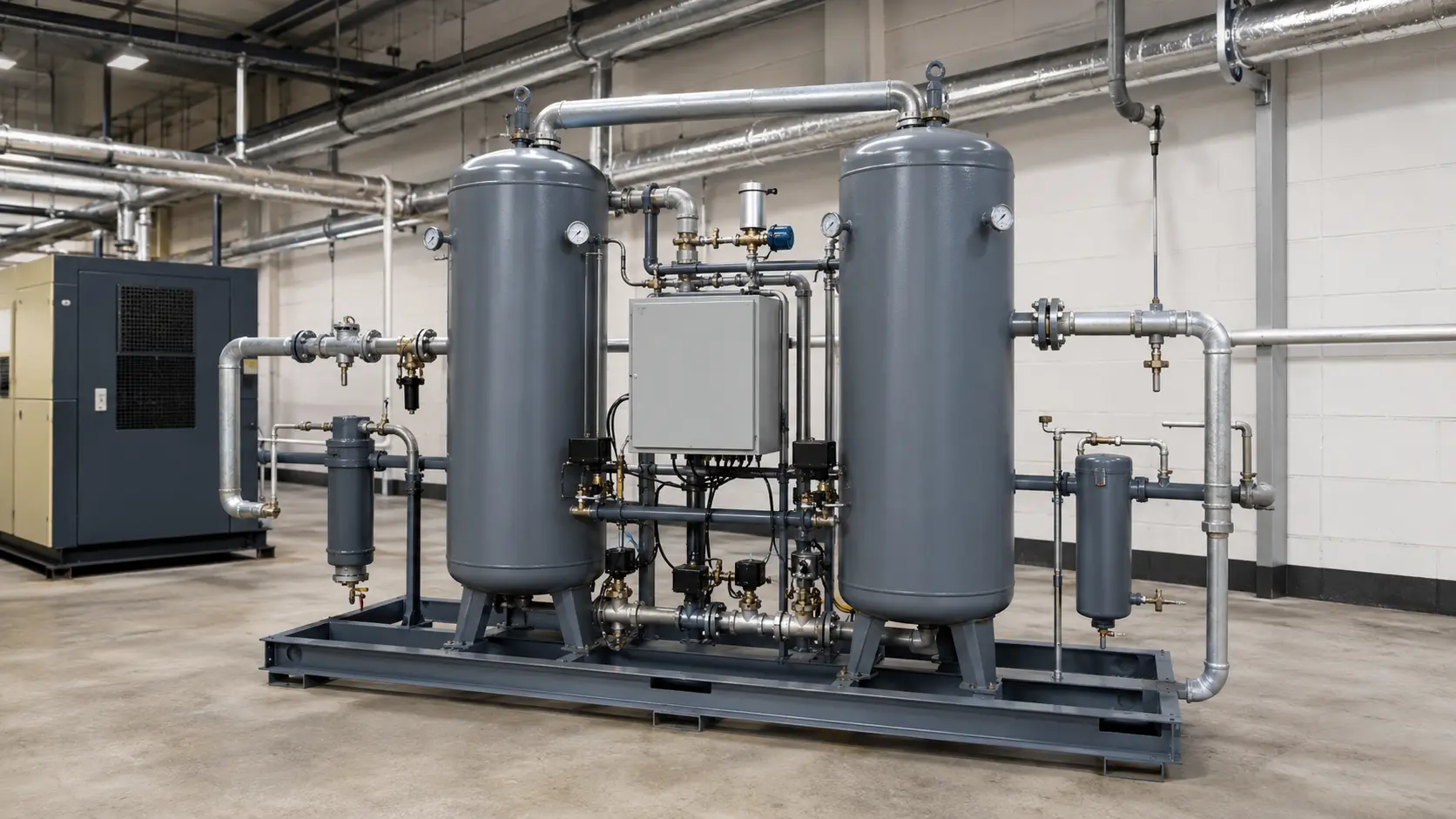
Confirm whether dew point, purity, pressure drop or service life has changed.
Check the system
Review liquid carryover, oil, dust, valves, flow, cycle timing and regeneration.
Choose the action
Decide whether to correct operation, regenerate where suitable or replace the bed.
Why Molecular Sieve Performance Declines
Performance loss does not automatically mean that the molecular sieve has reached the end of its service life. The bed may be receiving more moisture or contaminants than the original design allowed, or the regeneration cycle may no longer remove the adsorbed load effectively.
| Observed problem | Possible cause | First review |
|---|---|---|
| Dew point rises early | Higher inlet moisture, shorter cycle, insufficient regeneration or wrong grade | Inlet conditions, cycle timing, purge or heating and original specification |
| Pressure drop increases | Dust, attrition, crushed beads, liquid carryover, fouling or channeling | Filters, separators, bed condition, particle size and loading uniformity |
| Purity or outlet quality changes | Feed composition changed, co-adsorption increased or the grade is unsuitable | Complete feed composition and required outlet condition |
| Service interval becomes shorter | Contamination, incomplete regeneration, underfilling or changed operating load | Historical performance, filling quantity, bulk density and regeneration record |
When Is Regeneration Worth Reviewing?
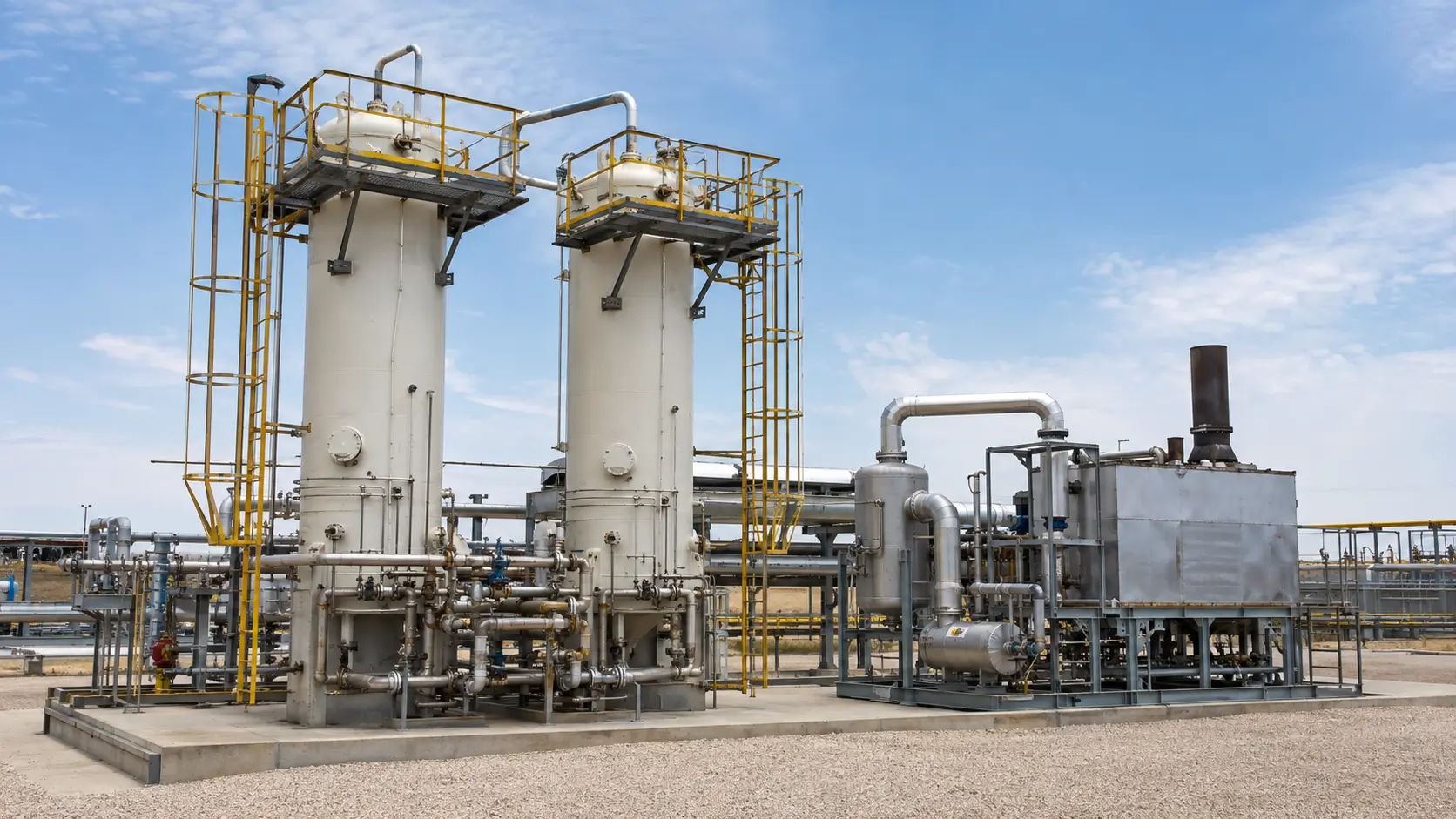
Regeneration removes adsorbed moisture or other retained components from the molecular sieve so the bed can return to an adsorption cycle. The suitable method depends on the product grade and equipment design. Thermal swing, purge gas, pressure swing and vacuum-assisted methods do not provide the same operating conditions.
- The molecular sieve is still mechanically sound and has not suffered severe attrition or crushing.
- The feed contamination is controlled and the bed has not been fouled by oil, liquid water or heavy hydrocarbons.
- The dryer can provide the temperature, purge flow, pressure reduction or vacuum required by the selected grade.
- The original grade and particle form remain compatible with the equipment and target outlet condition.
- Performance improves after the regeneration cycle and remains stable during a monitored operating period.
Important: Regeneration is not a universal repair method. Heating a contaminated or mechanically damaged bed may not restore capacity, and excessive temperature or unsuitable handling can damage the product or equipment.
When Should Molecular Sieve Be Replaced?
Replacement becomes the more reliable direction when the existing bed no longer meets the process requirement after the operating system has been checked. The new material should not be selected only by nominal pore size or the model name printed on the old package.
Capacity cannot be restored
Repeated regeneration does not return the bed to the required outlet condition or service interval.
Contamination is severe
Oil, liquid carryover, heavy hydrocarbons or other contaminants have reduced usable adsorption performance.
Mechanical condition is poor
Crushing, powdering, attrition, caking or excessive dust affects pressure drop and bed stability.
The process has changed
Feed composition, flow, pressure, temperature, purity or dew-point requirements no longer match the original grade.
What Must Be Compared Before a Replacement?
A replacement project is an engineering and procurement review, not a simple like-for-like name search. The existing equipment and operating history are often more useful than the old commercial model name.
| Data group | Information to confirm |
|---|---|
| Product | 3A, 4A, 5A, 13X or another application-specific grade; bead or pellet form; particle size; activation and binder direction |
| Equipment | Dryer or purifier type, tower diameter, bed height, number of vessels, screens and loading arrangement |
| Operating conditions | Feed composition, temperature, pressure, flow, humidity, cycle time, regeneration method and required outlet condition |
| Current bed | Original grade, particle size, filling quantity, bulk density, service history, pressure drop and reason for replacement |
| Approval documents | TDS, SDS, COA, particle-size tolerance, crush strength, bulk density, packaging and sample requirements |
Information to Send for a Molecular Sieve Review
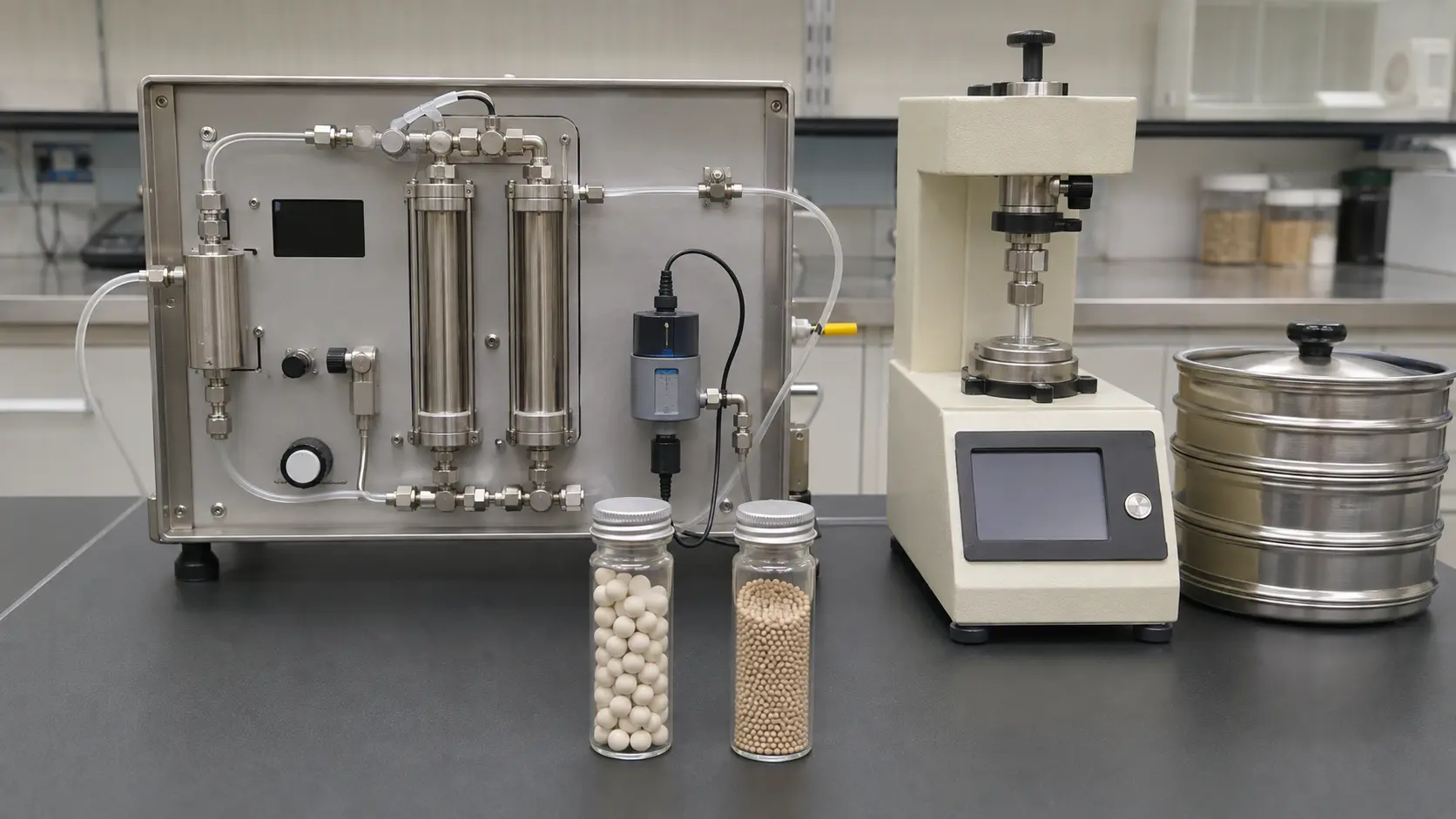
Send the available information first. A complete data package helps separate a product problem from an equipment problem and reduces the risk of an unsuitable replacement.
- Application and equipment model
- Current molecular sieve grade, particle size and supplier
- Original filling quantity and bed dimensions
- Feed composition, temperature, pressure and flow rate
- Required dew point, purity or residual-moisture target
- Adsorption cycle and regeneration method
- Current operating problem and service history
- Estimated quantity, destination and required documents
Regenerate or Replace Molecular Sieve? FAQ
Can molecular sieve be regenerated?
Many molecular sieve systems are designed for cyclic regeneration, but the actual method depends on the grade, contamination level, equipment and operating cycle. Regeneration does not guarantee recovery after fouling or mechanical damage.
How do I know whether the bed is exhausted?
Review outlet dew point or purity, breakthrough timing, pressure drop, regeneration performance, feed conditions and historical service data. A single reading cannot identify the cause by itself.
Can I replace 4A molecular sieve with 3A or 13X?
Not automatically. Pore direction, accessible molecules, adsorption behavior, strength, particle size, pressure drop and regeneration compatibility must be compared with the actual process.
Why did the new molecular sieve fail quickly?
Possible causes include liquid water or oil carryover, incomplete regeneration, incorrect filling quantity, unsuitable particle size, changed feed conditions, bed channeling or an incompatible grade.
What documents should I request before approving replacement media?
Request the applicable TDS, SDS, COA, particle-size data, bulk density, strength information, packaging details and sample information. Review them against the actual equipment and operating conditions. See our TDS, SDS and COA guide.
Need a Molecular Sieve Regeneration or Replacement Review?
Share the current grade, equipment information, operating conditions, target outlet condition and replacement reason. Adsorbent Source supplies industrial adsorbents and reviews the requested molecular sieve grade, specification, technical-document needs, packaging and quotation requirements against the equipment data. Sample and document availability can be checked for each inquiry.
Browse Molecular Sieves →
Review Compressed Air Drying →
Adsorbent Packaging and Export Guide →
Send Project Data →