Moisture Control for Coatings and Adhesives
Moisture Control for Coatings and Adhesives uses activated molecular sieve powder to adsorb residual water inside moisture-sensitive liquid and paste formulations, helping formulators address gas formation, premature reaction, storage instability and inconsistent curing.
Small Water Levels Can Create Large Formulation Problems
Residual moisture may enter through raw materials, fillers, pigments, solvents, production air or packaging. In isocyanate-containing and other moisture-reactive systems, even limited water can trigger unwanted reactions before application or during cure.
The result may include carbon-dioxide bubbles, pinholes, viscosity drift, reduced shelf stability, incomplete surface appearance or variable mechanical performance. The relevant moisture threshold depends on the complete formulation and processing conditions.
Activated Molecular Sieve Powder for Moisture-Sensitive Systems
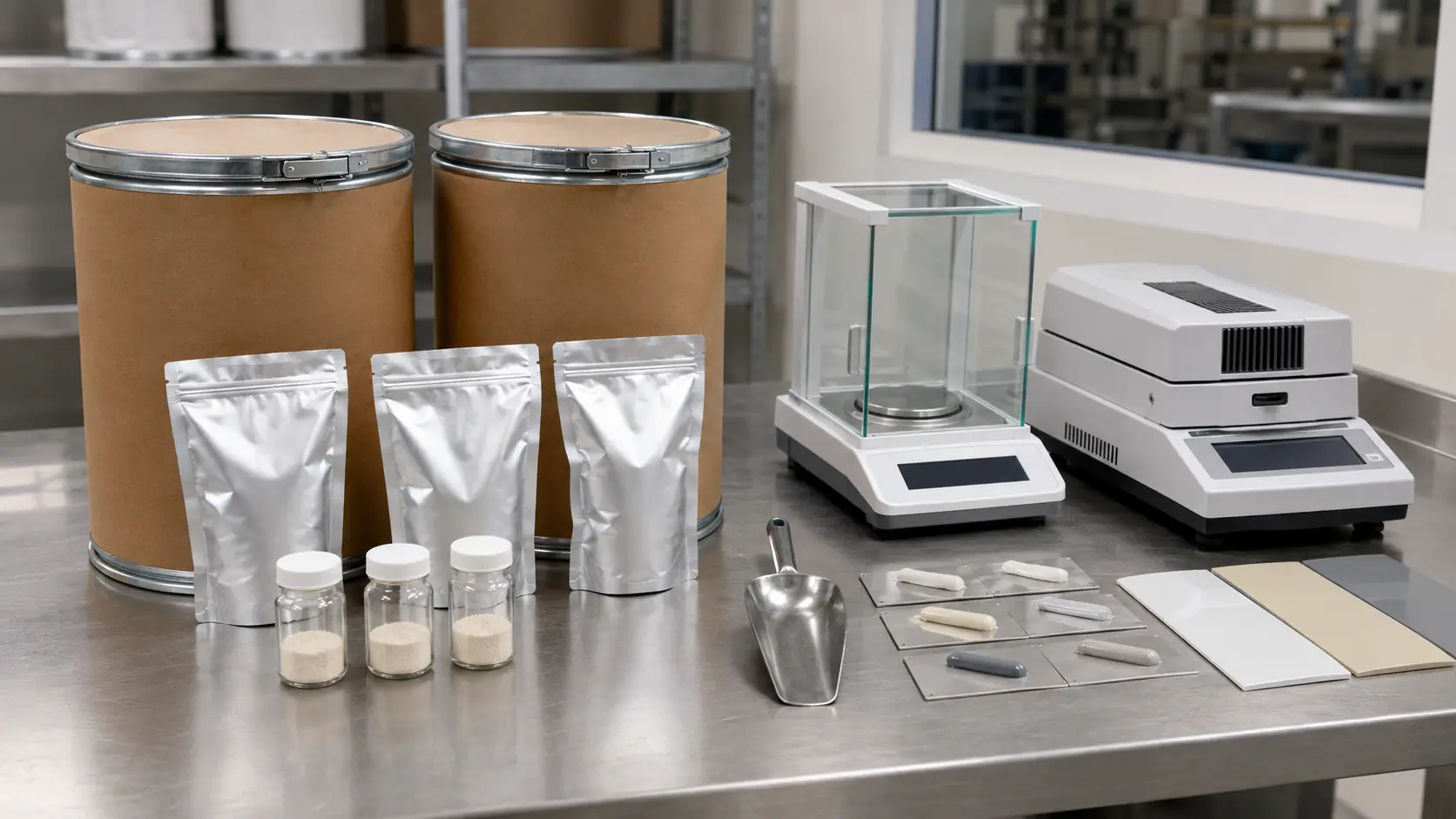
Activated molecular sieve powder is a finely milled, activated adsorbent designed to disperse into compatible formulations. Unlike beads used in drying columns, the powder remains incorporated in the compound and selectively adsorbs small water molecules within its pore structure.
Powder, Not a Loose Desiccant Bead
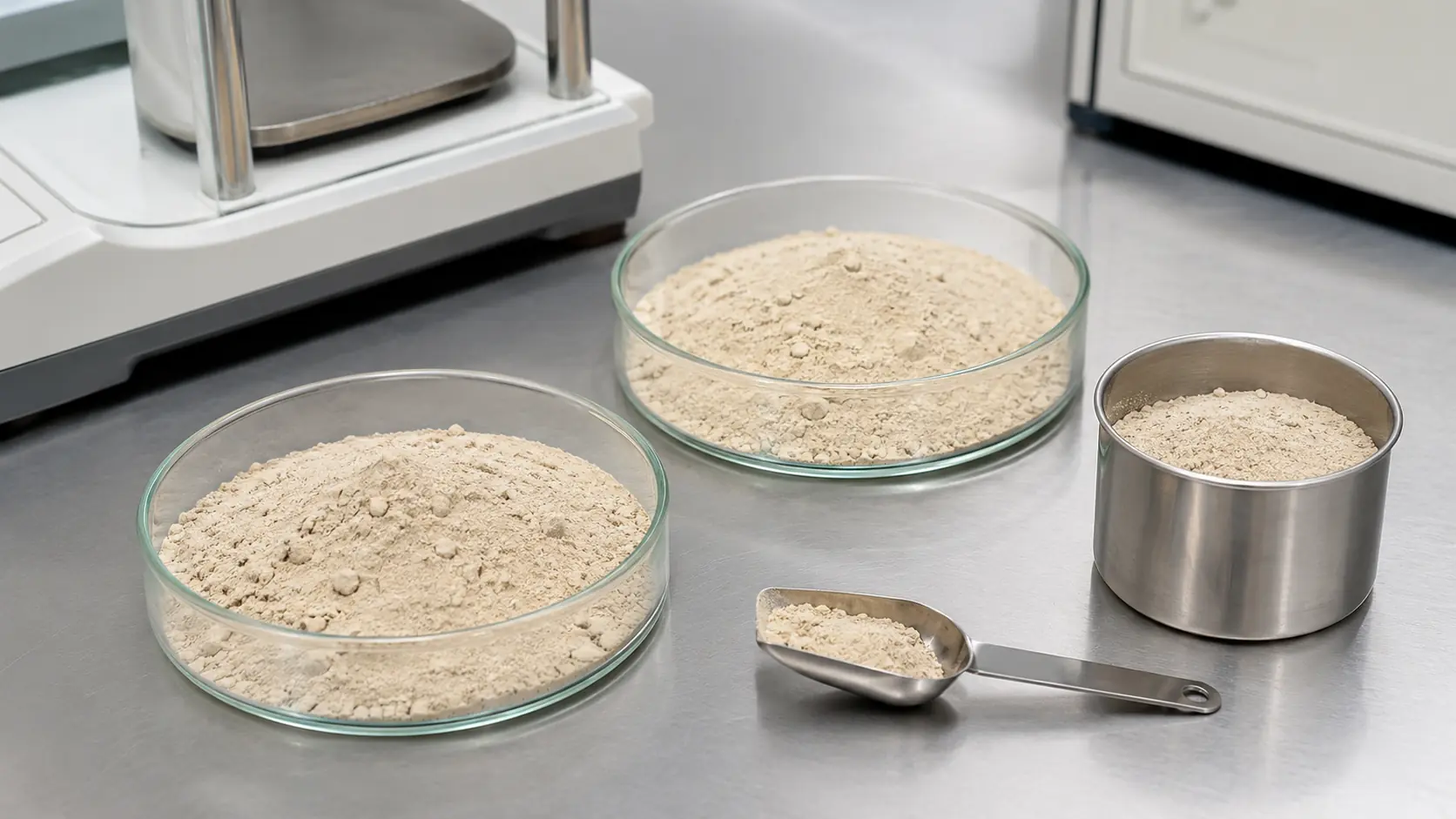
The product form supports incorporation into coatings, adhesives, sealants, resins and related compounds where a removable granular desiccant would not be suitable. Its performance depends on activation condition, pore selection, particle size distribution, dispersion quality and compatibility with the formulation.
Adsorbent Source reviews powder grade and sample availability against the target application. Final suitability must be demonstrated in the actual formulation.
Select Moisture Control for Coatings and Adhesives by Formulation Data
A powder grade should be reviewed as part of the formulation rather than selected from water capacity alone.
Moisture Load
Measure or estimate water contributed by resins, fillers, pigments, solvents and processing exposure.
Chemical System
Identify polyurethane, sealant, adhesive, coating or other chemistry and the components that must remain available.
Particle Size
Review fineness, dispersion, surface appearance, sedimentation and the acceptable effect on application properties.
Viscosity Impact
Check mixing energy, rheology, pumpability and application behavior at the proposed addition level.
Color and Purity
Confirm visual requirements and whether trace impurities could affect light-colored or sensitive formulations.
Packaging Control
Use sealed moisture-barrier packaging and minimize exposure between opening, dosing and final package closure.
Control Exposure from Package Opening to Final Mixing
Activated powder begins taking up moisture when exposed to air. Production planning should therefore coordinate package size, open time, dosing equipment, mixing sequence and closure of unused material.
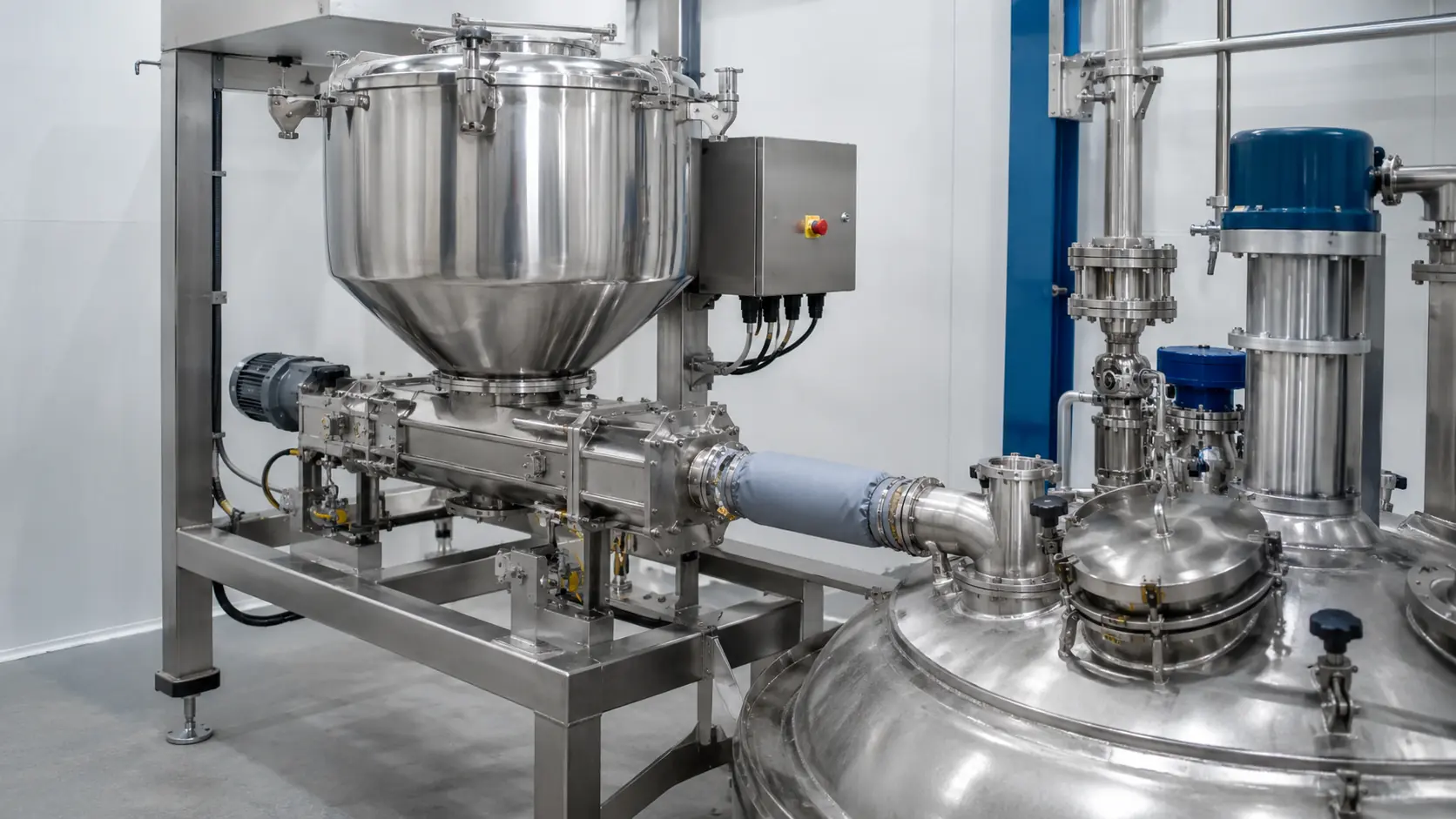
A closed or well-controlled powder dosing route can help reduce moisture pickup and dust release. The correct addition stage depends on resin chemistry, dispersion equipment and the manufacturer’s formulation procedure.
Where Activated Powder May Support Moisture Control
Suitability varies with chemistry, appearance requirements, manufacturing method and end-use performance targets.
| Formulation Area | Common Moisture Concern | Evaluation Focus |
|---|---|---|
| Polyurethane coatings | Reaction with isocyanate components, gas formation and film defects | Water level, dispersion, viscosity, cure and surface appearance |
| One- and two-component adhesives | Storage instability, premature reaction or variable bond development | Shelf life, working time, adhesion and mechanical properties |
| Sealants and caulks | Bubbles, poor extrusion consistency or moisture introduced by fillers | Rheology, extrusion, cure profile and final appearance |
| Filled resin compounds | Moisture carried by mineral fillers, pigments or other solids | Raw-material moisture, mixing sequence and sedimentation |
| Moisture-sensitive specialty formulations | Trace water affecting reaction control or package stability | Compatibility testing under actual storage and use conditions |
Build a Practical Sample Evaluation Plan
Activated Molecular Sieve Powder
Provide the formulation type, component moisture data, desired particle size, color requirement, proposed addition range, batch process and packaging needs. Powder grade, sample and supporting-document availability can be checked against the formulation and compatibility-testing requirements.
For broader adsorbent supply, documentation and packaging information, see our services or explore the complete molecular sieve range.
Moisture Control for Coatings and Adhesives FAQ
Why use activated molecular sieve powder instead of molecular sieve beads?
Powder can be dispersed within a compatible formulation, while beads are normally used in vessels, cartridges or packages where the adsorbent remains separate from the product.
What addition rate should be used?
There is no universal rate. It depends on measured moisture load, formulation chemistry, desired residual moisture, viscosity and the acceptable effect on finished properties. Laboratory trials are required.
Can the powder prevent all bubbles and curing defects?
No. It may reduce defects associated with available moisture, but bubbles and cure problems can also come from air entrainment, mixing, substrates, incompatible ingredients or process conditions.
Does particle size matter?
Yes. Particle size distribution can influence dispersion, viscosity, surface finish, sedimentation and processing. The acceptable range should be confirmed in the actual formulation.
How should activated powder be stored?
Keep it sealed in moisture-barrier packaging in a dry environment. After opening, limit air exposure and reseal unused material promptly according to the product handling instructions.
What information is needed for a sample recommendation?
Share the formulation category, reactive chemistry, raw-material moisture, particle-size requirement, color, viscosity, mixing process, proposed dosage range, package size and target performance.
Discuss Your Moisture-Sensitive Formulation
Send your formulation category, moisture data, processing conditions and sample requirements. Adsorbent Source can review powder grade and sample availability against the stated formulation data.