VOC and Odor Control Adsorbents for Industrial Air Treatment
Compare VOC and Odor Control Adsorbents for industrial exhaust, solvent vapor, process vent, tank breathing and nuisance-odor applications according to contaminant identity, inlet concentration, airflow, humidity, temperature, contact time and replacement plan.
GAC vs PAC Activated Carbon →
TDS vs SDS vs COA for Adsorbents →
How VOC and Odor Control Adsorbents Support Exhaust Treatment
Activated carbon captures many organic vapors through physical adsorption inside a developed pore structure. In a fixed-bed unit, contaminated air passes through the carbon layer and target molecules are retained until the usable adsorption zone approaches breakthrough.
Odor control is not a single-contaminant problem. A stream can contain solvents, hydrocarbons, sulfur compounds, amines, moisture and aerosols at the same time. Carbon source, pore distribution, particle size and possible impregnation should therefore be reviewed against the actual gas composition rather than selected from an odor description alone.
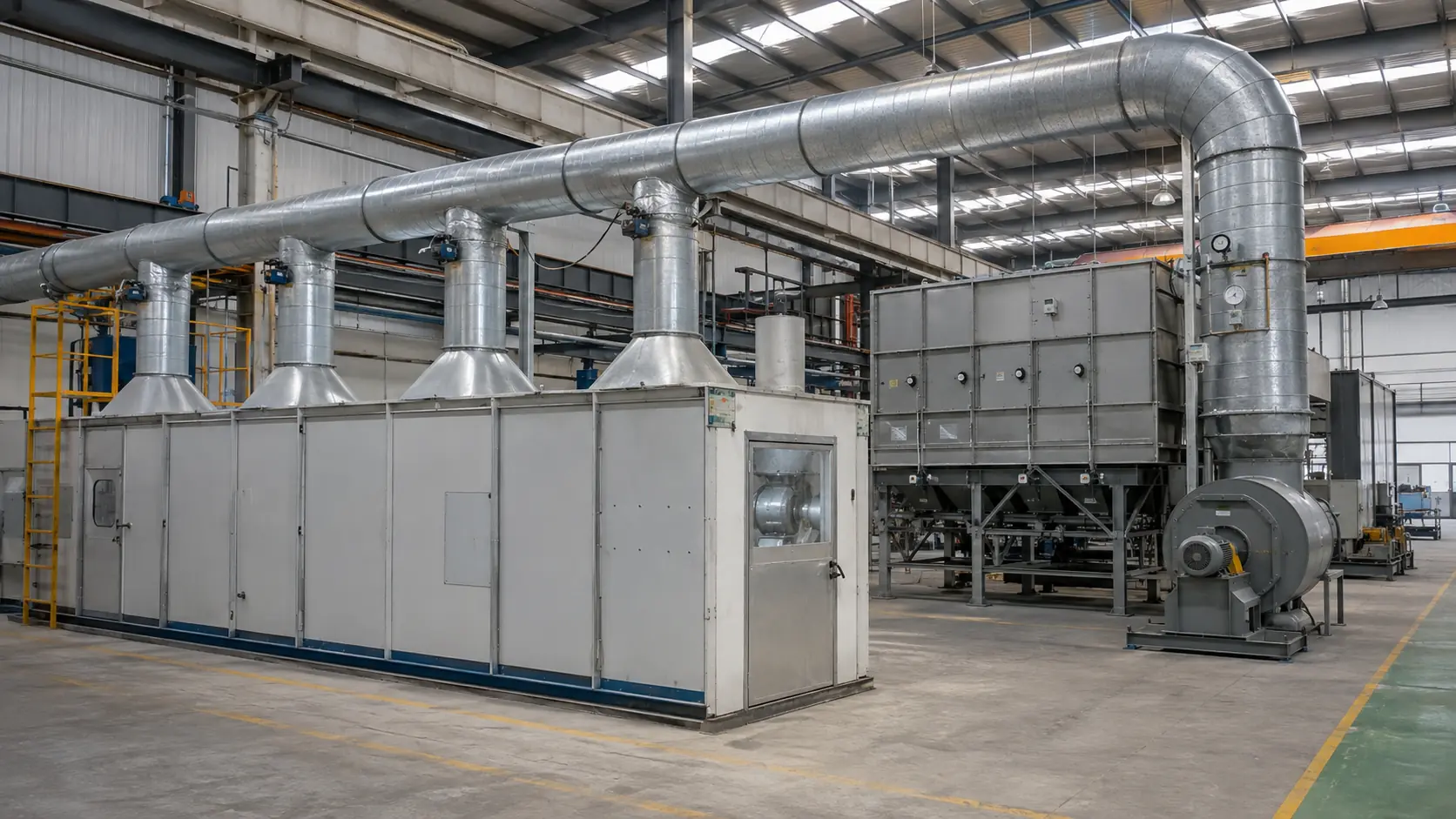
Where Activated Carbon Air Treatment Is Commonly Evaluated
The same odor complaint can come from very different compounds and loading patterns. Start with the process source and available gas data.
Coating and Printing
Exhaust containing solvents from paint, ink, adhesive, drying, cleaning and surface-treatment operations.
Chemical Process Vents
Batch vents, reactor breathing, transfer points and enclosed process exhaust with identifiable organic or odorous compounds.
Storage and Loading
Tank breathing, drum filling, solvent transfer and intermittent loading emissions that may create concentrated vapor peaks.
Wastewater and Waste Handling
Covered tanks, sumps, sludge areas and waste-handling points where mixed odors, humidity and sulfur compounds require careful review.
Activated Carbon Options for VOC and Odor Control
Product form and raw-material source affect adsorption behavior, pressure drop, loading, handling and replacement. Final selection should follow the target compounds and equipment design.
Granular Activated Carbon
Granular activated carbon is widely evaluated for fixed-bed vapor adsorption because it combines accessible pore structure with practical filling, screening and replacement.
- Carbon raw-material basis: coal, coconut shell or wood
- Mesh size selected for pressure drop and containment
- Standard or application-specific activity ranges
- Suitable for replaceable adsorption vessels and boxes
Pelletized Activated Carbon
Cylindrical pellets may be considered when uniform bed packing, mechanical strength and controlled airflow resistance are important.
- Consistent geometry for gas-phase beds
- Diameter chosen with equipment and velocity
- Standard or impregnated formulations may be available
- Dust, hardness and attrition data should be reviewed
Impregnated Activated Carbon
Certain difficult odor compounds may require chemically treated carbon, but the impregnant and loading must match the target gas, moisture condition and safety requirements.
- Considered for selected sulfur or alkaline/acid gases
- Not interchangeable across all odor applications
- Target compound and expected loading must be confirmed
- SDS, handling and disposal requirements need review
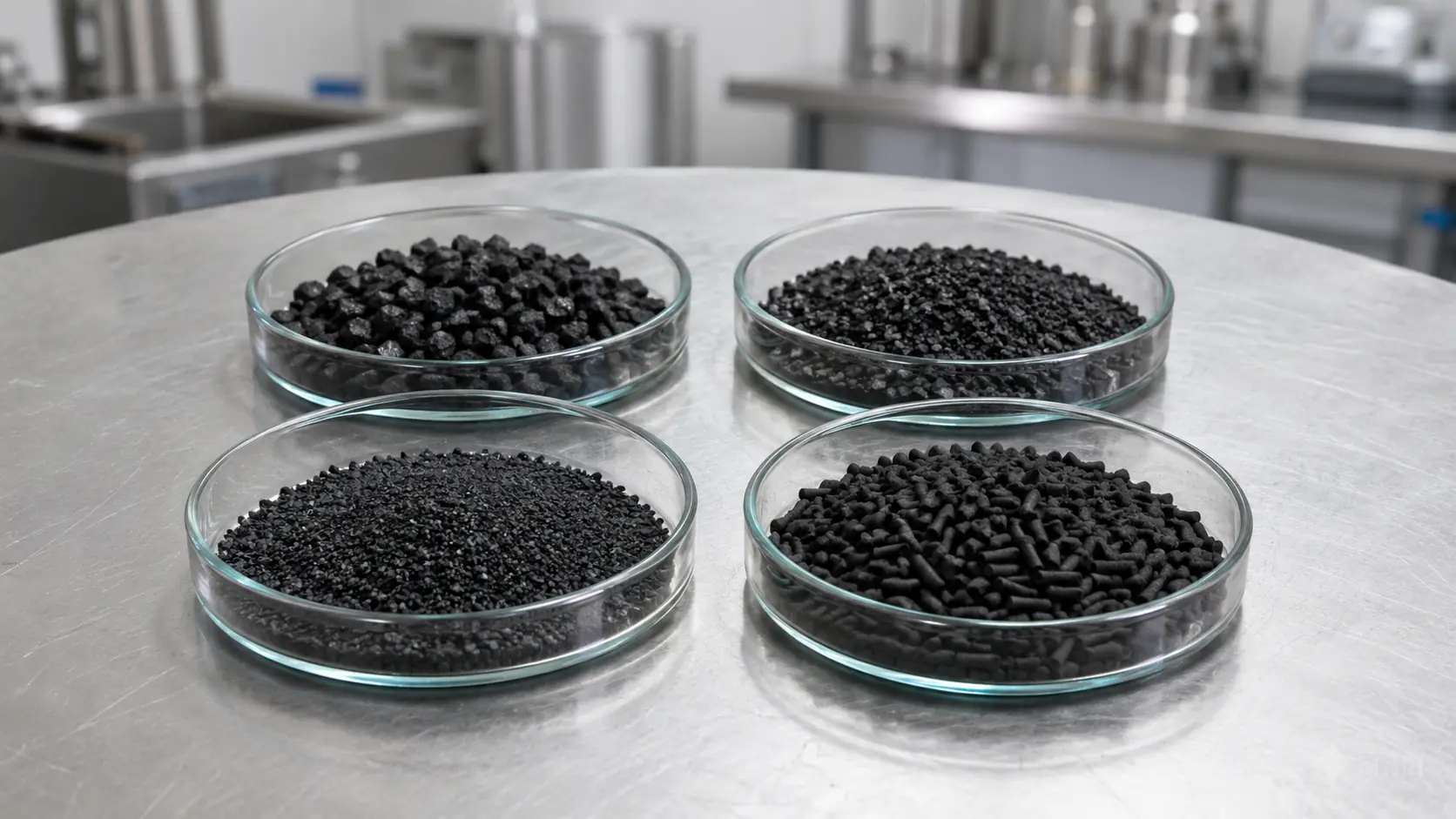
Match Carbon Form to the Adsorber, Not Only the Contaminant
Smaller particles can improve mass transfer but may also increase pressure drop. Larger granules or pellets can support airflow but may change adsorption-zone behavior. Screening specification, dust level, hardness, bulk density and actual bed geometry should be considered together.
For replacement projects, provide the original carbon form, mesh or pellet diameter, filling quantity, bed depth and measured pressure drop. Changing only the product name without checking these parameters can create uneven flow, early breakthrough or handling problems.
Starting Points for Common VOC and Odor Streams
This table organizes an initial review only. Laboratory data, pilot evaluation or supplier confirmation may be needed for mixed or critical streams.
| Application / Stream | Typical Concern | Initial Adsorbent Direction | Data to Confirm |
|---|---|---|---|
| Painting, Coating and Printing | Solvent vapors, mixed VOCs and intermittent peaks | Gas-phase granular or pelletized activated carbon | Compound list, peak concentration, airflow, humidity and duty cycle |
| Tank Breathing and Loading | Hydrocarbon or solvent vapor released during filling and temperature change | Activated carbon selected for vapor loading and cycle pattern | Vapor identity, maximum concentration, vent rate, temperature and peak duration |
| Wastewater and Sludge Odor | Mixed odor, sulfur compounds, humidity and aerosols | Standard and compound-specific carbon options for comparison | H2S and other gas data, RH, mist control, temperature and target outlet |
| Chemical Process Exhaust | Variable organic compounds, acid/alkaline gases or reaction by-products | Standard or impregnated carbon after compatibility review | Full composition, concentration range, moisture, oxygen, temperature and safety data |
| Indoor or Enclosed-Space Odor | Low-concentration mixed odor with comfort-based targets | Low-dust gas-phase carbon matched to the filter system | Air changes, filter dimensions, pressure drop, odor source and replacement interval |
Six Factors That Change Activated Carbon Service Life
Media capacity from a datasheet cannot be converted directly into field service life without stream and adsorber information.
High VOC Loading Requires More Than a Carbon Grade
Concentrated, reactive or easily polymerized vapors can create heat, rapid breakthrough or fire risk in an adsorption bed. Flammability limits, temperature rise, oxygen content, grounding, monitoring, isolation and emergency procedures belong to the equipment and process-safety review.
Provide the compound list and concentration range. Streams with unknown composition, aerosol carryover, high humidity, high temperature or large concentration peaks may require sampling, pretreatment or a different treatment route before carbon is approved.
Why an Activated Carbon Bed May Stop Controlling Odor
Early breakthrough is not always caused by low carbon activity. Check the stream, bed and operating record together.
Information Needed for VOC and Odor Control Adsorbent Review
Complete application data helps compare carbon source, form, particle size, activity direction, filling quantity, packaging and documents.
Send the Gas Stream and Adsorber Data
Adsorbent Source supplies activated carbon adsorbents and reviews the requested grade, gas composition, application data and quotation requirements for each inquiry.
Sample, TDS, SDS and COA availability, particle-size and bulk-density information, packing and export-supply details can be checked for the requested grade and project requirements.
Request Adsorbent Review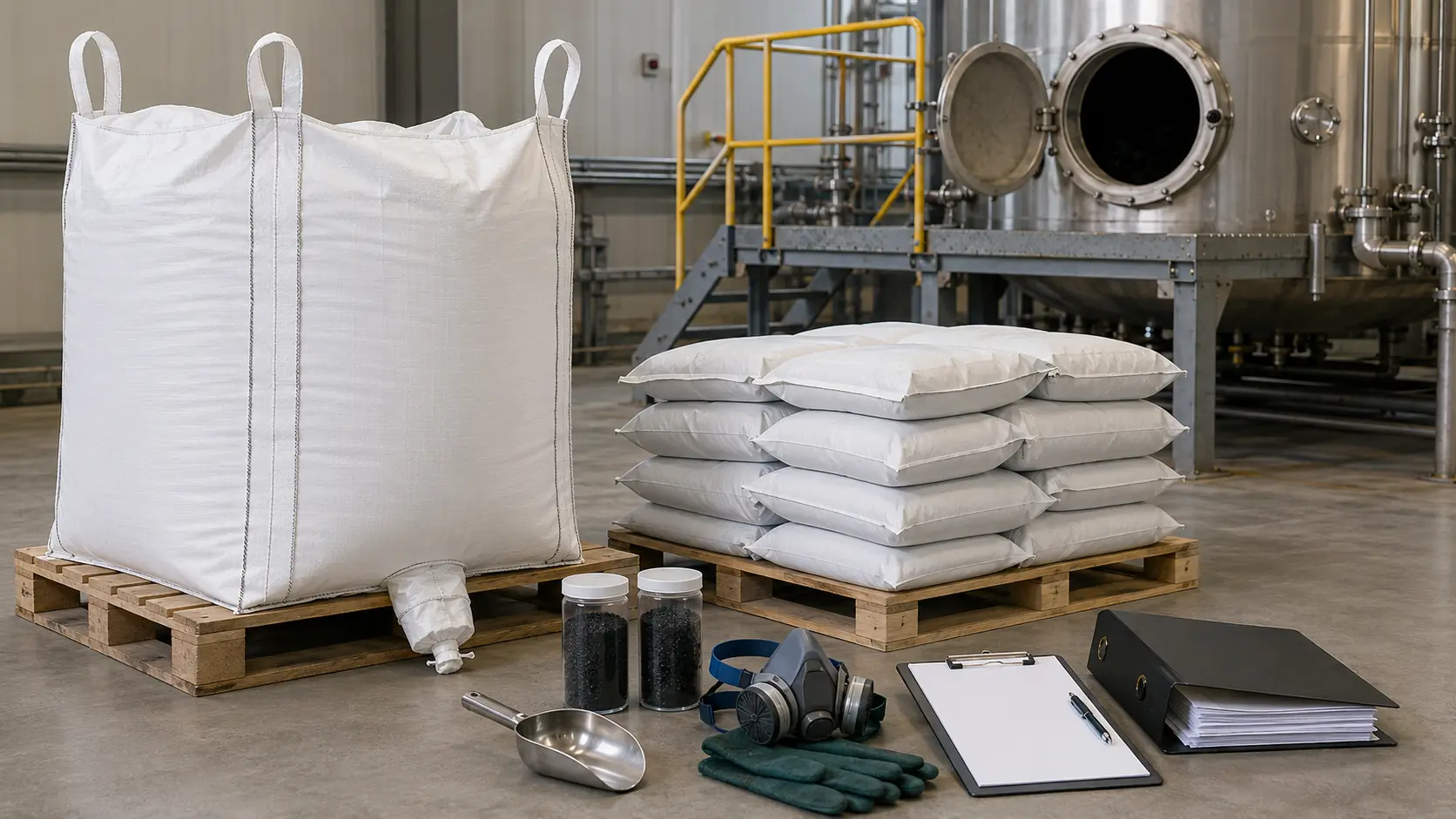
Review the Original Carbon, Operating History and New Supply Together
For an existing unit, the fastest starting point is the original carbon datasheet, mesh or pellet size, actual filling record, current service life and reason for change. If possible, send a retained sample and a used sample for comparison.
Adsorbent Source does not confirm removal efficiency or service life from iodine value, CTC activity or a model name alone. Final approval should follow selected product data, equipment design and actual process conditions.
VOC and Odor Control Adsorbent Questions
What adsorbent is commonly used for industrial VOC control?
Granular or pelletized activated carbon is commonly evaluated for fixed-bed VOC adsorption. The suitable carbon source, pore structure, particle size and activity depend on the target compounds and operating conditions.
Can one activated carbon remove every industrial odor?
No. Odor streams may contain organic vapors, sulfur compounds, amines, acids, moisture and aerosols. Standard activated carbon, impregnated carbon or another treatment method may be needed depending on the composition.
Is iodine value enough to select activated carbon for VOC removal?
No. Iodine value is one characterization index and does not predict adsorption for every vapor. Pore distribution, compound properties, humidity, temperature, contact time and concentration must also be reviewed.
How does humidity affect VOC adsorption?
High humidity can reduce usable capacity for some compounds because water competes for pore space. Condensation may also create channeling, corrosion or handling problems inside the adsorber.
How is activated carbon service life estimated?
Estimation requires VOC identity, average and peak concentration, airflow, operating hours, humidity, temperature, bed dimensions, carbon data and outlet target. Field monitoring is still required because actual loading can differ from design assumptions.
Why does odor return before the expected replacement date?
Possible causes include concentration peaks, high humidity, insufficient bed depth, channeling, bypass, particle-size mismatch, aerosol fouling, mixed-vapor competition or an unsuitable carbon direction.
When should impregnated activated carbon be considered?
It may be considered for selected difficult odor compounds that are not effectively controlled by physical adsorption alone. The impregnant, loading, moisture condition, handling and disposal requirements must match the application.
Can activated carbon be used for high-concentration solvent vapor?
High-concentration or reactive vapor requires an engineering and process-safety review. Heat generation, flammability, oxygen content, monitoring and emergency controls must be evaluated before carbon is approved.
What data is required for replacement carbon selection?
Provide the process source, target compounds, concentration range, airflow, humidity, temperature, adsorber dimensions, current carbon grade and size, filling quantity, service life, pressure drop and replacement reason.
What product documents may be available?
Availability of TDS, SDS, COA, particle-size and bulk-density information, packing details and export documents depends on the requested grade and order requirements and can be checked for each inquiry.
Select Activated Carbon From the Actual VOC Stream
Send the compound list, average and peak concentration, airflow, humidity, temperature, operating schedule, outlet target, adsorber dimensions and existing carbon data. Adsorbent Source can review requested grades, document availability and export-supply requirements against the process data provided.