Instrument air dryers · Desiccant replacement & bulk RFQ
Instrument Air Dryer Desiccant: Activated Alumina & Molecular Sieve
Specify desiccant media for industrial instrument-air dryers with attention to pressure dew point, regeneration, inlet air quality, bead size, vessel loading and current media compatibility. Review activated alumina and molecular sieve options before requesting a replacement quotation.
Which Desiccant Should an Instrument Air Dryer Use?
Activated alumina is a common desiccant direction for regenerative industrial compressed-air dryers, while selected molecular sieve grades may be used where the dryer design and required moisture specification call for them. For instrument air, the right replacement media must match the actual dryer, pressure dew point requirement, regeneration process and existing loading—not just the advertised bead diameter.
Instrument air serves pneumatic controls, actuators and instrumentation in industrial plants. Water carryover and poor air treatment can affect downstream reliability. The adsorbent bed is only one part of the overall system; filters, separators, valves and the dryer regeneration cycle also determine delivered air quality.
For broader compressed-air dryer system selection see the Compressed Air Drying Adsorbents overview. This page focuses on material specifications and replacement procurement for instrument-air dryer owners, service providers and spare-media buyers.
Start With the Required Pressure Dew Point
Instrument-air projects may specify pressure dew point, particle content, oil control and other quality criteria under a plant or equipment specification. Do not assume a universal instrument-air dew point requirement: it depends on local conditions, service criticality and the project acceptance basis.
- Air inlet: operating pressure and temperature, actual flow, inlet moisture and compressor carryover.
- Target: specified pressure dew point under stated measurement conditions.
- Dryer configuration: heatless, heated or other regenerative process and switching cycle.
- System integrity: check filtration, drain performance, valve condition and regeneration air supply.
If an existing dryer misses its dew-point target, verify equipment operation before concluding that replacement desiccant alone will resolve the problem.
Activated Alumina vs Molecular Sieve for Instrument Air
| Buying consideration | Activated alumina desiccant | Molecular sieve desiccant |
|---|---|---|
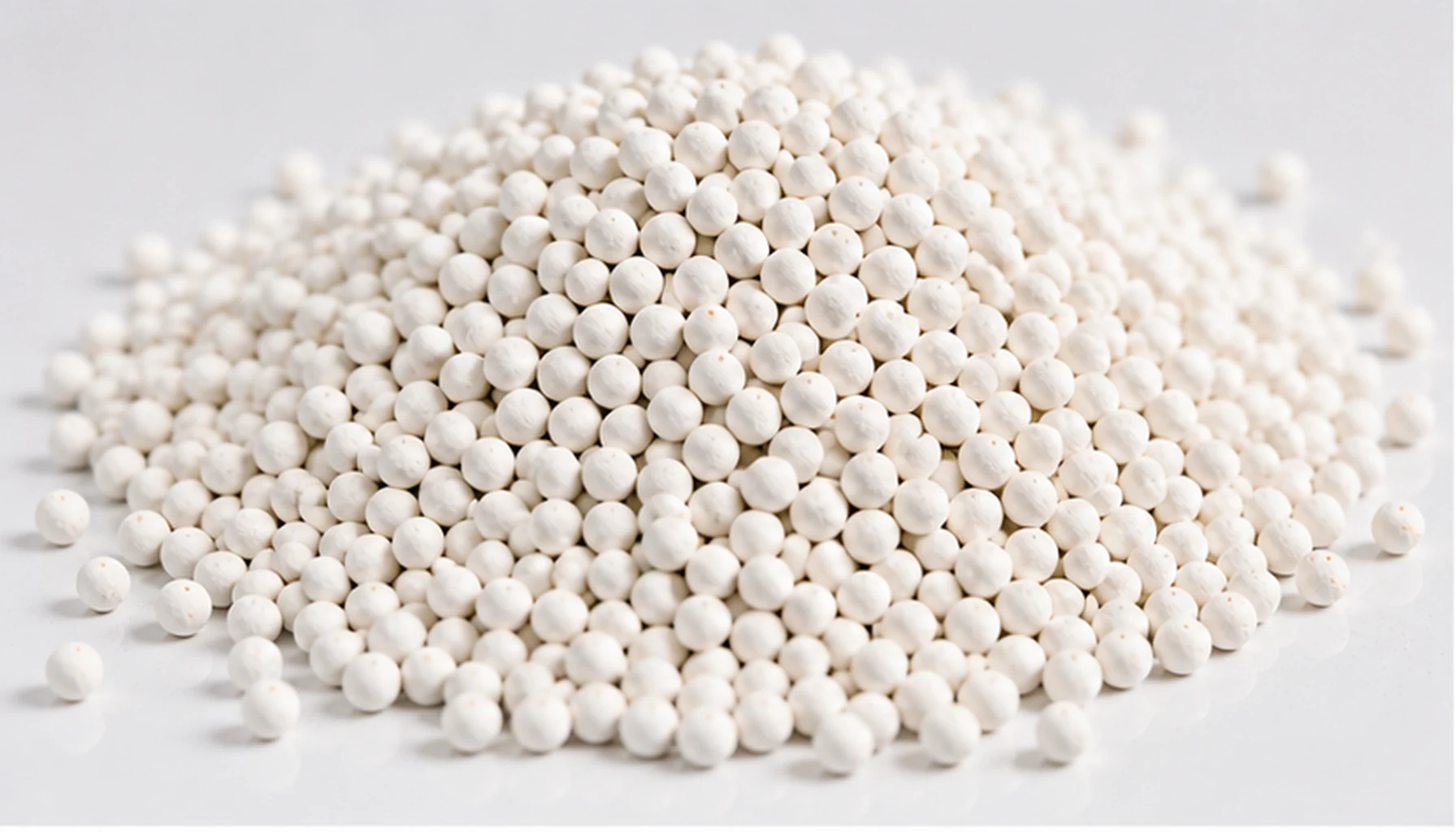
| Material direction | Common porous alumina adsorbent for industrial air drying | Selected zeolite grades for moisture removal where required by the dryer design |
| Typical selection focus | Dryer configuration, regeneration, pressure drop, bead size and capacity data | Grade-specific dew point duty, inlet contaminants, physical form and regeneration |
| Replacement risk | Switching bead size or density may alter bed behavior and pressure drop | Not all zeolite grades are interchangeable and moisture adsorption may differ by conditions |
| Purchasing evidence | Current TDS, SDS, lot-specific COA when provided, particle distribution and packaging | Grade-specific TDS, SDS, lot-specific COA when provided, size and compatibility confirmation |
Activated Alumina Desiccant
Review bead and supply specifications on the activated alumina desiccant product page.
4A Molecular Sieve
Check whether the 4A molecular sieve direction is supported by the equipment specification.
Material Comparison
Use the activated alumina versus molecular sieve guide to prepare a technical comparison.
Replacement Media Must Match the Adsorber
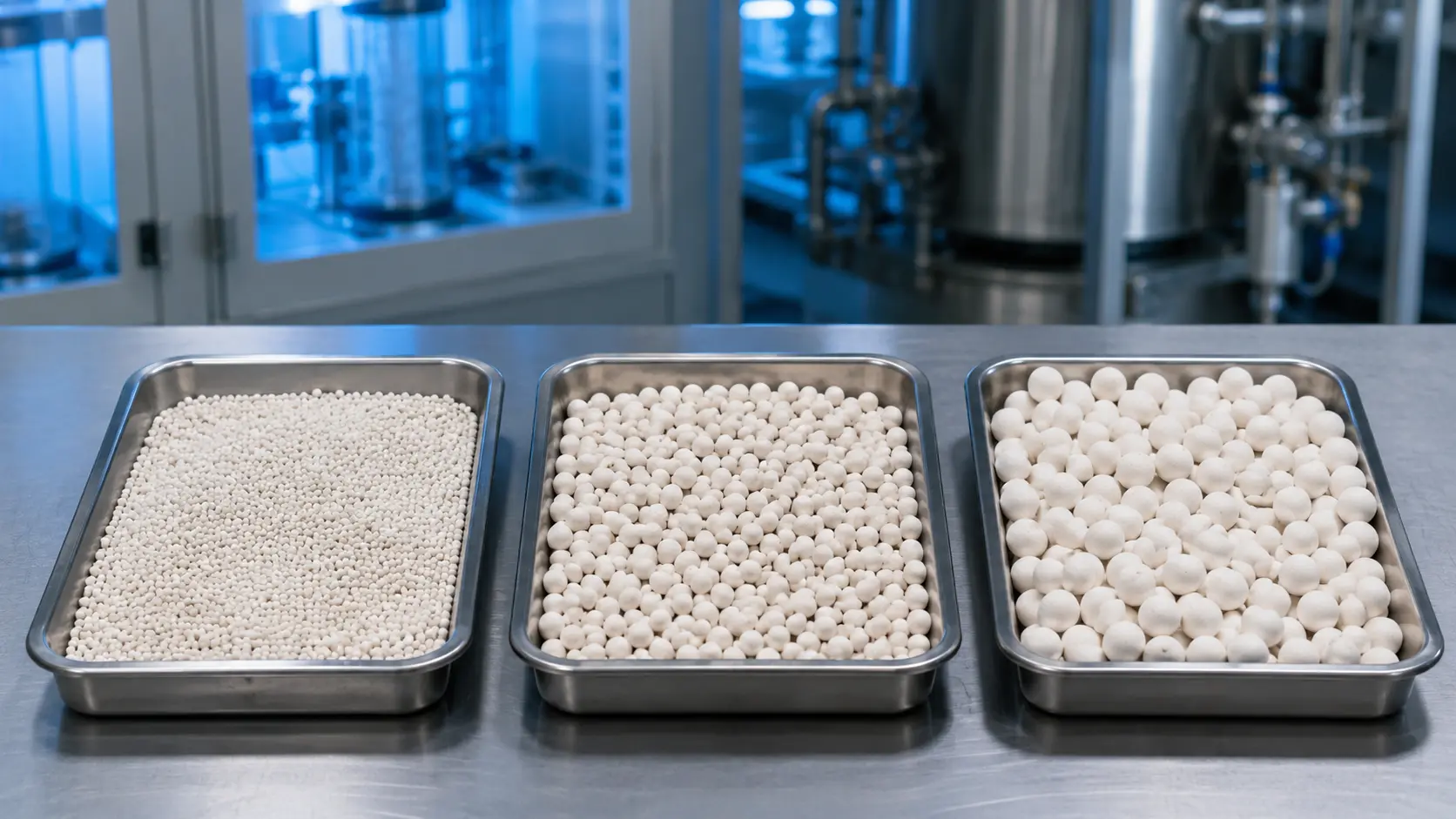
When a dryer already has an approved bill of materials, start with that grade and the current vessel charge. Replacement should consider changes to bulk density, particle-size distribution, mechanical condition and filtration requirements.
- Record original desiccant type, manufacturer, trade name and grade.
- Confirm bead size, total filling mass, bed dimensions and support arrangements.
- Check the latest pressure-drop and dew-point trends and any carryover events.
- Confirm drying cycle, purge flow, regeneration temperature where applicable, and switching behavior.
- Protect new media from moisture exposure during shipping, storage and filling.
For further procurement preparation, see the activated alumina replacement specification and bulk density and loading guide.
Instrument Air Dryer Desiccant Purchase Specification
A useful quotation inquiry identifies the dryer and the media acceptance basis. Buyers can send their existing equipment data sheet or the following fields.
| RFQ item | What to include | Why it matters |
|---|---|---|
| Site service and equipment | Instrument air duty, dryer manufacturer/model and number of vessels | Confirm equipment fit and service requirements |
| Operating air conditions | Inlet air flow, pressure, temperature, filtration and contamination history | Establish moisture loading and quality risks |
| Required air quality | Pressure dew point target, relevant standard or plant-specific acceptance test | Define measurable duty |
| Adsorption system | Regeneration type, cycle, purge conditions and vessel dimensions | Check cycle and bed compatibility |
| Current desiccant | Brand, grade, particle size, current charge weight and any layer arrangement | Support like-for-like replacement |
| Supply requirement | Quantity, packaging, destination, shipping term, target delivery and documentation | Prepare commercial quote and logistics |
Confirm any technical acceptance figures and test methods from the selected media’s current data sheet rather than copying unverified values from generic online charts.
Instrument Air Desiccant FAQ
Is instrument air drying different from standard compressed-air drying?
Instrument air is a defined service within industrial compressed-air systems. Its quality target and reliability needs should be taken from the plant specification. Adsorbent selection still depends on actual dryer operating and regeneration conditions.
Should I choose activated alumina or molecular sieve?
Neither is universally better. Compare the current dryer specification, dew point, inlet conditions, regeneration cycle and qualified media. Activated alumina is common in regenerative air dryers, but particular systems may specify molecular sieve.
Can I replace my dryer beads with a different size?
Not without evaluation. Bead diameter can affect pressure drop, attrition, mass transfer and interaction with support screens. Match the OEM or approved design where possible.
Will fresh desiccant fix a poor pressure dew point?
Not necessarily. Inadequate purge, malfunctioning valves, oil contamination, poor inlet separation or an incorrect operating cycle may cause poor performance even with new media.
Which desiccant documents should I request?
Request the current product TDS and SDS, available COA, particle-size and packaging information, and any project-required evidence that the supplier can verify.
How should I specify a bulk replacement quantity?
Provide the current media charge per tower, total tower count, bed layers, vessel volume and required quantity. Avoid estimating by vessel volume alone without approved bulk-density data.
Request an Instrument Air Dryer Desiccant Quote
Adsorbent Source reviews available activated alumina and molecular sieve product options, sample requests, technical documents and export packaging against the information supplied by the buyer. Final suitability and supply terms are subject to confirmation.
Identify the dryer
Brand, model, operating conditions, regeneration mode and current media.
Define the material
Approved desiccant grade, form, particle size, dew-point duty and documentation needs.
Set the purchase scope
Charge mass, total required quantity, packaging, Incoterm and destination.