
3A vs 4A vs 5A vs 13X Molecular Sieve: Key Differences
The difference between 3A, 4A, 5A and 13X molecular sieve is mainly related to zeolite structure, effective pore opening, accessible molecules and application direction. This comparison explains how buyers can distinguish the four common grades before selecting a drying, purification or gas-separation adsorbent.
What Is the Main Difference Between 3A, 4A, 5A and 13X?
A smaller effective pore opening creates stronger molecular exclusion. A larger opening allows more types of molecules to enter the zeolite structure. Therefore, the largest-pore grade is not automatically the best grade: it may adsorb components that the process needs to retain.
For preliminary selection, 3A is associated with highly selective moisture removal, 4A with general-purpose dehydration, 5A with selected purification and separation duties, and 13X with broader adsorption including air purification and carbon dioxide removal.
Selective Water Adsorption
A potassium-exchanged A-type zeolite used when water should be removed while many larger molecules remain excluded.
General-Purpose Drying
The sodium form of A-type zeolite and a common starting point for drying gases, liquids, solvents and compressed air.
Purification and Separation
A calcium-exchanged A-type zeolite used for selected gas purification, normal-paraffin adsorption and separation duties.
Broad Adsorption
An X-type sodium zeolite with a larger opening, commonly reviewed for moisture, carbon dioxide and broader impurity removal.
3A vs 4A vs 5A vs 13X Molecular Sieve Comparison Table
This table provides a purchasing and application starting point. Exact adsorption capacity, kinetics, bead or pellet strength, regeneration conditions and service performance depend on the selected commercial grade and actual operating data.
| Grade | Zeolite Direction | Effective Opening | Selection Character | Common Application Direction | Product Page |
|---|---|---|---|---|---|
| 3A | Potassium-exchanged Type A | Approximately 3 Å | Strong molecular exclusion and selective moisture adsorption. | Ethanol and alcohol drying, unsaturated hydrocarbon drying, refrigerant systems, insulated glass and specialty moisture control. | View 3A → |
| 4A | Sodium Type A | Approximately 4 Å | General-purpose dehydration with access for more small molecules than 3A. | Compressed air, process gas, solvents, liquids, natural gas and general industrial drying. | View 4A → |
| 5A | Calcium-exchanged Type A | Approximately 5 Å | Allows selected larger molecules to enter and supports separation or purification duties. | Gas purification, selected pressure-swing adsorption duties, normal-paraffin separation and sulfur or impurity removal routes. | View 5A → |
| 13X | Sodium Type X | Approximately 10 Å | Large-pore, broad-adsorption molecular sieve for a wider range of accessible molecules. | Air purification, CO₂ removal, air-separation pretreatment, natural-gas purification and broad gas treatment. | View 13X → |
When Each Molecular Sieve Grade Is Usually Considered
Commercial molecular sieves are supplied in application-specific formulations, bead or pellet sizes and packaging. The four grade descriptions below explain the core distinction without replacing the supplier’s TDS or process review.
3A Molecular Sieve
Type 3A is produced by replacing part of the sodium in Type 4A zeolite with potassium ions, reducing the effective pore opening. It is selected when water must enter the pore structure while many larger molecules should remain outside.
- Common starting direction for ethanol and light-alcohol dehydration
- Used for moisture control in unsaturated hydrocarbon streams
- Available in grades for refrigerants, insulated glass and other systems
- Useful when reducing co-adsorption is important
4A Molecular Sieve
Type 4A is the sodium form of A-type zeolite and is widely used as a general-purpose drying adsorbent. Its larger opening compared with 3A means that additional small molecules may be accessible, depending on process conditions.
- Common starting point for compressed-air and process-gas drying
- Used in liquid, solvent and hydrocarbon dehydration
- Requires review of competing molecules and feed contaminants
- Suitable grade depends on dynamic cycle and outlet specification
5A Molecular Sieve
Type 5A is a calcium-exchanged A-type zeolite. Its effective pore opening permits access to molecules that are excluded by 3A and 4A, supporting selected gas purification, molecular separation and normal-paraffin adsorption applications.
- Reviewed for selected gas purification and separation systems
- Used in some pressure-swing adsorption processes
- Can support normal-paraffin separation from branched molecules
- Cycle design and supplier-specific dynamic data are essential
13X Molecular Sieve
Type 13X is the sodium form of X-type zeolite and has a larger effective opening than A-type molecular sieves. It is considered when the process requires broad adsorption of water, carbon dioxide and selected larger impurities.
- Commonly reviewed for air purification and ASU pretreatment
- Used for carbon dioxide and moisture removal from gas streams
- Applied in natural-gas and industrial-gas purification routes
- Application grades such as 13X APG require separate review
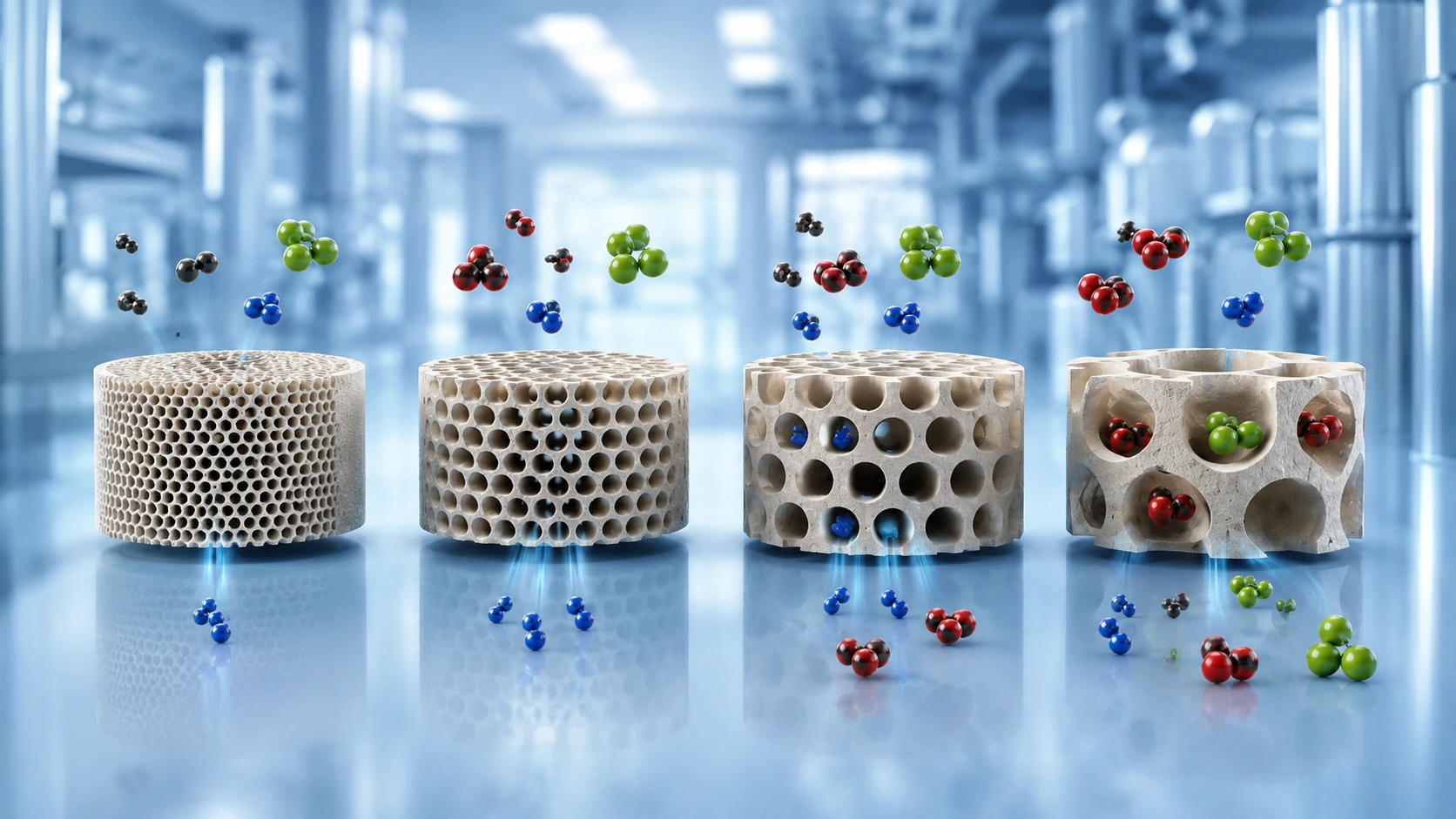
A Larger Pore Opening Does Not Mean a Better Molecular Sieve
Molecular sieving works through accessibility and adsorption affinity. A molecule must be able to enter the pore structure before internal adsorption sites can be used. Therefore, the selected pore opening should admit the target contaminant while excluding valuable product molecules whenever possible.
Which Molecular Sieve Grade Fits Common Industrial Applications?
These are initial selection directions. Product formulation, particle size, vessel design, regeneration conditions and outlet requirements must be reviewed before a final grade is confirmed.
Ethanol and Light Alcohol Drying
The process normally requires selective water adsorption while retaining the alcohol product.
- Typical starting direction: 3A
- Confirm feed water and final purity target
- Review cycle, strength and dynamic capacity
Compressed Air and Process Gas
The selected grade must meet pressure-dew-point requirements while maintaining acceptable pressure drop and cycle performance.
- Typical starting direction: 4A
- 13X may be compared for broader impurity removal
- Activated alumina can also be evaluated
Natural Gas and Hydrocarbon Streams
Water, sulfur compounds, oxygenates, liquid carryover and cryogenic downstream requirements affect the adsorbent direction.
- 3A or 4A for selected drying duties
- 5A or 13X for selected purification duties
- Full gas composition should be supplied
Normal-Paraffin and Gas Separation
Separation depends on molecular accessibility, equilibrium selectivity, cycle timing and the commercial adsorbent grade.
- Typical starting direction: 5A
- PSA design data is application specific
- Do not select from pore size alone
Air Separation Pretreatment
Moisture and carbon dioxide must be controlled before cryogenic air separation to protect the downstream system.
- Typical direction: 13X or 13X APG
- Inlet humidity and CO₂ loading are important
- Cycle and regeneration design must be checked
Refrigerant Filter Driers
Refrigeration applications require a product designed for the refrigerant, lubricant, component size and sealed system.
- Application-specific 3A or refrigerant grades
- Confirm chemical compatibility
- Confirm bead size and filling process
The Adsorbent Grade and the Adsorption System Must Be Evaluated Together
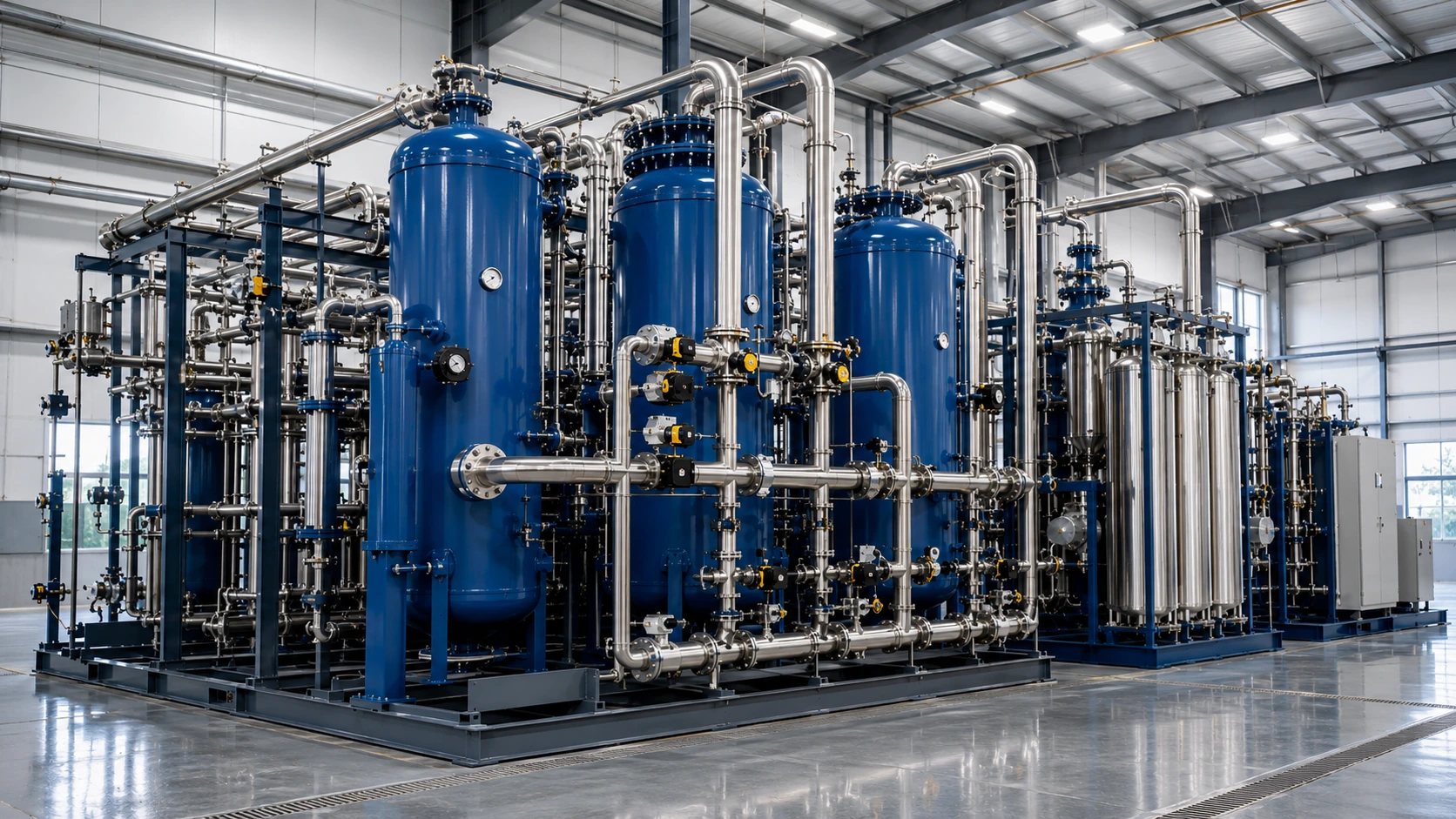
A molecular sieve does not operate independently from the vessel and cycle. Bed dimensions, superficial velocity, pressure drop, inlet distribution, regeneration gas, heating and cooling all influence usable capacity and breakthrough behavior.
Can 3A, 4A, 5A and 13X Molecular Sieves Be Interchanged?
They should not be treated as direct equivalents. Even when two products have similar moisture capacity under a laboratory test, different pore openings can change co-adsorption, outlet purity, regeneration load, cycle length and downstream product loss.
Brand-to-brand replacement within the same nominal type also requires comparison of physical and dynamic properties.
Check the Nominal Zeolite Type
Confirm whether the existing material is 3A, 4A, 5A, 13X or an application-promoted grade rather than relying only on color or particle shape.
Compare Particle Size and Form
Bead and pellet dimensions influence pressure drop, loading density, mass transfer, dust and equipment compatibility.
Compare Mechanical Properties
Crushing strength, attrition, dust level and durability matter in cyclic adsorption systems and during transport or loading.
Compare Dynamic Performance
Static adsorption values alone cannot confirm bed performance. Review the actual feed, cycle and outlet specification.
Confirm Regeneration Compatibility
Heating capacity, purge-gas availability and cycle timing must be compatible with the proposed replacement.
Information to Send Before Requesting a Grade Recommendation
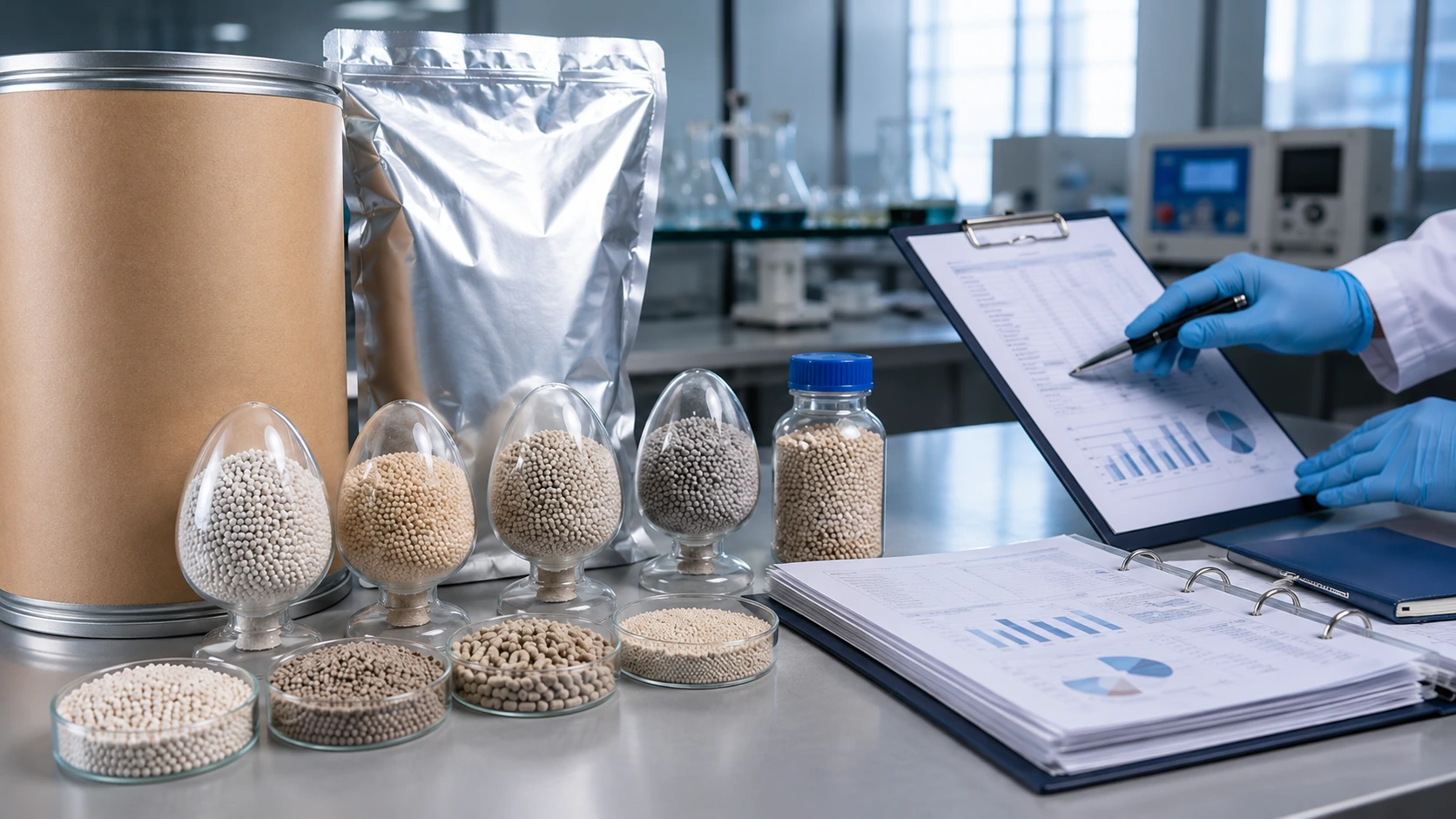
A clear inquiry helps avoid selecting a molecular sieve by name alone. Send the available process, equipment and purchasing data so suitable grades, samples and documents can be coordinated.
3A vs 4A vs 5A vs 13X Molecular Sieve FAQ
The answers below provide a practical comparison framework. Final selection and replacement approval should be based on the actual process and the selected product’s technical data.
What is the simplest difference between 3A, 4A, 5A and 13X?
Which grade is best for water removal?
Can 4A replace 3A in ethanol dehydration?
What is 5A molecular sieve mainly used for?
Is 13X better than 4A for compressed-air drying?
What documents should be checked before purchasing?
Can Adsorbent Source coordinate samples and product comparison?
Select the Grade From the Process Stream, Not From the Product Name Alone
Send the application, feed composition, target contaminant, operating conditions, outlet requirement and existing adsorbent details. Adsorbent Source can help organize suitable 3A, 4A, 5A, 13X or application-grade directions, samples, documents, packaging and quotation information.